Wealthy Kenyans and foreign contractors are evading billions in taxes by moving cash offshore and fleeing the country, exploiting gaping loopholes in Kenya’s tax enforcement system, a damning report by Auditor General Nancy Gathungu has revealed.
The report, part of the African Union Regional Coordinated Audit on Illicit Financial Flows (IFFs), exposes shocking weaknesses in Kenya’s ability to pursue tax cheats beyond its borders, recover unpaid revenues, and curb rampant fraud in high-risk sectors like construction, real estate, and foreign-funded projects.
Gathungu’s audit found that once taxpayers—especially foreign contractors—skip the country without declaring or paying dues, the Kenya Revenue Authority (KRA) has no mechanism to track or recover the funds.
“There is no collection system in place to pursue a taxpayer beyond Kenya’s borders when they have not declared and paid their taxes in full,” Gathungu stated, citing fresh evidence from tax assessments on foreign firms contracted for road construction who disappeared without remitting taxes.
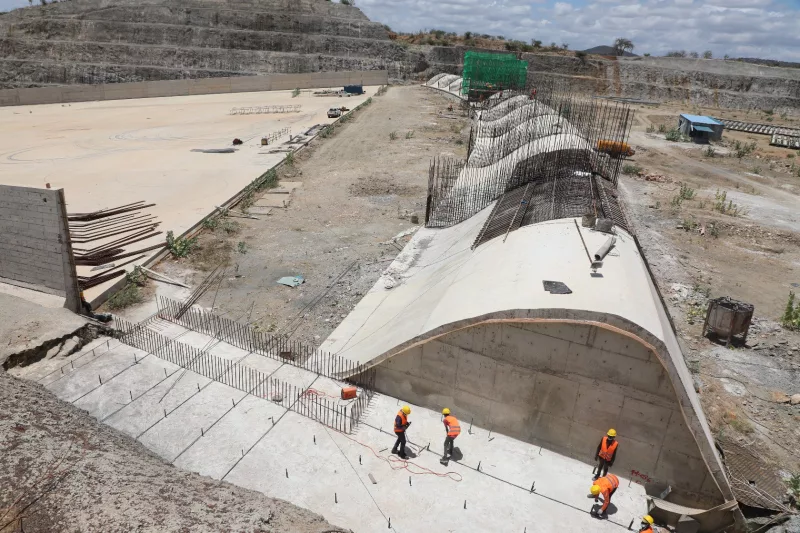
Zeroing in on foreign contractors working on publicly funded infrastructure projects, Gathungu reveals that some firms secured approval for inflated costs—almost equivalent to the contract value—raising red flags about the commercial viability of these ventures.
The Kenya Revenue Authority (KRA), despite conducting post-default audits, has been unable to enforce timely tax recovery due to delayed investigations and ineffective cross-border coordination.
Other than the construction firms, the report also reveals that, there inadequate regulations to govern sectors prone to illicit financial flows. The audit warns that these sectors remain largely unsupervised, creating fertile ground for capital flight, tax evasion, and money laundering.
“These sectors include real estate agencies, money remittance providers, money network operators, savings and credit cooperatives, casinos, the legal sector and car dealerships, as well as nonprofit organisations,” the report reads in part.
Further the findings also show that tax-exempt projects have also become a major point of leakage.
Gathungu says that the fragmented administrative setup and lack of a centralized system to manage tax exemptions has seen excessive imports of duty-free items and imports that should have been sourced locally.
“Cases of excessive imports of tax-exempt items and imports of items intended for local purchase have been identified. This lack of collaboration stems from the absence of an integrated system, which hinders immediate reconciliations and the removal of items from master lists,” the Auditor General said.
The public finance oversight body warns that Kenya is losing billions in unpaid taxes due to weak enforcement, poor inter-agency collaboration, and outdated laws.
“Kenya’s tax authorities lack a mechanism to identify transactions where outbound transfers are disguised as payments for purposes other than the remuneration of foreign staff,” said Gathungu.
Additionally, while the Kenya Immigration Department maintains a register of all foreign nationals, including their activities and declared remuneration in the country, this information is not shared with tax authorities.
“An examination of tax returns
and self-declarations by taxpayers
revealed that some foreign entities
operating in the country paid their
employees in their countries of origin
without subjecting these salaries to
Kenyan tax regulations,” Gathungu
said.