THE government is looking to collect Sh100 billion from landlords and property owners after unveiling a simpler digital tool to help them remit taxes in real-time.
Unlike the previous tax payment system considered complex and costly, the Electronic Rental Income Tax System (eRITS), unveiled in Nairobi on Thursday is seamless and augments voluntary compliance within the sector while reducing administrative burdens associated with taxation.
It is designed to enable seamless integration with the KRA ecosystem for purposes of tax computation, filing, and payment; and is accessible through the Gava Connect API portal for system-to-system integration, and as a service through the eCitizen platform.
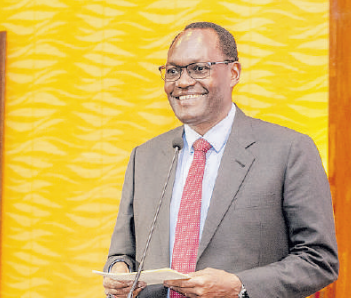
Speaking during the launch, the National Treasury PS Chris Kiptoo hailed the launch of the new system as a significant milestone in the government’s commitment to ensuring a fair and efficient tax system that will contribute to national development.
He regretted that the country is collecting less than Sh20 billion in rental tax, far away from the annual potential of Sh100 billion, largely due to the complex tax filing mechanism.
“The government is committed to ensuring that the tax system remains fair and that compliance is as seamless as possible. With eRITS, we are moving towards a smarter, more efficient tax system that benefits everyone,’’ Kiptoo said.
“With this system, we aim to not only increase revenue collection but also create a more equitable and predictable tax environment that benefits both taxpayers and the government.”
Introduced in 2016, the Monthly Rental Income (MRI) applies to landlords earning between Sh288,000 and Sh15 million annually.
The MRI tax rate was reduced from 10 to 7.5 per cent, from January last year.
This only applies to residential properties. Commercial properties, non-resident landlords, and landlords with very high rental income (over Sh15 million) are subject to different taxes.
Penalty for non-compliance is a fine of Sh2,000 or five of the tax due, whichever is higher for individuals. The penalty for corporations is Sh20, 000 or five per cent of the tax due, whichever is higher.
The penalty for late payment is five per cent of the tax. Late payment also attracts an interest of one per month or part of the month.
In the last financial year, 2023- 2024, tax revenues collected through MRI stood at Sh14.4 billion, translating to a 5.2 per cent year-on-year growth compared to collections of Sh13.6 billion and Sh12.3 billion in the previous financial years.
The Housing secretary of the State Department of Housing and Urban Development, Athman Said applauded KRA and its partners for the innovation, saying that the real estate sector is now poised to be a major contributor to Kenya’s overall development through tax revenue.
According to KRA Commissioner General, Humphrey Wattanga, the system is a voluntary compliance tool that aims to support and enhance tax compliance among rental property owners and agents, adding that the system reflects KRA’s commitment to service excellence, efficiency, and continuous improvement.
“With this launch, we are taking a bold step toward a future where tax compliance is not a burden but a shared responsibility for nation-building,” Wattanga said.
In a move aimed at modernising tax systems and fostering seamless compliance, KRA has unveiled several tools in the past three years, with the Electronic Tax Invoices added to its offering in January last year.
The system maintains a record of stocks through an electronic management system prescribed by the Commissioner (eTIMS)