WHEN global hospitality company InterContinental Hotels Corporation Limited, now known as IHG Hotels & Resorts, announced its exit from the Kenyan market in 2020, it spelt doom to hundreds of workers who dependent on employment at two of its hotels as a source of livelihood.
These were the InterContinental Nairobi and Mombasa Continental Resort, both 5-star hotels.
While the company did not categorically peg the closure on the Covid-19 pandemic that hit hard the hotel and tourism industry that year with at least least 1.2 million full time jobs lost in the tourism industry over the pandemic period, the global chain bowed out of the Kenyan market after 53 years due to financial struggles and debt.
The closure of Intercontinental Nairobi had a significant impact, including downgrading the hotel’s value and derailing the sale of the government’s stake to a company associated with the family and allies of late President Daniel Moi.
However, the sister facility in Mombasa was rescued by local investors.
Mombasa Continental Resort is nestled along the picturesque shores of Shanzu Beach and one of the oldest beach resorts in Kenya.
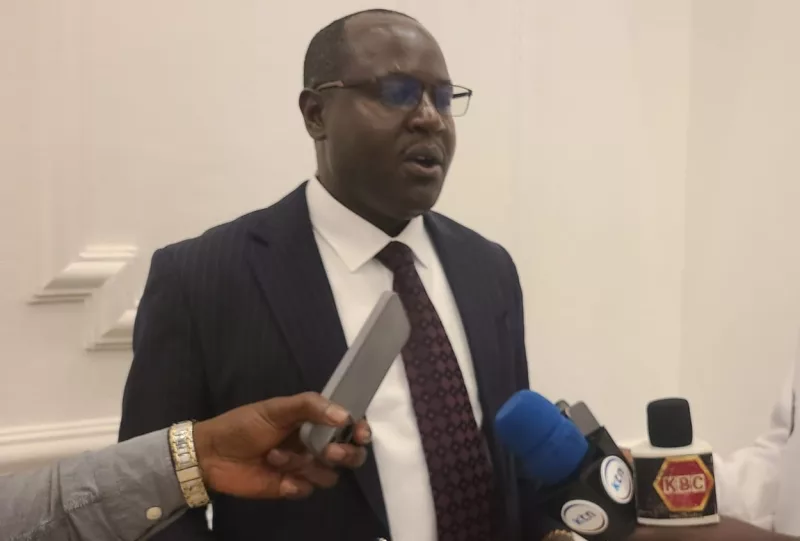
The Star sought to know more about the general manager Mike Kamau who is behind revival of the resort, turbulent moments, overcoming the Covid pandemic, cash crunch and growth prospects as Kenya’s tourism industry strives for new heights.
Tell us about yourself and how long have you been in the hotel industry?
Well, Mike is somebody who is passionate about the hotel industry with a very good background on food and beverages.
I love food. I love wine matching with food. I have been in this industry for, let’s say, over 20 years now.
I have worked in Mombasa, Kisumu, Nairobi and partly Uganda.
So all this experience, I am trying to bring it together and see whether I can be part of the 40 years celebration for Mombasa Continental
How was the exit of Intercon in Kenya and how did you survive?
When they left, the transition was a little bit shaky so we had to close the hotel for about six years. The closure saw the resort lose its glamour as its name slowly faded away from the minds of both domestic and international tourist, including frequent visitors.
But thanks to a local investor who pumped in funds, the facility has returned to full operation creating jobs both directly and indirectly including suppliers and neighboring businesses around Sanzu. We have shaken-off the Covid dust and now fully operational.
Mind telling us who the investor is?
I would love to but he is a very private person, he does not like publicity but he is someone with a rich history of this country’s economic growth and development. It is a Kenyan brand run by the Kenyan people so we are proud that at least, we have one Kenyan fully-owned beach property that is taking tourism to new levels.
What does it take to successfully run a beach hotel?
It takes a lot. First, it requires a lot of time, dedication and understanding the dynamics of different tastes for different people. You must get a team that sees your vision and understand where you are going as a team. The worst thing that can happen in any institution when the people behind you dont know where you are taking them. So you have sit down and get them to see it the way you are seeing it. And like they say, the institution is as good as its leadership.
I never serve anybody, I don’t clean rooms, I am not at the bar but those people who are doing it, they must do it from the bottom of their heart. They have to be passionate about it and leave a mark on customers. A lot of people will come back because they were served by a particular person or got the best service all round at the facility.
What is your capacity?
Mombasa Continental has 180 rooms with almost 420 beds. We have two presidential suites. We also have five boardrooms. We have a conference facility that takes up to 400 people and other small ones that take 60 and 180 people. In total, we can take up to about 600 people at any one time in conferencing.
What are your Easter projections?
So far, business is good with closure of schools and we are looking at a good business over Easter. Kenyans are last minute so we could even be full. We have partnered with airlines and the Standard Gauge Railway to offer packages to travelers as we seek to tap the huge potential both in the domestic and international market.
How is the domestic market compared to international markets?
Domestic market is really what is driving tourism business in Mombasa and for us in particular, we are almost 70 per cent domestic.
However, we are slowly trying to get back the international travellers. We have signed up with a few international operators. We are looking at moving on to Poland, Germany, Switzerland, and UK.
Those are markets that we believe are going to sustain us.
Looking at the statistics from the Kenya Tourism Board we are also seeing potential in emerging markets such as her new emerging markets like Czech Republic and Russia. Regionally, we are keen on Uganda and other East African Community states.
Mombasa Continental is the only place along the Jomo Kenyatta-Bamburi-Shanzi public beaches where sea turtles, an endangered species, breed onshore.
Tell us about it?
Yes, we have taken it as our responsibility to protect turtles. They are being hunted by almost everybody.
They kill it first to get oil from it because they believe the oil treats skin disease. They also believe that turtles have an aphrodisiac. Other animals in the ocean also feed on them.
So, by that, it becomes very endangered. There are about 6,000 turtles between Mtwapa and Nyali. Statistics show that out of 280 turtles that hatch in a single breeding cycle, on average, only one per cent survives.
Working with a community-based organisation, we remain committed to protect this endangered species. Our vision is to push the population to 10,000. I believe in sustainable tourism.
Since reopening, what would you say are some of the key challenges?
The biggest challenge not only for us but the industry as a whole in Mombasa has been infrastructure. The roads have for long been bad but we thank the government there is a lot of infrastructure development.
Once the road from the airport all the way to Malindi is done. Oh, it is going to be a game changer. The second thing of course we don’t have enough direct flights. While we have some including chartered flights, we need to look at how we can make Mombasa and the coast region as a whole more accessible.
The other thing is the cost of doing business is very high.
The tax regime is very unpredictable.
Every year we have different tax changes both from the national and county government. We need a predictable environment where we can have say at least three years before any major changes.
The Tourism Research Institute projects that the business traveler is the next big thing. How are you angling yourself to tap this market?
First is to understand the needs of this business traveler. A business traveler wants security, good Wi-Fi and a good sleep.
That is all he is bothered about. A leisure traveler wants to check how is the swimming pool, how is the beach.
We always try to create an environment that fits both but for the business traveler, we are keen on affordable packages.
What do you think is the best way to drive the country’s tourism industry?
We have seen the ministry talk of a target of five million by 2027.
To achieve this and drive the industry to new heights, first we need to invest on the right facilities that the tourists want even as we retain our uniqueness.
We must also invest in marketing destination Kenya globally and maintain domestic campaigns including at county levels.
We need to tap on all the tourism potential we have. We must not forget that we have other destinations offering the same products and they are watching. We must think ahead.