Faith Nchagwa, a resident of Tagare village in Kuria West, Migori county has been using firewood as the main source of energy for cooking for over two decades.
However, this changed early this year after the 43-year-old mother of three was diagnosed with chronic bronchitis which according to her doctor, was a result of long-term exposure to smoke that came from burning firewood.
She has now switched to using cooking gas after buying a 6-kilogramme cylinder as a way to avoid continued exposure to smoke which would worsen her condition which she is managing through medication.
Her story is almost similar to Irene Kemunto who runs a roadside eatery in Umoja. While she still uses both charcoal and gas, she intends to ditch the former.
“I want to invest in a good burner that will allow me to cook different dishes at the same time,” she told the Star.
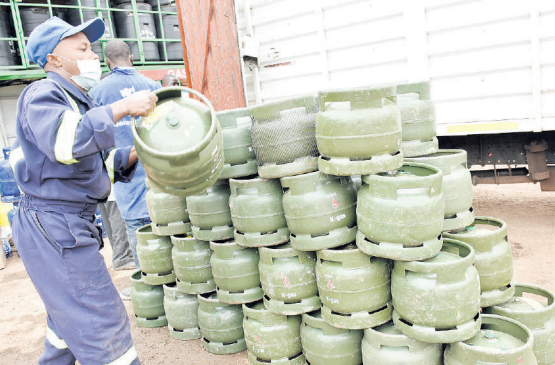
The two are part of thousands of households in the country who have in recent years embraced the use of Liquefied Petroleum Gas (LPG) as the main source of energy for cooking, in a move to avoid the health effects that come with the use of unclean energy sources.
While traditionally used for cooking and heating, firewood and charcoal have significant environmental and health impacts, including deforestation, air pollution, and respiratory illnesses.
According to experts, burning firewood for cooking and heating can negatively impact health, leading to respiratory problems, cardiovascular issues, and increased risk of certain cancers.
The country’s Economic Survey indicates that indoor air pollution from cooking fuels like charcoal and firewood is killing an estimated 21,600 Kenyans annually.
Of these deaths, about 40 per cent are children (exceeding the burdens of diseases of malaria, tuberculosis, and diarrhoea combined).
Cases of respiratory diseases reported in health facilities were 19.6 million in 2023, up from 17.1 million, the latest Kenya National Bureau of Statistics indicate.
The government has since embarked on an ambitious plan to increase the use of LPG in public institutions and homes.
In 2023, the government exempted cooking gas from Value Added Tax (VAT), the 3.5 per cent Import Declaration Fee (IDF) and the two per cent Railway Development Levy (RDL) to promote its use and reduce reliance on charcoal.
CONSUMPTION
LPG consumption has since increased to 414,861 metric tonnes, latest data by the Energy and Petroleum Regulatory Authority (EPRA), Biannual energy and petroleum statistics report for the financial year 2024-25, shows, up from 360,592 metric tonnes in 2023 and 333,829 in 2022.
“We have witnessed encouraging trends in Liquefied Petroleum Gas consumption, aligning with the government’s commitment to implementing the LPG growth strategy. The demand is expected to continue its upward trajectory as the government advances the LPG growth strategy, focusing on promoting its use in schools and hospitals,” EPRA director general Daniel Kiptoo said.
About 93 per cent of LPG is imported through the Port of Mombasa, six per cent through the Namanga border while Loitoktok and Lungalunga accounted for the remaining one per cent with imports coming in from Tanzania.
Apart from public institutions, the government is taking a second shot at the cylinder distribution plan for poor households in its clean energy drive.
This is similar to the ‘Mwananchi Gas Project’ which failed after alleged corruption, lack of funds and supply of defective cylinders. Under the Sh3 billion ‘Mwananchi Gas Project’ ( Gas Yetu), households were to receive 6kg cooking gas cylinders and burners at a discounted price of about Sh2,000.
The well-thought plan was intended to save poor households from respiratory diseases, where about 80 per cent of Kenyan homes rely on charcoal, firewood, and kerosene for cooking.
The Energy Ministry at the time said the plan was shelved due to a cash crunch. Instead, the government introduced VAT on LPG through the Finance Act 2019 Clause No. 13, where LPG was removed from the list of Zero-rated supplies.
In the latest development, President William Ruto’s administration targets at least eight million cylinders for low-income households at a discounted price, in a project that will involve private sector players.
“All the subsidised cylinders under the government growth strategy will be locally manufactured. We are talking of about eight million cylinders,” EPRA’s petroleum and gas director, Edward Kinyua, told the Star.
According to EPRA, the government is putting in place structures, including partners for the project. It is also putting in place regulations that will guide the use of cylinders to ensure firms don’t lose their cylinders to rogue players.
An LPG refilling plant will be required to have at least 70,000 cylinders to be licensed.
“You cannot rely on other players’ cylinders. We also want to put an end to illegal refilling in the country,” Kinyua said.
To lower retail prices, the government is mulling a possible price control as products will be imported under an Open Tender System or a government-to-government Lowering prices is expected to increase the use of clean energy by households.
The government targets to increase annual uptake of gas from 7kgs per capita to 15kgs.
The government also targets to enhance penetration from the current 24 per cent to 70 per cent by 2028.
PIEA data shows LPG demand remained resilient during the fourth quarter of 2024 (October to December), with a 15 per cent growth during the year, compared to an eight per cent increase witnessed in 2023.
Kerosene consumption dropped by 24 per cent as consumers switched to cooking with cleaner LPG.
“The infrastructure is in place so we can even double the consumption of LPG in one year. We however need to streamline operations and ensure players do legit business,” PIEA chairman Peter Murungi said.
LPG is currently not price-regulated with a monopoly in the industry leaving consumers at the mercy of the importers and retailers who set their own markups.
Price controls will be pegged on
components similar to those used in
setting petrol, diesel and kerosene
prices, where a formula is in place
to determine the maximum retail and
wholesale prices, based on import
costs, global market prices and local
currency components, with bidders
competing to offer lower price marks.