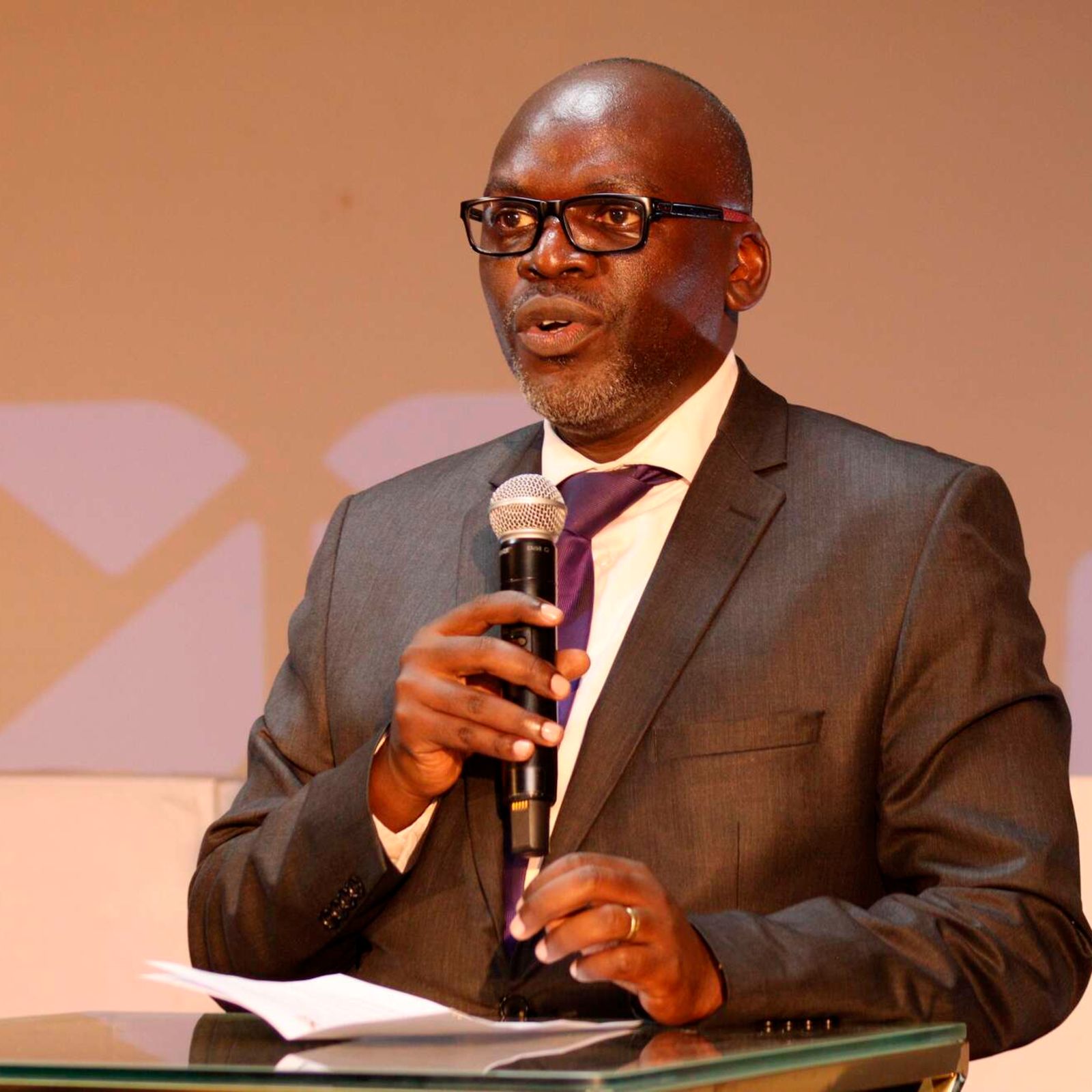
Growing up, Tobias Alando dreamed of becoming a spy, inspired by his father’s career in the police service and a family-owned investigative firm.
However, he ended up as an Information and Communication Technologies expert, who would later become the Kenya Association of Manufacturers (KAM) chief executive.
He now leads the country’s industrial growth agenda as the government targets to have the sector contribute about 20 per cent to the GDP by 2030.
The Star sought to know who Alando is and his agenda for the industry.
Who is Alando, where was he born, where did he go to school and what has his career been like?
Tobias Alando was born in Mombasa but grew up in Nairobi.
In terms of school, I went to Maranda High School and then India for my bachelor’s in computer science. I also did my postgraduate course in Management Information Systems and then master’s in management and leadership at the Management University of Africa.
I started working in the IT field and would later join KAM as a sector officer, dealing with exports. I worked a lot with the Kenya Revenue Authority and KPA. That is where I grew my skills, including knowledge about the manufacturing sector and exports.
Then what?
I was selected by a US-affiliated chamber of commerce as one of the rising star chamber staff and went to the US for internship for three months.
I went to the Rapid City Chamber so I am a graduate of the Rapid City Chamber class of 2007. I served in Mombasa for about five years before I was promoted to head the membership arm of KAM in 2010.
This is where I understood a lot of policies in the manufacturing sector. Another portfolio was added to me so I became head of membership and governance.
In terms of the top role, I first acted but after interviews, someone else was appointed as the CEO and I was given the chief operating officer role, which I served in for about three years.
I was then given an opportunity to serve as the CEO, so that is the journey about my career. In terms of family, I am married with three kids.
How is the manufacturing sector performing?
The manufacturing sector is not growing. The last time we had double-digit growth was 2021 or earlier than that.
Right now, we have stagnated at 7.6 per cent. The speculation is it might drop to six per cent.
That means we need to do a lot. That is one of the reasons we are launching studies and reports like the manufacturing priority agenda.
What needs to be done to grow the sector?
We need predictability in the tax and policy space. The current situation inhibits growth directly because any investment is done with a plan.
Any investor has a four- or five-year plan. What we have currently is unpredictable. The government has been aggressive in increasing taxes, and that really impedes manufacturing growth, something that needs to change.
We have had cases of manufactures closing shop and moving to other jurisdictions. What is the exact situation? It is true.
We have seen big names that have also opted to import rather than manufacture locally. Every manufacturing company does what we call a business case.
They will assess: if I produce this item here, vis-à-vis importing, which one will be more viable? When you do your cost analysis, sometimes it is cheaper to import certain products.
It is because certain countries have given incentives and are encouraging their manufacturing companies to export. Egypt is doing that.
Kenya needs to do that — provide incentives to allow companies to export. In the manufacturing quarter four barometer we did, 60 per cent of manufacturers are holding their investments or expansion because of the unpredictability of the policy and tax base.
Once that is aligned, believe you me, all these firms will invest. Kenya is a very good environment. We have educated citizens, our infrastructure is slightly better than Uganda and Tanzania. Looking at technology-wise, we are far much ahead.
We have two ports: Mombasa and Lamu. We have the ability to access our region. So Kenya, indeed, if you look at any investor, is a very good market.
However, these issues of taxation and the policy space are what we really need to address. We have to be intentional as a country. For instance, Tanzania is listening to every policy and proposal that our government makes and they are luring manufacturers to invest in their country.
We are going into the 2025-26 financial year. What is your expectation?
Predictability. If only we can fully implement the National Tax Policy.
How can the country ensure competitiveness?
There are a number of ways, including tax applications. For instance, there is a structure that we apply in terms of the Common External Tariff.
Zero for raw material, 15 per cent for intermediate products and 25 per cent for intermediate products that are not locally available, and then 35 per cent for finished products.
There is a clear duty structure. We should not distort the duty structure to favour one sector or one company, because once you do that, it affects your competitiveness.
Tanzania has recently imposed some duties on Kenya’s exports. What is your take?
Protecting local manufacturing by increasing duty is happening worldwide. The US is imposing tariffs on imports from China or any other country to protect their local companies.
But it should be done on the basis of data and information. We must ensure we attract investment and make products affordable to the local citizen.
Any country can impose
tariffs, but it should be done based
on the WTO rules and guidelines.
Apart from the tax regime, what are the other challenges in the sector?
Cost of energy is a big one. We are about 70 per cent uncompetitive. Our energy is reliable but expensive. When you do a comparison between Kenya, Uganda, Tanzania, even as far as South Africa, we are still very expensive, in terms of the cost of energy.
Our proposal to address this is to look at the power purchase agreements and reduce the use of thermal. Another challenge is fees, levies and charges, especially at the county level.
We know they need to raise their revenue but they are not thinking about the impact of taxation to the broader manufacturing sector.
Let it be structured. We need the government to take critical action in the issues around fees and charges by counties and by ministry departments and agencies.
My expectation is that they will hear our plea in terms of taxes.
The issue of VAT refunds to the industry, how is the situation?
I think we need to address this as a country because the system, the way it is structured in our country, it is not working well.
In terms of the study we did, there are about Sh800 billion owed to not only manufacturers but generally businesses in terms of pending payments in government and county government.
For the manufacturing sector, there are VAT refund claims monthly of more than Sh6 billion per month, while KRA gets an allocation of about 2.5 billion for the same. This means we have a shortfall that needs to be addressed.
Tell us about the priority agenda
The Manufacturing Priority Agenda focusses on four pillars. One is global competitiveness. We are in a flat world and we compete with our counterparts in the region, internationally and nationally.
The other second pillar of focus is SME development. SMEs form part of the future of the manufacturing sector, and supporting them is crucial for any government and that is why we have prioritised that.
The third pillar of focus under our Manufacturing Priority Agenda is agriculture for industry. In many years, that linkage between farmer and industry has not been adequately done.
We’ve seen cases where we are importing even tomato paste from Egypt or any other country, while we can farm tomatoes and process them and produce tomato paste. Issues around pyrethrum, sun- flower for seed oil, potatoes… these things can be done here.
So the priority is linking our farmers to the right seeds and the right products so that they produce the seeds and we guarantee off-take to process and we pay them the right amount. Is the 20 per cent manufacturing sector contribution to the GDP by 2030 achievable? It is a bit ambitious.
We may not reach the target but at least we can do a double digit. It is possible. We need to change things for us to move to that number. We have to be intentional.
What is your dream for Kenya’s manufacturing sector?
My dream is that the sector becomes the leading employer in this country and a leading revenue generator for government.
I also want to see the sector lead in Africa for exports to the continent and other global markets. So I am seeing the manufacturing sector grow and have a huge impact on the economy.
Lastly, I am also seeing a lot of youth involvement in the manufacturing sector because the perception that has been created is a big man’s or big woman’s platform.
I am seeing
a future where a lot of young people
will love manufacturing and get involved in the manufacturing sector.
That is my ambition.