Parliament's Finance and National Planning Committee is in talks with the Central Bank of Kenya with a view of reviewing the Sh10 billion core capital requirement for banks.
The discussion comes as concerns mount over the impact of the regulation on liquidity and lending in the financial sector.
During the committee session, Homa Bay Town MP Peter Kaluma questioned CBK Governor Kamau Thugge on whether the high number of non-compliant banks signalled a need to reassess the requirement.
Kaluma noted that as of December 2024, 24 out of 38 banks had not met the Sh10 billion threshold. CBK ha,d however, asked the 24 banks to submit board-approved capital build-up plans by April 1st 2025.
“As a layperson, my understanding is that core capital represents the minimum amount a bank must have to operate. By raising it significantly, we may be reducing the money available for lending. Given the current situation, would you advise Parliament to maintain the requirement at Sh10 billion or consider lowering it to enhance liquidity?” Kaluma asked.
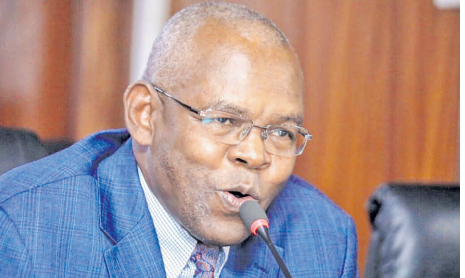
Thugge defended the requirement, stating that the move was essential for strengthening Kenya’s financial sector and aligning it with global standards.
Thugge argued that the core capital requirement of other countries is much higher than Kenya, and if the country wants to be the East Africa financial hub then the review is necessary.
He pointed out that when the core capital was last increased to Sh1 billion in 2012, total banking sector deposits stood at Sh1.5 trillion.
Today, deposits have surged to Sh5.6 trillion, while lending has grown from approximately Sh1 trillion to Sh4 trillion.
“The financial sector faces increased risks, including cybersecurity threats and the need for advanced technology. Adequate core capital is crucial for resilience. Higher capital requirements do not necessarily reduce lending capacity; instead, banks can attract strategic investors or conduct rights issues to boost their capital,” Thugge stated.
The session also exposed the government's appetite for domestic loans that has locked out private sector. The committee chairperson Kimani Kuria criticized CBK for not proposing stronger protections for the private sector, to access funding.
“Where do we leave the private sector when the government is competing for loans with businesses? We wish you had said you will protect the private sector despite these issues,” said Kuria.
This has seen the government’s domestic debt portfolio rise to Sh5.9 trillion as of December 2024, above the Sh5.06 trillion foreign debts.
Data by the apex bank shows that 45.34 per cent of the domestic debt is owed to Banking Institutions, while insurance firms only account for 7.18 percent of the debt.
Thugge pointed out that commercial banks prefer lending to the government—considered a risk-free borrower—rather than private businesses that already struggle with high levels of non-performing loans, there by crowding out private sector access to credit.
“When we started this financial year before the Finance Bill was withdrawn, the projected net domestic borrowing was slightly below Sh400 billion. That figure later increased to Sh430 billion, and with the second supplementary budget, it has now risen to Sh584 billion,” Thugge said.