Kenya is expected to repay the bulk of its Sh11.2 trillion debt in the next nine years, a period the government describes as ‘the toughest moment’ of the country’s history.
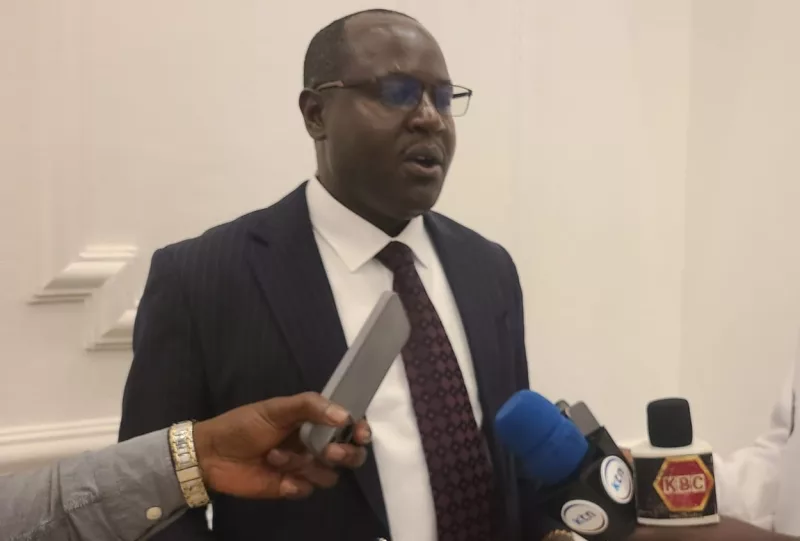
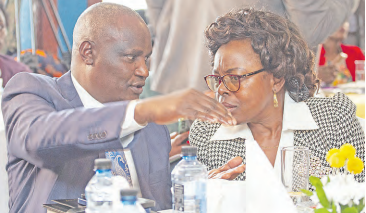
Speaking at a medium-term debt strategy forum in Nairobi, National Treasury Cabinet Secretary John Mbadi said taxpayers should tighten their belts for a bumpy ride between now and 2034, noting there is no other way out.
“We are in a debt repayment phase of our history. Although the government is scouting for strategies to ease the burden, it will not be an easy ride,” Mbadi said.
For instance, the country is expected to clear $5.1billion (Sh660 billion) of close to $6 billion (Sh776 billion) Eurobond debt by 2034, in addition to maturing domestic debt and other external loans.
According to the country’s debt plan, the upcoming financial year 2025-26 will be among the toughest for Kenya, with 18.6 per cent of domestic debt due by October in addition to close to interest payment on external loans which are likely to push the debt obligation for the financial year to close to Sh1 trillion.
Mbadi said that the situation would have been worse, if not for the shilling stability that has since cut the external debt service by close to Sh1 trillion.
The CS blamed rampant corruption saying it posed a major challenge to fiscal restructuring. According to Mbadi, the country can effortlessly service its debt if corruption is cut by half.
“Most of the revenue collected and borrowed is looted, pushing the government to borrow more to sustain the budget. Taxpayers on other hand want services for their taxes. We are in catch-22 scenario that led to instances witnessed in June last year. “
Data shows that total external debt declined from Sh6.09 trillion in December 2023 to Sh5.09 trillion in January 2025.
Top on the list of debt service obligations in the coming financial year is $800 million (Sh114 billion) of syndicated loan.
In July 2023, Kenya secured a $500 million three-year and five-year syndicated medium-term loan from Trade and Development Bank (TDB) to finance development projects as part of the budget approved in the fiscal year 2022/23.
The loan facilities are due in September and October. Apart from widening the tax regime in a plan to cut reliance on shrinking external debt and grant opportunities, the National Treasury has prioritised buying back most of debt to lengthen repayment period.
According to Mbadi, the government plans to repackage short-term debt instruments like T-Bill into long term bonds to secure sustainable breathing space.
“We are also going to prioritise multi-lateral loans and buy back some of the external debt. In the long run, we want to make sure domestic debt is the bulk of our total obligation at 55 per cent by 2027/28,” Mbadi said.
Kenya’s National Treasury further notes in its Public Debt Management Strategy 2025 that the downgrade of the country’s credit rating had significantly impacted its ability to borrow commercial loans from various credit sources.
Rating downgrades, according to the Treasury, lead to increased borrowing costs, low investor confidence, currency depreciation and debt sustainability risk.
He further asked Kenyans to prepare to commit even more towards budgetary support in view of waning support from the international community.
“Things are expected to worsen given tough policies by our international supporters like the US government which through Presidential executive orders has put limits to funding programmes. We now have to look inwards to seal the deal those loopholes,” Mbadi said.