Kenya's pension industry is calling on the Capital Markets Authority (CMA) to introduce innovative products to absorb the large pool of funds held by pension and insurance companies.
Public Service Superannuation Fund (PSSF)—a contributory pension scheme offering retirement benefits to government workers — says that with a young and growing population, the country’s pension sector is set for expansion, and the funds will need to be invested.
Most of the local pension schemes channel monthly contributions into various investments, including capital markets, debt securities, and real estate, in an effort to ensure long-term economic benefits.
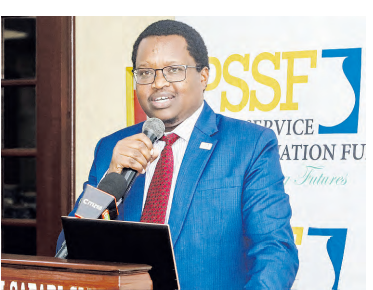
However, PSSF CEO Jonah Aiyebei says there has been a challenge of limited investment opportunities for pension funds within the country.
“A challenge that comes in is the investment opportunities. Is our economy big enough to absorb these investable assets?” asked Aiyebei.
With the growing need for secure and profitable investment avenues, industry stakeholders are urging regulatory bodies to facilitate solutions that will optimize the use of pension assets while fostering economic growth.
“Because of this challenge, it calls on the practitioners in the capital market space and also the players in this space, even the pension funds themselves, to be very innovative and come up with new products that can attract proper investments for pension funds,” said Aiyebei.
The scheme says that this proper investment vehicle for pension institutions will cushion the government from huge spending towards safety net programs.
With over Sh1.7 trillion in assets under management as of 2023, the pension industry is exploring new avenues, including infrastructure projects, private equity, and green energy, to secure long-term growth for retirees.
“So there is a need for innovation. There is a need for continuance, looking for proper vehicles that can deliver an effective return for members,” added Aiyebei.
The Cabinet Secretary for the National Treasury, John Mbadi last December challenged pension and insurance funds to explore public-private partnerships (PPPs) with the government.
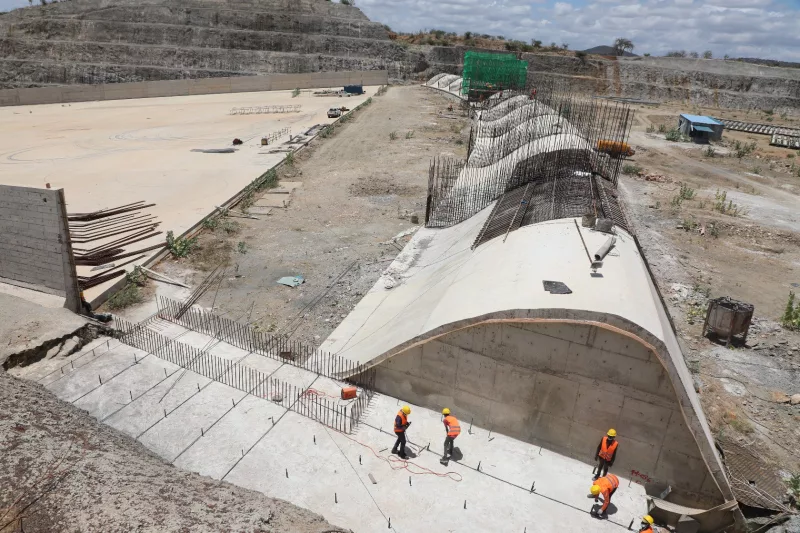
Under this arrangement, he said that instead of the government seeking external funding for infrastructure projects, pension schemes can step in as key investors, ensuring both national development and sustainable returns for pension funds.
PSSF says that the pension sector has the potential to fund state infrastructure projects, but the government will have to set up clear structures on how the money will be recouped.
“There have been a lot of discussions on funding infrastructure. But at this point, we have not made a commitment. We have not really got the actual fundraising strategy of the promoters for us to say we can set aside this amount of money,” the CEO added.
The fund that became operational in 2021 has grown its value, hitting Sh187.65 billion as of the end of December 2024.
This is out of a membership of 443,379 members comprising 261,475 teachers, 115,564 disciplined services, and 66,015 civil servants.
Over the years, the pension liability and expenditure under this scheme had increased exponentially. For instance, in 2017-2018, the government budgeted Sh71.9 billion to cater for pension expenditure.
In five years, this budget had increased to Sh140.7 billion, an increase of 96 percent. This, PSSF says, necessitated the introduction of reforms in the pension sector.