Recently, there has been a diplomatic rift between Rwanda and Belgium which centres on accusations regarding their respective roles in the ongoing conflict in the eastern Democratic Republic of Congo (DRC).
Brussels has been leading calls for European nations to sanction Rwanda over its alleged support for the M23, a rebel group at the centre of DR Congo's crisis.
On March 17, 2025, Rwanda announced the severance of diplomatic relations with Belgium, ordering Belgian diplomats to leave the country within 48 hours.
The Rwandan Ministry of Foreign Affairs claimed Belgium was "consistently" undermining Kigali during the DRC conflict, citing Belgium's alleged support for international sanctions against Rwanda.
In its statement on Monday, Kigali claimed Brussels attempted to "sustain its neo-colonial delusions".
"Belgium has taken sides in a regional conflict and continues to systematically mobilise against Rwanda in different forums, using lies and manipulation to secure an unjustified hostile opinion of Rwanda, in an attempt to destabilise both Rwanda and the region," the statement said.
In response, Belgium's Foreign Minister, Maxime Prevot, criticized Rwanda's decision as disproportionate, stating that Rwanda prefers to avoid dialogue during disagreements.
"This is disproportionate and shows that when we disagree with Rwanda they prefer not to engage in dialogue," said Prevot.
This declaration can lead to the removal of diplomatic status and often results in the expulsion or the withdrawal of recognition of envoys.
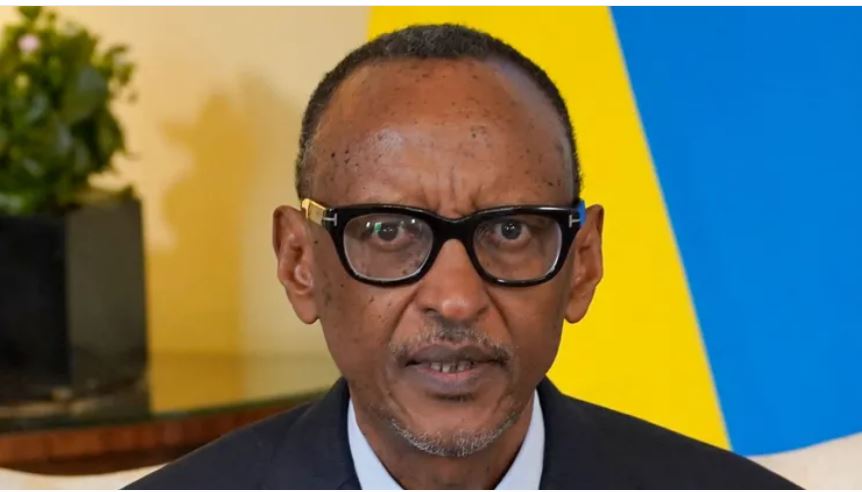
Before Kigali cut ties with Brussels, Rwandan President Paul Kagame vowed that his country would "stand up" to Belgium.
"We would ask [Belgium]: 'Who are you by the way? Who put you in charge of us?' Rwandans believe in God, but did God put these people in charge of Rwanda?" Kagame asked in an address on March 16.
Belgium response
Belgium subsequently declared Rwandan diplomats persona non grata, further escalating tensions between the two nations.
Since the beginning of the year, around 7,000 people have been killed in fighting between the M23 and DR Congo's armed forces in the east of the country, the Congolese authorities have said.
More than 850,000 people have been forced to flee their homes since the conflict increased in intensity in January, the UN children's agency, Unicef, said.
The M23 has taken control of two key cities - Goma and Bukavu - in the past two months.
This diplomatic fallout coincides with the European Union's adoption of sanctions targeting Rwandan military commanders and members of the M23 rebel group, which is accused of destabilizing eastern DRC.
Belgium has been at the forefront of advocating for these sanctions, reflecting its stance against Rwanda's alleged involvement in the DRC conflict.
On Monday, the EU sanctioned three of Rwanda's military commanders, citing connections to the M23.
The sanctions, which include the freezing of assets, were also applied to the head of Rwanda's state mining agency.
The EU has accused the agency of exploiting DR Congo's conflict to extract valuable resources from the mineral-rich east.
Britain and Germany have also taken measures against Rwanda - over the past month, both countries cut some of their aid to Kigali.
The strained relations are further complicated by historical contexts, as Rwanda was formerly a Belgian colony.
The Rwandan government has criticized Belgium's "neocolonial delusions" and its "destructive historical role" in exacerbating ethnic tensions leading to the 1994 genocide against the Tutsi.
Additionally, there have been calls within the EU to suspend a €900 million minerals agreement with Rwanda, part of the EU's Global Gateway initiative, due to concerns that the deal might indirectly support rebel activities in the DRC.
Belgium has been a vocal advocate for reevaluating this agreement in light of the ongoing conflict.
The Belgium-Rwanda history
The strained relations between Rwanda and Belgium have historical roots dating back to the colonial era.
Belgium administered Rwanda until its independence in 1962, and the colonial legacy has left lingering tensions.
Incidents such as the murder of ten Belgian peacekeepers during the 1994 Rwandan genocide, which led to Belgium withdrawing its troops, have further complicated relations.
The expulsion of diplomats signifies a significant deterioration in bilateral relations.
This diplomatic rift occurs amid efforts by African leaders to broker a lasting ceasefire in the DRC, where the Rwandan government faces accusations of backing M23 rebel offensives.
And in February, the UN Security Council demanded that the M23 end hostilities and that Rwanda should pull its troops out of DR Congo.
Rwanda's diplomatic spat with Belgium came a day before the Congolese government and M23 rebels were set to meet for peace talks.
But the rebels announced on Monday afternoon that they would no longer participate accusing unspecified international institutions of undermining the peace efforts.
Severance of diplomatic relations under the Vienna Convention
According to the Vienna Convention, the breaking of diplomatic relations between countries is the official announcement by one of the partner countries about the termination of the dialogue.
At the same time, it is necessary to export representatives and ambassadors, and members of their families to their homeland.
Also, all property of embassies is transported and premises are vacated.
At the same time, an intermediary state can protect the interests of citizens of a country that is severing relations. All these actions must be documented.
The gap is necessarily announced publicly so that all countries and people know about the new state of affairs.
At the same time, the state can finally or temporarily withdraw its ambassadors, before resolving any situation.
Reasons for Severing Diplomatic Relations
Serious Political Disputes
When there are fundamental disagreements or conflicts over political ideologies, territorial disputes, or human rights issues, countries may resort to severing diplomatic relations as a way to express strong disapproval and exert pressure.
Acts of Aggression
In response to acts of aggression, such as military invasions or attacks on diplomatic personnel, countries may sever diplomatic relations as a form of retaliation and to signal their condemnation of such actions.
Economic Sanctions
As a means of economic pressure, countries may sever diplomatic relations to impose economic sanctions, restrict trade, and limit financial transactions with the targeted country.
Human Rights Violations
Severe and systematic human rights violations can lead to the severing of diplomatic relations as a way to express disapproval and hold the offending country accountable for its actions.
Consequences of Severing Diplomatic Relations
Communication breakdown
The absence of diplomatic channels can hinder communication and cooperation between the two countries, making it difficult to resolve disputes or address issues of mutual interest.
Economic Impact
Severing diplomatic relations can have negative economic consequences, including reduced trade, disrupted supply chains, and potential loss of foreign investment.
Political Isolation
The country that severs diplomatic relations may face international isolation and criticism from other countries, potentially damaging its reputation and influence on the global stage.
Increased Tensions
The severing of diplomatic relations can escalate tensions between the two countries, increasing the risk of further conflicts or even military confrontations.