Oil Marketing firms, small petroleum dealers and transporters are set to gain as the Energy and Petroleum Regulatory Authority moves to increase sector sector margins, which could equally push up pump prices.
The regulator has announced plans to adjust upwards retail investment margins, operations margins, wholesale prices, storage tariffs, inventory financing and transport tariffs, that will impact pump prices by Sh7.80 per litre of petrol, Sh7.75 per litre of diesel while Kerosene could go up by Sh7.67 per litre in the long-run, with implementation being done in phases.
This, even as EPRA says it will be keen to ensure the impact on consumers remains minimal as it strikes a balance between the price adjustments and the falling global crude prices and a much stable shilling which has seen the landed cost remain low.
Retail operations margins are expected to go up to Sh6.61 from Sh4.14, which includes provisions for product losses and a markup on the overhead costs.
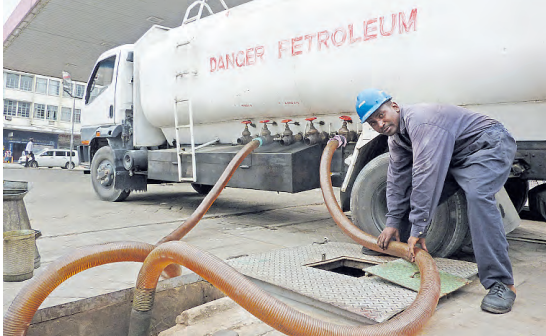
Tankers moving petroleum products will be allowed to charge Sh1.18 per litre up from Sh0.54 per to deliver products within a 40 kilometre radius of Nairobi, with a varying rate of Sh19.28 per cubic metre per kilometre for retail locations outside the pricing towns.
This has put into consideration round trips by the tankers. Retail investment margins will go up to Sh6.17 up from Sh4.05 per litre, wholesale margins will increase to Sh4.69 per litre from Sh3.05 while investory financing will gain from a Sh1.18 charge per litre.
Other adjustments are on secondary storage tariffs albeit marginal increases of cents. The tariff increase is informed by the Cost of Service Study in the Supply of Petroleum Products (COSSOP) undertaken by a consultant–Kurrent Technologies, commissioned 14 months ago.
It is part of a five-year cycle tariff review by EPRA with the first COSSOP conducted in 2018, which was implemented in December of that year.
Recommendations from the first study saw the regulator hand oil marketing companies a profit margin of Sh12.39 per litre of petrol, Sh12.36 on diesel, and Sh12.36 on kerosene.
Investors in product transportation and retail outlets are however the biggest winners in the latest review, with motorists and households seen to be the casualties as pump prices are expected to go up.
Speaking during a media roundtable in Nairobi yesterday, EPRA director general Daniel Kiptoo said the adjustment will be done in phases, with the initial increase having an increase of Sh3.68 on a litre of petrol, Sh3.62 on diesel while kerosene will cumulatively (all tariffs considered) increase by Sh3.54.
The five-year review is pegged on the need to factor in investment costs in the petroleum indistry which have since gone up.
For instance, the last time investors in the tanker business had a review was in 2010.
“We are here to balance the interests of investors, consumers and the government. In terms of implementation, we are looking for a mechanism where we implement this, the recommendation of this report in phases. We want to time it at a point where it will not impact the consumer negatively and we want to apply it at a time when we are having the petroleum prices come down,” Kiptoo said.
He said the move will cushion investors from the high cost of doing business, where some have since been pushed out of the market.
“The cost of investing in this sector has gone up and if you look for instance at an investment by the transporter….in 2010, the cost of diesel was Sh70. This person has been tied to the same delivery contract for all these years. So there is a justification. If we don’t do this, many of these businesses will shut down,” Kiptoo said.
He noted petrol station owners have also been hit by high operating costs including staff costs, rent, among other bills which if not addressed, hundreds will be forced to close meaning loss of business and jobs with further implications to the economy.
“The overall increase has been largely occasioned by the significant changes in key cost drivers for the petroleum pricing components such as exchange rate inflation, annual minimum labour wage, consumer price index and other relevant factors considered prudent and necessary,” EPRA said.