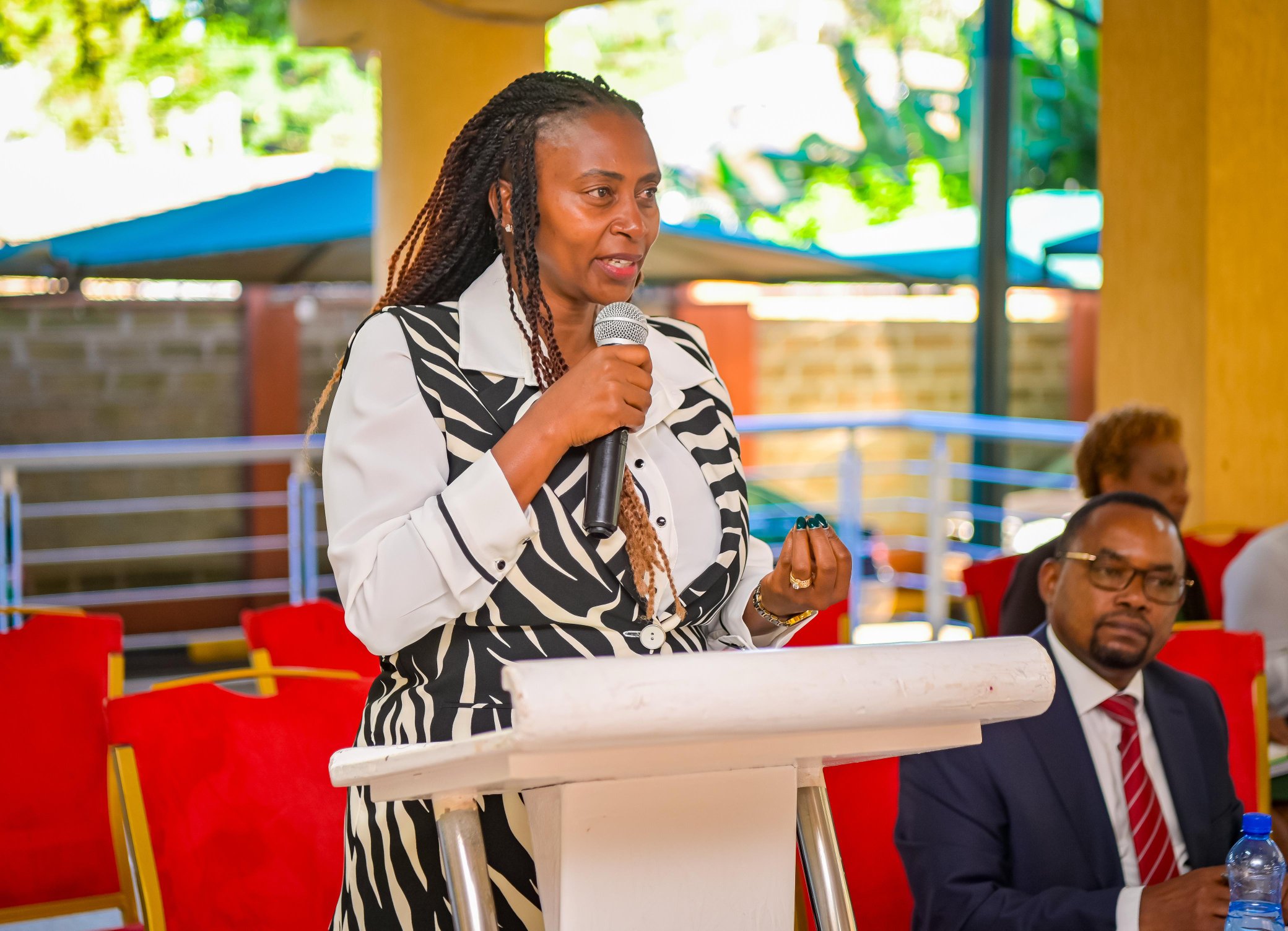
 Health PS Mary Muthoni / HANDOUT
The Ministry of Health has said it will administer the second round of antimalarial medicine in Turkana starting from June.
The ministry said the process will integrate a digital campaign approach using the eCHIS platform.
In a statement on Saturday, Health PS Mary Muthoni said data from both the 2024 and 2025 campaigns will guide future expansion and implementation strategies to enhance the impact of malaria prevention efforts.
Muthoni said that Turkana experienced a transition from a largely seasonal malaria burden to a more stable endemic pattern, with some regions still exhibiting seasonal peaks.
She said assessments by the National Malaria Control Programme; the County Government of Turkana, Moi University, and Duke University revealed a more than 65 per cent increase in malaria cases during the rainy season in Turkana.
“In response, the first phase of Seasonal Malaria Chemoprevention (SMC) was implemented in Turkana Central subcounty, which had recorded 102,000 malaria cases in 2024, with 60 per cent occurring between May and September,” she said.
“Building on this success, the second round of SMC in Turkana Central is scheduled for June 2025 and will integrate a digital campaign approach using the eCHIS platform.”
Launched in June 2024 with support from Catholic Relief Services (CRS), the SMC campaign targeted 38,585 children under five years to prevent malaria episodes during peak transmission periods.
Over five cycles, each spaced 28 days apart, 71 per cent (27,206 children) of the targeted population completed all five doses.
The cycles included, Cycle 1 (88 per cent coverage, 33,820 children), Cycle 2 (101 per cent, 39,229 children), Cycle 3 (95 per cent 36,741 children), Cycle 4 (100 per cent, 38,924 children), and Cycle 5 (104 per cent, 40,123 children).
The PS said that the SMC intervention reduced malaria incidence by 71 per cent.
She further detailed its efforts in fighting malaria in prevalent counties across the country, saying malaria remains a major public health concern in Kenya.
According to her, the country reported approximately 5.5 million cases in 2023, translating to an incidence rate of 104 cases per 1,000 populations.
PS Muthoni said the highest burden is concentrated in six counties including Busia, Kakamega, Kisumu, Migori, Siaya, and Vihiga.
The areas have an adjusted malaria incidence of 748 cases per 1,000 people. Bungoma, Homa Bay, Kwale, Turkana, and West Pokot counties recorded an incidence of 474 cases per 1,000 people.
She said the country has intensified interventions such as the distribution of insecticide-treated nets (ITNs) in efforts to combat malaria.
The country has also improved malaria case management and the introduction of targeted prevention strategies, including Indoor Residual Spraying (IRS) and Seasonal Malaria Chemoprevention (SMC).
The PS said in 2024, IRS was successfully conducted in Busia and Migori counties with support from the United States Government through the President's Malaria Initiative (PMI).
The campaign targeted high-transmission areas, ensuring that 423,037 structures were sprayed out of 444,890 eligible structures.
The PS said Busia County reached 95.1 per cent while Migori achieved 95.0 per cent surpassing the WHO-recommended effectiveness threshold of 85 per cent.
She said the intervention protected approximately 2 million people.
“Notably, malaria incidence in Busia County declined significantly by 50 per cent dropping from 746 cases per 1,000 population in 2023 to 358 per 1,000 in 2024,” the PS said.
The PS said the ministry remains committed to strengthening malaria control interventions and ensuring that all high-burden regions receive the necessary support to eliminate malaria as a public health threat.