"Merging institutions is not just a theoretical reform -it is a solution that works.”
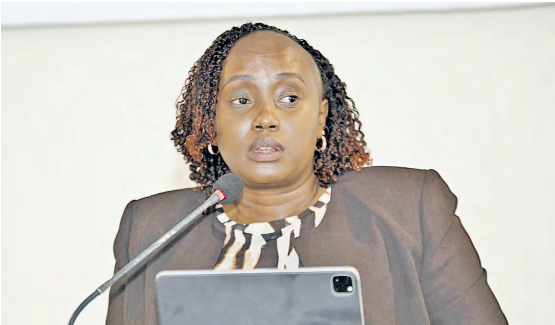
These were the words of the Kenya Development Corporation (KDC) boss, Norah Ratemo when the Star sought her views on the government’s plan to restructure, merge and dissolve 42 state agencies with duplicative roles in a bid to cut wastage of public resources.
The sweeping reforms announced late last month by the cabinet during President William Ruto’s tour in Kakamega will have the majority of state agencies merged (20), six restructured while the rest will either be divested or dissolved.
The Presidential Task Force on Parastatal Reforms, chaired by Abdikadir Mohamed which seeks to save the country close to Sh200 billion, highlighted inefficiencies, overlapping functions, and unsustainable financial hemorrhages as some of the greatest undoing of most of Kenya’s state entities.
As critics question the viability of merging as a cost-cutting measure, Ratemo who has overseen a smooth amalgamation of three Development Finance Institutions (DFIs) with cross-cutting functions into a single profitable entity simply flashes numbers.
She explains that before KDC, there the Industrial and Commercial Development Corporation, IDB Capital Limited, and the Tourism Finance Corporation existed in silos.
Although each had a specific mandate, their impact remained minimal due to resource constraints, inefficiencies, and fragmented strategic direction.
“Their merger streamlined operations, pooled financial and human resources, and created a more robust entity capable of tackling national development priorities more effectively,’’ says Ratemo.
According to her, they did a detailed skills analysis of employees from collapsed entities to resolve a mismatch crisis and ensure that the available human resources bring value.
“We started looking at capacity, capability and qualifications for everybody so that we pick up the development areas whether leadership or competencies and use that for our development plan. The impact has been a success story with the corporation achieving great milestones.”
The firm’s books seen by the Star show that while it started its inherited portfolio with a 78 per cent of non-performing loan (NPL) ratio in July 2021, it has implemented customer-centric financial solutions that have significantly reduced the NPL ratio.
Loans disbursed post-merger have performed particularly well, with a Portfolio at Risk (PAR) approaching the industry benchmark of 15 per cent.
Last year, the corporation’s revenues increased to Sh1.86 billion, coupled with growth in profitability driven by a 21.9 per cent reduction in expenditure.
She said that KDC has mobilized resources through flagship programmes like de-risking, inclusion, and value enhancement through tailored financial solutions.
For instance, it has an initiative supporting climate-vulnerable pastoral communities, and Supporting Access to Finance and Enterprise Recovery (SAFER), which supports businesses affected by the Covid-19 pandemic.
“Such resource mobilization initiatives were unthinkable with the former DFIs but have now been made possible by the merger. This positive growth shows the efficiencies gained through consolidation.”
She holds that mergers can offer other advantages beyond financial gains, particularly in terms of employee development and organizational growth.
She breathes hope in state employees who fear that the ongoing reforms will render them jobless saying that although mergers have wrongly been assumed to result in job losses, on the contrary, they can lead to job creation and greater job security.
“Merged entities can create a robust work environment offering better chances for professional development. Employees also gain access to peer-to-peer learning, enhanced training programs, exposure to diverse operational practices, and the potential for internal promotions within a larger organization.”
Ratemo insists that Kenya’s case is not an outlier as similar initiatives have been successful globally.
“A notable case is the United States Department of Homeland Security (DHS), established in 2003 by consolidating 22 federal agencies, including the U.S.”
She also cites the merger of Customs Service and the Federal Emergency Management Agency which aimed to unify national efforts against threats and has since enhanced the country’s ability to manage emergencies and security challenges.
She adds that the 2017 restructuring of Shenhua Group, which was China’s largest coal producer, and China Guodian Corporation, which was a leading power generator, to form the China Energy Investment Corporation (CIEC) has enabled the country to diversify its energy portfolio by integrating substantial clean energy assets, thereby reducing reliance on coal.
According to the Fortune Global 500 Ranking, CEIC is now one of the world’s largest companies, ranking position 84 globally in 2024.
Hassan Abubakar, Principal Secretary of the State Department for Investment Promotion while acknowledging the success at KDC cautions that with the planned reforms it should be noted that mergers alone aren’t magic bullets.
“Mergers present several challenges that organizations must navigate to achieve successful integration,’’ Abubakar told the Star.
According to him, cultural differences between merging entities are one major hurdle that should be dealt with from the first day. He explains that these can easily lead to conflicts and reduced employee morale if not properly managed.
He adds that ICT system integration can be difficult, leading to operational disruptions. Mergers demand proper execution, and, crucially, the right leadership to drive change.
Even so, he holds that for financial growth and independence, Kenya cannot afford to sustain redundant and underperforming state agencies.
“The government is right to take another shot at parastatal reforms, cutting waste, and streamlining service delivery. While mergers are not a silver bullet, the KDC case shows that when done right, they can create stronger, more resilient institutions capable of propelling the nation forward.”