Ken is actively pursuing a path towards sustainable tourism by implementing initiatives that prioritise environmental conservation, community engagement and responsible travel practices.
This strategy focuses on balancing the economic benefits of tourism with the preservation of natural ecosystems and local cultures. The sustainable tourism journey is guided by research both in the domestic and international markets.
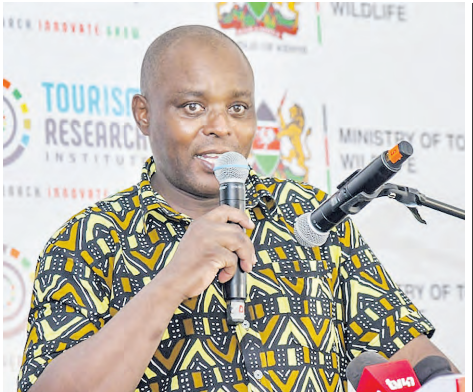
The Star spoke to the Tourism Research Institute (TRI) Acting CEO David Gitonga on the country’s sustainable tourism journey and growth in tourist numbers as industry eyes five million international arrivals, over Sh800 billion in revenue by 2027.
Who is Tourism Research Institute?
It is a state corporation established by the Tourism Act of 2011, to serve the research and knowledge management needs of the sector.
Functions include research on best practices, research on sustainability, competitiveness, product development, improving sector workforce, sector performance reporting, tourism impact analysis…so all research needs for the government both for policy and strategy; marketing, leadership and regulations among other needs and also the private sector and indeed the public are served by TRI.
The Institute started operations in 2019 and we ensure everybody continues to be well equipped with the right information and data to make informed decisions and drive Kenya’s tourism growth.
What is the importance of having research in tourism?
Tourism is a leading sector of our economy and Kenya is a leader in tourism not just in Africa but globally. Tourism research is very important as it influences a lot of decisions including policies and investments in a sector that has become very competitive globally.
Prior, we had the problem of not having the right information and data about the sector.
What does it take to build a strong research entity?
First, you have to adhere to the global research standards to ensure you give out quality research information and data that can be relied upon.
Then you have to ensure you are timely in delivering research information and that you have a clear policy on handling, processing and dissemination of information and be responsive to the market that you are serving.
How has your research and data impacted the tourism numbers and investments?
All the time we are analysing how the various markets are performing, both existing and new markets, we are able to inform the industry players on how the markets are looking like.
It also helps identify markets with huge potential and where we should put more focus on marketing activities to drive numbers.
We in addition analyse travel patterns, and spending by different demographics and source markets so as to advise on maximizing returns.
Another key focus area has been to ensure that we research on service quality expectations so that we are able to have a good match between what the visitors expect and the product and service quality.
To support tourism investments, there is also lots of data we have generated on the extent of investment in the sector and the level of investments required in various areas for tourism.
We have further developed the Tourism Satellite Account (TSA) within the UN Tourism framework so as to effectively report on the total impact of tourism on the economy in terms of contribution to GDP, employment, capital formation among other critical indicators.
This framework enables us to analyse and report on the impact of key events like impact of major MICE events on the economy(WRC Safari Rally is a major one we did analysis on).
The framework also came in handy to assess the impact of Covid 19 on tourism and the multiplier effect this had on the broader economy considering that tourism was the most affected sector and thence led by the Ministry of Tourism and Wildlife, the sector was able to then develope a recovery strategy.
One of the major ongoing works is a sector work force survey and skill gaps audit. This aims to answer to the concerns in the sector on the required work force training and skilling to answer to the ever-growing demand on service excellence by both international and domestic markets.
There are many other analysis on a daily basis as per requests by the government and other players in the sector and we have to be responsive to all.
In a nutshell what is sustainable
tourism?
Sustainable tourism is a concept that covers the complete tourism experience including concern for economic, social and environmental issues as well as attention to improving tourists’ experiences and addressing the concerns of host communities.
TRI recently released the country’s first sustainable tourism report, where are we as a country?
Kenya is well reputed in terms of sustainability basically because we are a nature-based tourism destination. But this is the first time we are doing a study that tells us about our status in terms of international benchmarks for tourism sustainability.
We went ahead to come out with three other outputs including what we need going forward in terms of international benchmarks, we included a framework for incentives and disincentives which can help the sector engage the government to drive sustainable practices in the sector for sustained competitiveness.
The other key output is the system of environmental-economic accounting based on UN Tourism framework which will allow us report on greenhouse gases emissions, waste being produced, energy resources and other resources.
This is in line with the commitments we gave as a country under the United Nations Framework Convention on Climate Change (UNFCCC), a process for negotiating an agreement to limit dangerous climate change.
What are the outstanding issues that need urgent attention? We need to improve more on waste management, energy and water use.
The areas we are lagging behind are green building standards, comprehensive recycling and green fleet management.
Other destinations have been able to move to even developed green bonds for the sector which has become a source of funding for the industry. We also need to get into the carbon markets. These are areas we need to put more focus on so that as a sector, we are able to benefit from green financing which will enhance our adaptation and mitigation on the effects of climate change, making us more sustainable as a destination and more competitive globally.
But still don’t forget that we are one of the destinations recognised by UN Tourism for sustainable practices. Investors must work closely with agencies mandated to drive the tourism agenda and get the standards right.
There has been a push to only allow non-fossil fuels to access national parks and game reserves. Where are we with that?
Yes, the industry is being encouraged to drop the use of fossil fuels like many other destinations are doing. This is to allow people to adopt. It is a conversation that is ongoing.
There are however incentives in place to enable people renew their vehicle fleets with electric vehicles being the most preferred. There are rebates on customs duty and other incentives.
How do you compare Kenya with other key African destinations in regards to sustainable tourism?
The country has made some significant strides. We led in banning single use plastics in our parks, the government also banned plastic bags in the country which was a bold move.
The areas we need to put more effort is coping with climate change; if we get that right, then we will continue to be leaders but we are among countries that are doing well.
This current report on sustainability and climate change is a result of
in-depth research with broad based
sector players engagement both in
public and private sectors.