The government is planning loan downgrades and targeted recovery strategies as some of the ‘radical’ measures to deal with those who have defaulted on their Hustler Fund loans for two years.
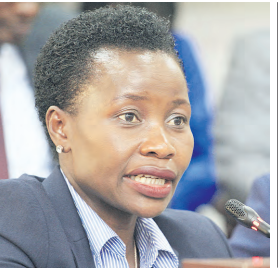
According to the State Department of Micro Small and Medium Enterprises (MSME) Development Principal Secretary, Susan Mang’eni, the fund has already established a credit rating system that will help in tracking down defaulters.
The rating scale ranges from A (excellent) to C3 (poor). Currently, six million Kenyans fall between A and B ratings, making them eligible for higher loan products.
“But now that we have achieved the credit rating, which was one of the key expected outcomes, we now know who is who and their default status.’’
Mang’eni revealed that the punishment defaulters, particularly borrowers rated C2 and C3, who borrowed in the initial months but failed to repay, she said that measures include loan downgrades and targeted collection strategies.
“Of what do we do to these people, for example, rating C3, who have had our loan outstanding even for two years? We have been forced to come up with some very radical measures. In doing so, we have to note that since it’s rehabilitation, we try to incentivize where it fails, then we see how to make sure this works.”
She noted that the fund has started a conversation with the six million Kenyans who reported a positive credit rating (A and B ratings) to access other credit products and integrate them into banking systems.
She further revealed that all 25.3 million Hustler Fund beneficiaries have been subjected to a credit rating system as a way of enhancing financial discipline.
“A pilot programme targeting 1.5 million top-tier borrowers resulted in the introduction of the Bridge Loan product. Since its launch two months ago, 210,000 Kenyans have enrolled, with total disbursements reaching Sh1.67 billion. Repayments currently stand at Sh1.054 billion, demonstrating strong liquidity,” said Mang’eni.
This comes at a time when President William Ruto’s flagship project is struggling to get back Sh12.5 billion in loans yet to be recovered as of February 24.
So far, Sh63.4 billion had been disbursed to about 25.3 million Kenyans as of Monday morning, and then the total repayment from that portfolio was Sh50.9 billion.
Data submitted to the National Assembly’s Committee on Trade, Industry, and Cooperatives show that the fund has achieved long-term savings of 70 per cent amounting to Sh2.9 billion.
The short-term saving, on the other hand, is Sh460 million, while voluntary saving is Sh369 million. Submissions before the James Gakuya-led committee show that the second hustler fund product— the group loan scheme—has seen 876,529 Kenyans express interest in forming lending groups.
However, only 14,601 groups have completed registration and received loan limits, with total disbursements standing at Sh196 million.
Challenges in digital on boarding have slowed adoption, but ongoing reforms aim to streamline the process.
Additionally, the Ministry of Cooperatives and MSMEs Development is requesting Sh500 million in the next budget to develop an internal digital platform for managing the Hustler Fund. This system will facilitate real-time reconciliation, reducing reliance on private service providers.
At the session, the Cabinet Secretary for Cooperatives and Micro, Small, and Medium Enterprises (MSMEs) Development, Wycliffe Oparanya called for additional funding to enable state agencies to effectively fulfill their mandates and complete ongoing projects.
He noted that several key priority areas in the Budget Policy Statement remained unfunded and urged the committee to support the State Department during the 2025/2026 budget allocation.
Among the critical unfunded areas in the State Department for Cooperatives, CS Oparanya highlighted a funding gap of Sh200 million for mobilization across eight value chains, Sh138 million for promoting good governance and accountability in cooperatives, and Sh4.1 billion for refurbishing primary coffee handling infrastructure, including the production and multiplication of coffee planting materials.
In the State Department for MSME Development, the Financial Inclusion Fund (Hustler Fund) requires an additional Sh8 billion for credit disbursement and Sh400 million for recurrent expenditure.
Additionally, the Uwezo Fund needs Sh168.6 million for Constituency Uwezo Fund Management Committees and Sh450 million for re-engineering the fund.