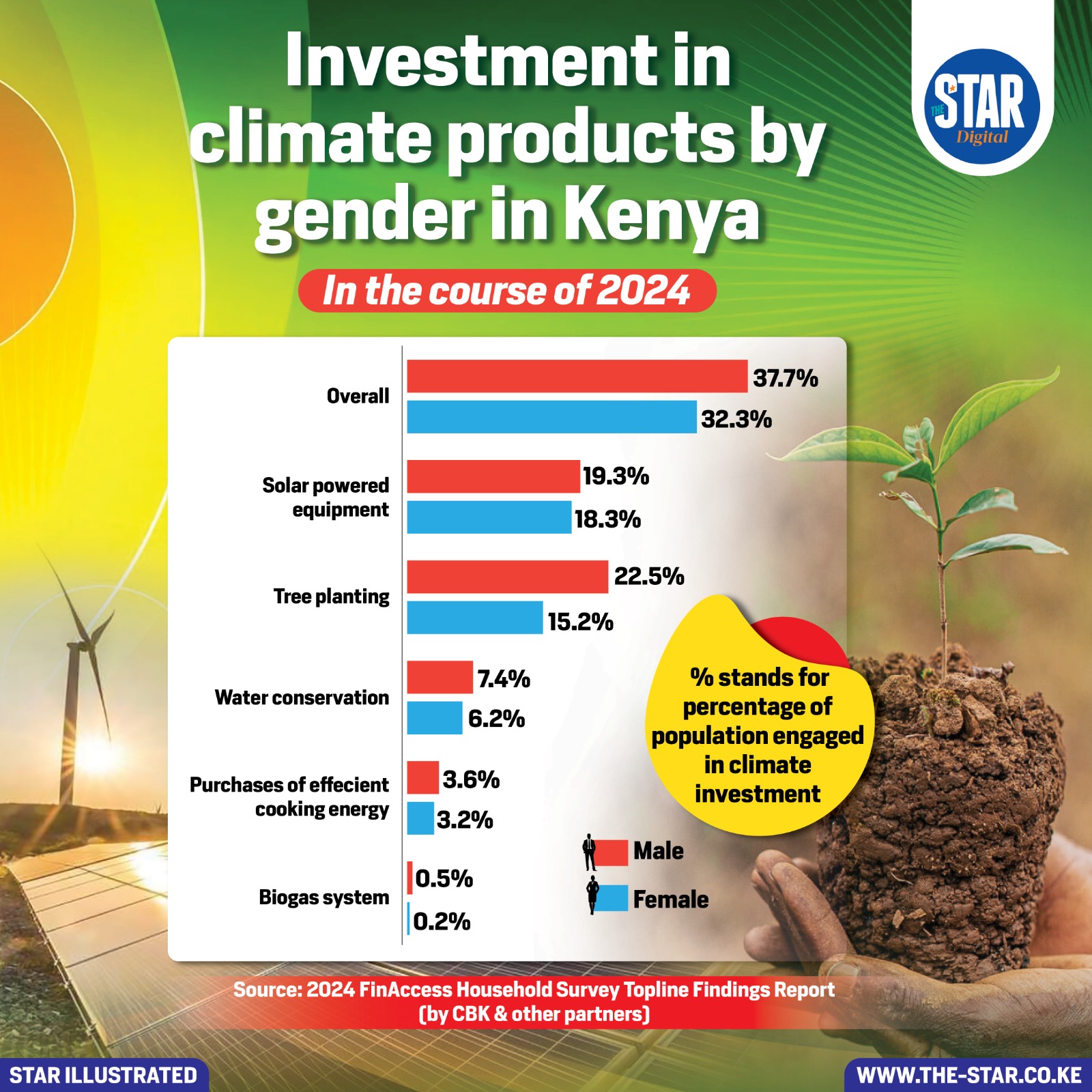
Water conservation and management shows similar gender-based patterns though with smaller gaps (7.4 per cent for males vs 6.2 per cent for females).
Lower-cost interventions like energy-efficient cooking stoves show more balanced adoption rates (3.6 per cent males vs 3.2 per cent females), while high-cost investments like biogas systems have a slight male preference (0.5 per cent vs 0.2 per cent for females).
These patterns
suggest that gender disparities in
climate investments may be influenced
by factors such as access to resources,
land ownership, and decision-making
power within households.