A new report shows that your birthplace, ethnicity, gender, and parental
background, coupled with market
and institutional distortions could
determine your destiny.
The World Bank report further indicates that unequal and limited access to jobs, finance, and public services such as education and healthcare have increased inequality and stalled poverty reduction in Sub-Saharan Africa.
The report titled Levelling the Playing Field: Addressing Structural Inequalities to Accelerate Poverty Reduction in Africa was released on Thursday.
It ranks the continent as the world’s second most unequal region after Latin America, and the only one where extreme poverty reduction has stalled in recent years.
While extreme poverty – defined as people who live on less than $2.15 (Sh325 ) a day – has rapidly declined globally to single digits, Africa’s extreme poverty rate stood at 38 per cent in 2022, the highest among all regions.
While the region today hosts 60 per cent of the globe’s extremely poor population, this share could rise to 87 per cent by 2030, without significant reforms.
The report suggests that poverty reduction strategies should focus on broadening opportunities. It cites Kenya’s market-friendly financial products, such as mobile money, and how it has helped to boost financial inclusion and households’ ability to cope with shocks, as among the key steps the continent must take to broaden opportunities.
Others are Ethiopia’s expansion of land user rights, helping to promote investment in agriculture.
In Ghana, investments in primary education led to increases in completion rates, while partial market liberalization of the cocoa sector, along with investment in research, disease control, and credit programmes, led to increases in agricultural incomes.
“There is nothing inevitable about structural inequalities. As successful country examples show, barriers to opportunities can be removed and replaced with well-designed policies that allow people to build their productive capacities and open access to jobs and markets,” says Nistha Sinha, co-author of the report.
The region overall has struggled to transform economic growth into poverty reduction, largely because of high inequality.
In particular, the report highlights that many people are born into circumstances that severely limit their future opportunities.
For instance, children from the poorest 20 per cent of the population are least likely to finish school on time, and on average, only 32 per cent of poor households have access to electricity, compared to nearly 70 per cent for non-poor households.
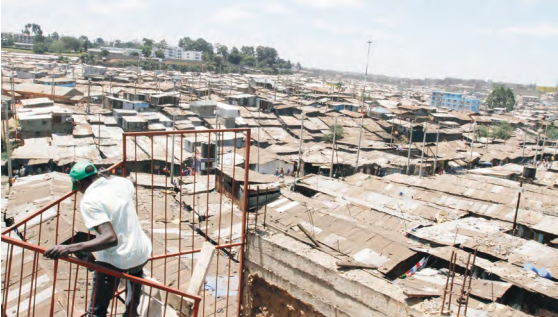
These differences are compounded by market and institutional distortions that prevent people from reaching their productive potential, perpetuating cycles of poverty, with poor young people forced into low-paying, insecure jobs in the informal sector.
Despite the limitations, the continent is poised for greater growth ahead. For instance, it has the talent potential of the 8–11 million youths expected to enter the labour market each year between 2020 and 2050 and the significant revenue potential from green minerals to support a clean energy transition.
To realise this, the report says the continent must foster strong economic and institutional foundations by promoting macroeconomic and fiscal stability and ensuring the institutional framework eliminates barriers to competition, prevents undue privilege, and safeguards property rights to allow productive firms, farms, and workers to prosper.
It should also address inequalities in acquiring human capital and other assets to build productive capacity by investing in education, health, and basic infrastructure to significantly enhance workers’ productive capacity.
World Bank says Africa should enable markets to function well, boost
the use of productive capacity, and
create jobs and better earnings opportunities.