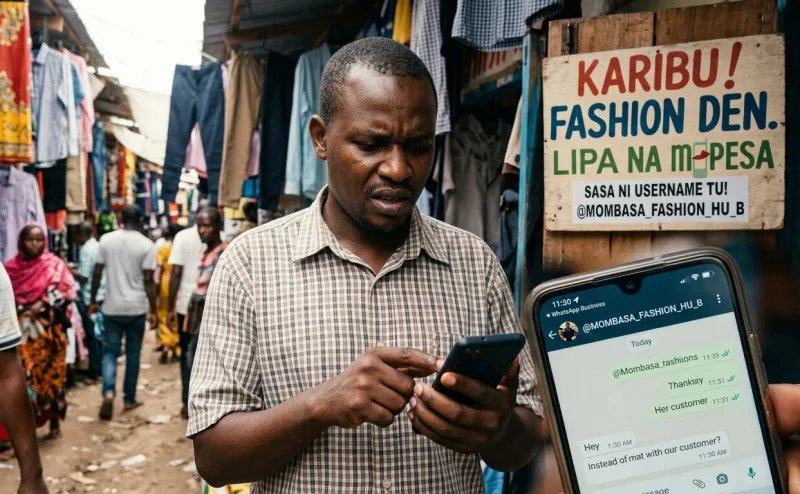
The day is meant to celebrate men’s achievements, but this feels increasingly difficult in a world where many men are struggling to make their mark.
In today’s fast-paced society, taking pride in one’s accomplishments as a man seems more challenging than ever.
Why is this the case? Perhaps it’s because the standards for modern masculinity feel out of reach for many when compared to the towering achievements of the men who came before us.
For most men, success is commonly measured through tangible accomplishments—chiefly financial stability.

According to the Kenya National Bureau of Statistics (KNBS), youth unemployment, which disproportionately affects men under 35, stands at 13%, with many more grappling with underemployment.
Even those who are employed face financial struggles; data shows that over half of Kenya’s workforce earns below Sh50,000 monthly, barely enough to meet basic needs in urban centers.
Another key benchmark is having a wife and family—a milestone that is increasingly delayed or outright unattainable for many men under 35.
The 2019 Kenyan Census revealed a decline in marriage rates among younger men, often attributed to financial instability.
Additionally, with the rising cost of living—Kenya's inflation rate hovered around 6.7% in 2024—the ability to sustain a household remains a distant dream for many.
This reality begs the question: Should we redefine what success looks like for the modern man? Maybe. But would this shift in mindset be viewed as cowardly or unambitious?
Historically, the African man’s role has been closely tied to producing and providing—offering financial security, protection, and a legacy.

While these values are admirable, they may no longer suffice in a world where emotional intelligence and community impact are gaining recognition.
Could success be measured in strength of character or how men treat their friends, families, and the less fortunate?
Kenya is a society deeply rooted in communal values, yet these softer markers of success often take a backseat to material accomplishments.
Even though acts of kindness and community service carry immense societal value, they are rarely celebrated as key indicators of masculinity.
Or could success lie in embracing traditionally "feminine" traits such as empathy, vulnerability, and emotional resilience?
With male suicide rates accounting for over 70% of cases in Kenya (according to the Ministry of Health), emotional well-being is a critical issue.

Even with these suggestions, the true male experience in Kenya still seems inseparable from the markers of producing and providing for those we care about.
Whether it’s paying for siblings’ education, supporting aging parents, or starting a business to employ others, a man’s worth is frequently judged by his contributions to others.
And therein lies the challenge: Kenyan society remains largely tethered to traditional metrics of masculinity, which are increasingly difficult for many Kenyan men to attain.
Can we change those metrics, and more importantly, should we?
NB: The opinions expressed in this article are solely those of the author.