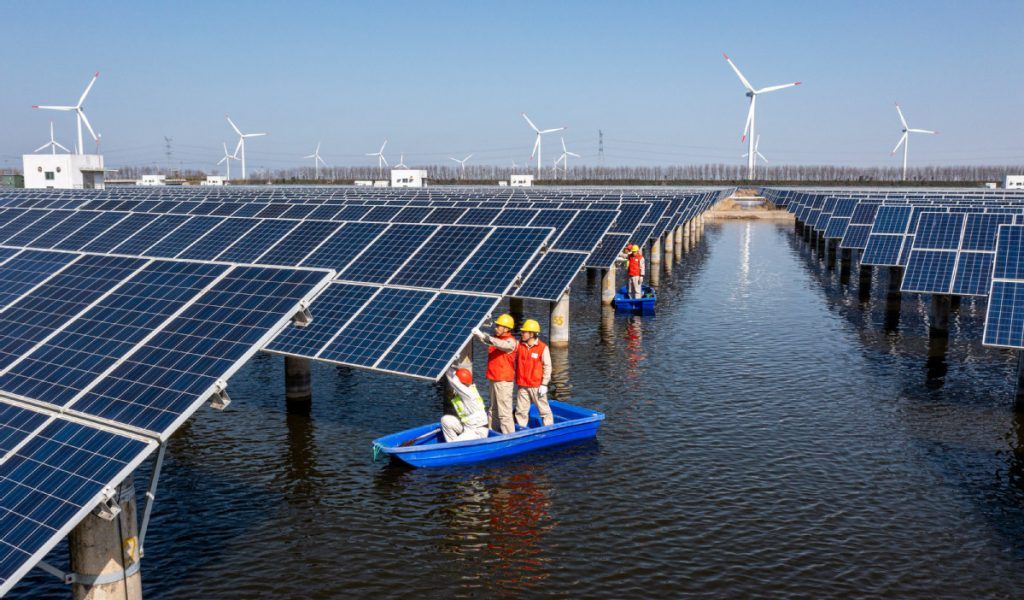
Chinese workers inspect photovoltaic power generation facilities in Hai'an East, Jiangsu province, on March 15, 2022/ Xinhua
BY STEPHEN NDEGWA
China’s economic growth in
October 2024 provides a clear indication of steady progress and resilience
amidst global uncertainties. Bolstered by a combination of strategic policy
measures, domestic demand and technological advancements, the world’s
second-largest economy continues to demonstrate its capacity to adapt and
thrive. The latest data highlights robust performances across various sectors,
offering optimism not just for China but for the global economy.
According to the National
Bureau of Statistics, China’s GDP expanded by 4.8% year-to-date by the close of
the third quarter, reaching ¥94.97 trillion (approximately $13.34 trillion).
Industrial output grew by 4.5% year-on-year in October, with high-tech
manufacturing playing a crucial role, posting a 6.2% increase. These gains are
particularly significant as they showcase China’s ability to align its economic
recovery with long-term goals of modernisation and sustainability.
The consumer market also
displayed strong performance, driven by a resurgence in retail activity. Retail
sales grew by 7.6% year-on-year, with online physical goods sales increasing by
12.5%. This growth reflects the effectiveness of measures to boost domestic
consumption, such as tax reductions for middle-income households and subsidies
for rural buyers. Moreover, October’s week-long National Day holiday provided a
notable boost to consumer spending, with billions spent on tourism, dining and
shopping.
One of the hallmarks of
China’s economic progress has been its strategic focus on technological
innovation and green energy. Investment in high-tech sectors, such as
semiconductors, robotics, and artificial intelligence, has surged. These
industries are not only driving growth domestically but also positioning China
as a global leader in cutting-edge technologies.
Simultaneously, China’s push
for renewable energy continues to be a standout feature of its economy. As the
world’s largest producer of solar panels, wind turbines and electric vehicles,
the country is playing a pivotal role in global efforts to combat climate
change. Investments in renewable energy projects rose sharply in October,
contributing to a 3.2% increase in fixed-asset investment. Such efforts align
with China’s goal of achieving carbon neutrality by 2060, reinforcing its
commitment to sustainable development.
Despite global economic
challenges, including weakened demand in key markets, China’s trade figures
remain resilient. Exports grew by 5.3% during the first three quarters,
supported by strong performances in sectors such as electric vehicles,
machinery and solar technology. This growth underscores the success of China’s
"dual circulation" strategy, which aims to balance domestic economic
activity with international trade. Notably, China’s trade ties with emerging
markets, including countries in Africa and Southeast Asia, have deepened,
providing stability amid fluctuating demand from traditional markets in Europe
and North America.
The domestic economy has
emerged as a key driver of growth, reflecting efforts to shift reliance away
from exports. Retail data from October showed a significant increase in
spending on household goods, electronics and automobiles. Online shopping
festivals, such as Double 11, further boosted consumer confidence, with
billions in sales recorded within hours. The government’s proactive stance in
stimulating consumption, such as by easing borrowing restrictions and
implementing tax relief measures, has significantly contributed to these
outcomes.
While China’s overall growth
figures are impressive, regional disparities remain a challenge. Coastal
provinces like Guangdong and Jiangsu, driven by their export-oriented
industries, continue to outperform the less-developed inland regions. However,
initiatives under the Belt and Road framework and targeted infrastructure
investments are helping to bridge these gaps. Development in logistics,
transportation and digital infrastructure is creating new opportunities in
previously underperforming areas, gradually reducing inequalities and enhancing
the economic inclusivity of the broader recovery.
China has shown an ability to
tackle such issues proactively. Measures to stabilise the property sector,
including refinancing options and support for struggling developers, are
beginning to restore confidence. Additionally, reforms to improve local
government fiscal health, such as the issuance of special-purpose bonds, are
helping to mitigate debt risks.
As China accelerates its
digital economy and embraces artificial intelligence, it is poised to capture
significant growth potential. Moreover, the nation’s commitment to green
technologies ensures it will remain a leader in the global transition to a
sustainable future.
China’s steady economic
progress in October holds significant implications for the global economy. As a
major consumer of raw materials and a leading exporter of manufactured goods,
China’s recovery supports demand in commodity-exporting nations, particularly
in Africa and Latin America. Furthermore, its leadership in renewable energy is
accelerating the global shift toward cleaner technologies, with ripple effects
across industries and markets worldwide.
Looking ahead, China remains
on track to achieve its annual GDP growth target of approximately 5%. The
combination of robust domestic demand, sustained technological advancements,
and strategic global partnerships positions the economy for continued stability
and growth. As the year heads to a close, the world will continue to watch
China’s economic journey with keen interest, recognising its pivotal role in
shaping the future of the global economy.
Stephen Ndegwa is the Executive Director of South-South Dialogues, a Nairobi-based communications development think tank, and a PhD student at the United States International University-Africa.