You probably no longer see some trees and rodents that were common in your childhood.
If nothing is done they will be completely forgotten.
This is according to the latest IUCN Red List of Threatened Species, a globally recognised record that identifies species most at risk of extinction.
The current issue lists trees, animals and other living things facing extinction, including some in Kenya.
It was released ahead of the ongoing COP29 UN climate conference in Azerbaijan.
The list shows that more than one in three tree species worldwide face extinction.
"Today, we are releasing the global assessment of the world’s trees on the IUCN Red List, which shows that more than one in three tree species are threatened with extinction. ,” Dr Grethel Aguilar, IUCN director general said in a statement.
"Trees are essential to support life on earth through their vital role in ecosystems, and millions of people depend upon them for their lives and livelihoods."
In Kenya, there are 1,100 native tree species, of which 10 per cent are threatened with extinction, according to the list.
Many of them are no longer in living memory of most Kenyans as they are only left in forests.
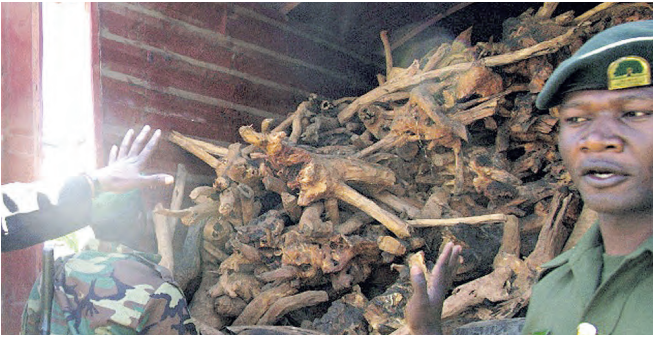
Inside the Kakamega Forest, for instance, indigenous trees like the Mondia Whitei, Fagara and Olea Capensisi are facing extinction due to illegal timber harvesting, charcoal burning, and human settlements.
The IUCN Red List shows globally, at least 16,425 of the 47,282 species assessed are at risk of extinction.
The number of threatened trees is now more than double the number of all threatened birds, mammals, reptiles and amphibians combined.
“This comprehensive assessment presents the first global picture of the conservation status of trees, which enables us to make better informed conservation decisions and take action to protect trees where it is urgently needed,” Dr Malin Rivers, global tree assessment lead at Botanic Gardens Conservation International, a Red List Partner said.
“The work is a global effort, with over 1,000 tree experts involved. We need to continue to work together to scale up local, national and international tree conservation action to support people and the planet.”
The IUCN Red List also shows that the loss of trees is a major threat to thousands of other plants, fungi and animals.
As a defining component of many ecosystems, trees are fundamental to life on Earth through their role in carbon, water and nutrient cycles, soil formation and climate regulation.
People also depend on trees, with over 5,000 of the tree species on the IUCN Red List used for timber in construction, and more than 2,000 species for medicines, food and fuels respectively.
In Kenya, Kakamega rainforest
is the biggest source of indigenous
trees in East Africa, the majority of
which are a source traditional medicine used to cure common ailments
like malaria, flu, epilepsy, barrenness, erectile dysfunction among
others