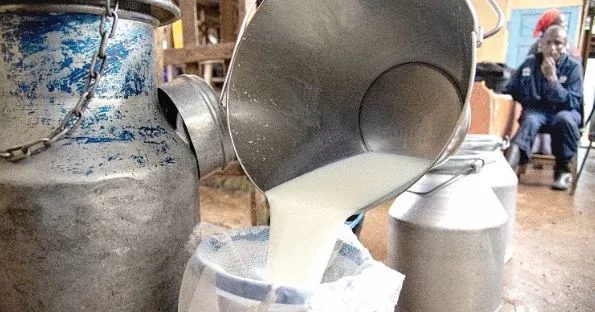
The government is seeking to introduce milk testing equipment at 250 sites across the country as part of efforts to expand a payment system that rewards dairy farmers based on the quality of their produce.
The Ministry of Agriculture and Livestock Development, through the State Department for Livestock Development, has invited bids from companies to supply and deliver the milk analysers under the Livestock Value Chain Support Project.
According to a tender notice, the equipment will support dairy producer organisations in adopting a quality-based payment system, under which the quality of milk supplied by farmers will inform how much they earn.
The proposed approach is intended to move beyond a system that largely rewards farmers according to the quantity of milk delivered, by giving them an incentive to improve its quality.
Milk quality can be assessed through parameters such as butterfat and protein content, bacterial levels, hygiene and the presence of adulterants. However, the tender notice does not specify the exact tests the equipment will conduct or the standards that will determine farmers' payments.
Kenya has previously explored quality-based milk payments. A 2023 study published in the NJAS: Impact in Agricultural and Life Sciences examined a pilot involving a dairy processor in Nakuru County, where farmers received different prices depending on the quality grades of their milk.
Under that pilot, farmers supplying higher-grade milk received additional payments, while the assessment considered factors including bacterial contamination, antibiotic residues, added water, total solids, fat and protein content.
The approach is also supported by existing regulations. The Dairy Industry (Pricing of Dairy Produce) Regulations, 2020 provide for milk quality to be considered when determining prices, alongside production costs, seasonal changes and other factors affecting the dairy sector.
Separately, the Dairy Industry (Dairy Produce Safety) Regulations, 2020 require dairy business operators to examine, test and grade milk before accepting it.
The push for improved testing comes amid concerns about milk safety and handling practices.
A study on milk quality in Kenya's dairy value chains, published in 2021, found contamination in samples collected from different points in the supply chain, including farms, collection centres and retail outlets.
The researchers reported that some samples contained added water, while others showed bacterial contamination, highlighting the importance of stronger quality controls throughout the dairy chain.
The latest procurement is therefore expected to provide dairy producer organisations with equipment to assess milk quality more consistently and support the implementation of quality-based payments.
The tender, listed under reference number SDFD/736/0091/2026-2027, has a security requirement of Sh1 million.
The procurement will be conducted through open national competitive bidding, with interested firms required to submit their applications electronically through the government's e-GP platform.
Bids are due by December 9, 2026, at 11 am. Companies seeking to participate must register on the platform through egpkenya.go.ke to access the tender documents.
The State Department has advised bidders experiencing difficulties accessing or uploading documents to seek assistance from the e-GP Help Desk at KISM Towers.