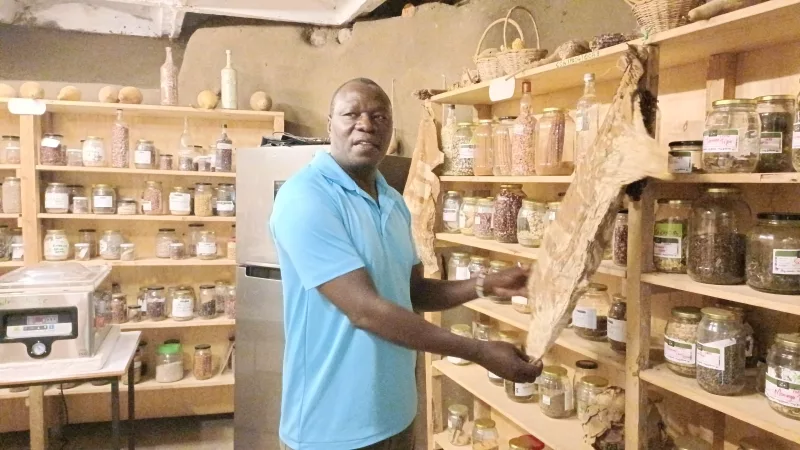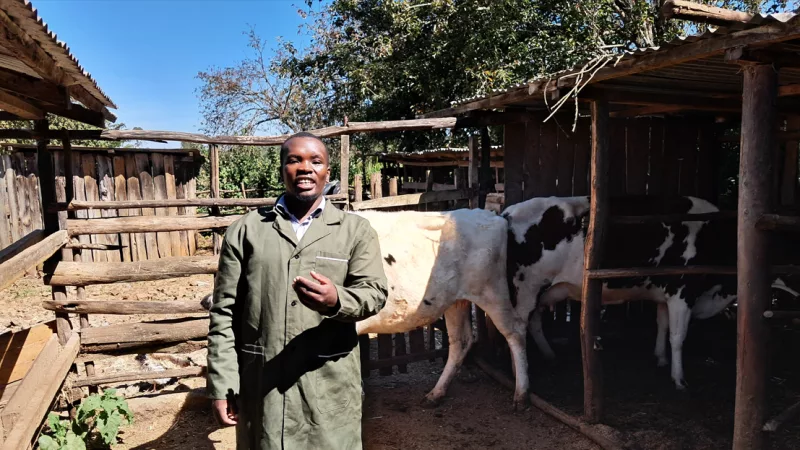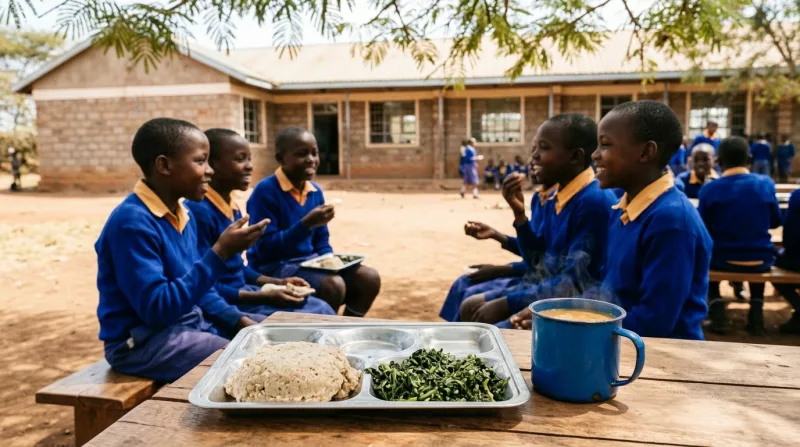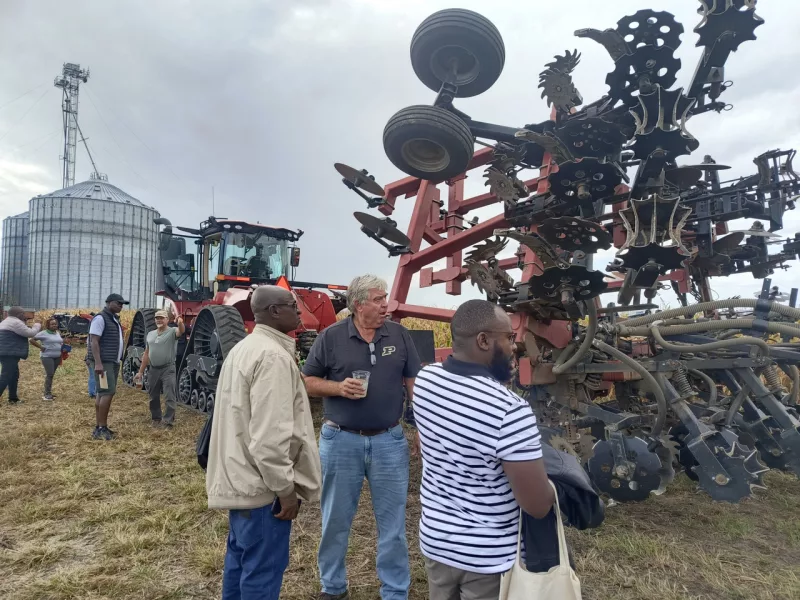
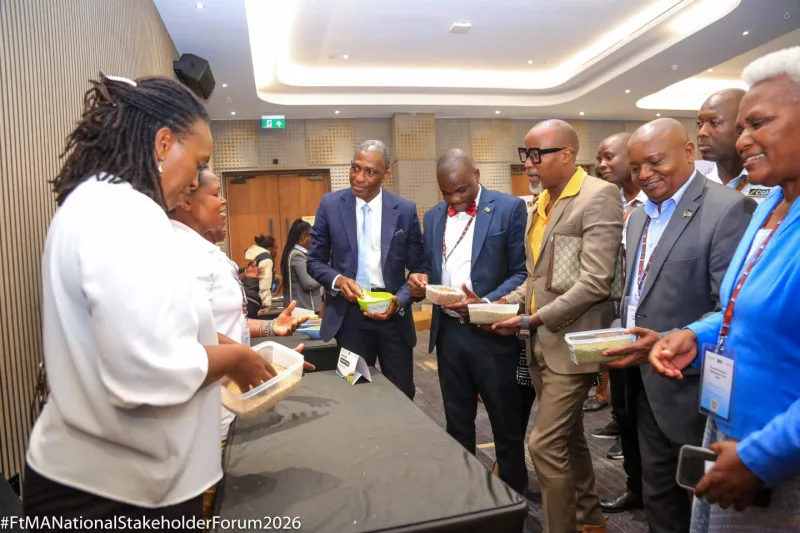
Farmers can now access inputs and market for their produce closer, thanks to the establishment of service centres.
Farmer service centres are helping smallholder growers access agricultural inputs, equipment, training and markets closer to home, reducing the cost of production and creating new business opportunities in rural communities.
The centres, established under the Farm to Market Alliance Initiative, have expanded to 13 counties, with plans to reach 10 more regions next year.
George Njoroge, country coordinator of Farm to Market Alliance and Climate Resilient Food Systems at the World Food Programme (WFP), said the centres were established to address the challenge of farmers travelling long distances to access essential services.
"Farmers can access services, inputs and markets nearest to their locality, allowing them to spend more time on their farms rather than sourcing for services," he said.
The centres have also helped farmers aggregate their produce, making it easier for private sector players to engage smallholders who would otherwise struggle to meet the volumes required by buyers.
Through aggregation, farmers can negotiate better prices, benefit from bulk discounts on inputs and connect with wider markets.
Njoroge said the centres also provide training, agricultural information and access to services such as tractor hire, while offering government agencies a platform to reach farmers and monitor agricultural activities at the grassroots.
The initiative started in Migori and Meru counties before gradually expanding to 13 counties.
The first four years focused on learning how to organise farmers, identify suitable local operators and build partnerships with government and private sector players, while the subsequent five years focused on expansion.
The programme is now seeking to scale up to 23 counties, including 10 additional counties especially in arid and semi-arid regions.
"We now have a blueprint that can be scaled countrywide. We do not want it to remain a WFP programme but become a national initiative that other partners can adopt and implement," he said.
However, he noted that access to markets alone was no longer sufficient, with farmers needing greater certainty about prices, quality requirements and demand before planting.
He said buyers needed to engage farmers before production so they could plan what to grow, how much to invest and where to sell their produce.
This would also help farmers access financing because they would have a clearer picture of their expected markets and returns.
Njoroge said some progress had been made in value chains such as soya beans and sorghum, but more needed to be done to strengthen agreements between farmers and buyers.
WFP Kenya Deputy Country Director Bai Sankoh said the centres have also created opportunities for young people and women to participate in agriculture by supporting rural enterprises and employment.
He said the centres had reduced the average distance farmers travel to access agricultural services from between two and five kilometres to about 2km.
"We have seen young people and women start businesses at the grassroots and employ more youths within their own sectors," Sankoh said.
Cereal Growers Association chief executive Anthony Kioko said the initiative had made progress in improving access to inputs, markets and climate-related support, but warned that more investment and partnerships were needed to expand its reach.
He said access to quality seeds, fertiliser and crop protection products remained a major concern, particularly where farmers lacked reliable agro-dealers and adequate information on the correct use of inputs.
Kioko said bringing input suppliers closer to farmers and strengthening training had helped improve productivity.
He, however, cautioned that the ongoing drought had worsened the situation for cereal farmers, with some losing their crops after the rains failed and hopes of a second planting season fading.
He called for stronger collaboration and support to help affected farmers resume production.
The planned expansion and digitisation of the centres are expected to strengthen market information and connect farmers with service providers through an open-source system that can be used by different partners.