Here in Nairobi, the global headquarters of the United Nations Human Settlements Programme (UN-Habitat), conversations about the future of our continent’s cities carry a unique urgency.
“Serving as the pioneering city where this transformation took root, Addis Ababa is reclaiming neglected riverfronts into flourishing ecological parks and climate-resilient neighborhoods.”
Africa’s cities are both among the most rapidly growing in the world and the most underserved by modern infrastructure. According to recent data from the African Development Bank (AfDB), the continent faces a staggering annual infrastructure financing shortfall estimated at $130 billion to $170 billion, even as Africa’s urban population is projected to double from roughly 704 million to 1.4 billion people by 2050. Standing on the front lines of climate change, Africa cannot afford mere concrete expansion; we must embed climate-resilient, green policies into the very core of our urban growth.
For decades, the prevailing narrative has suggested that African cities can only solve this dual crisis through slow, externally dictated master plans. Yet, across Addis Ababa and stretching deep into Ethiopia’s regional towns and rural heartlands, a bold counter-narrative is unfolding. Guided by the homegrown philosophy of Medemer (synergy), Ethiopia’s Integrated Corridor Development Initiative anchored by a comprehensive green urban framework proves that African cities can be designed and built by Africans, for Africans, in an unmistakably African way.
BEYOND ASPHALT: CLIMATE-RESILIENT, PEOPLE-CENTERED URBANISM IN ADDIS ABABA
When observers first hear the term “corridor development,” it is easy to mistake it for a standard road-widening campaign. Ethiopia’s corridor initiative is a comprehensive reimagining of human dignity, climate-resilient public space, and urban livability. As the pioneering city where this transformation began, Addis Ababa has set a rapid pace completing the 40-kilometre Phase 1 and 132-kilometre Phase 2, and now executing Phase 3 alongside a 22-kilometre riverside revitalisation project.
Rather than prioritising private vehicles alone, these corridors integrate wide pedestrian walkways, dedicated cycling lanes, smart street lighting, modern storm drainage, and lush green canopies, reclaiming eroded terrain and neglected riverfronts into flourishing ecological parks, low-carbon transport networks, and climate-resilient urban neighbourhoods.
In addition to that, through round-the-clock construction shifts, modern, fully serviced residential complexes complete with electricity, water, sanitation, playgrounds, and community facilities have been built and handed over to relocated families in record timeframes as short as four months.
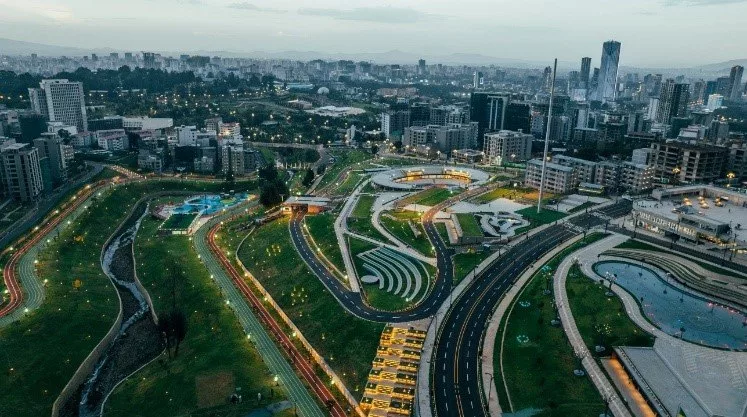
This transformation is most visible in Addis Ababa’s elevated standing as Africa’s diplomatic capital. Through world-class design, the corridor project has made the African Union (AU) headquarters far more convenient for global guests, with visiting heads of state, diplomats, and diaspora routinely praising how completely the city has evolved in just two years from a transit hub into a premier destination.
FROM THE CAPITAL TO REGIONAL CITIES & RURAL VILLAGES
Perhaps the most transformative aspect of this initiative is that it does not stop at the borders of the capital. As H.E. Prime Minister Abiy Ahmed (PhD) has emphasised, urban renewal is a national right.
Today, the Corridor Development Programme has expanded to more than 60 regional cities and towns across Ethiopia.
From the lakeside promenades of Bahir Dar, Hawassa, and Bishoftu to the newly inaugurated corridors of Arba Minch and Jimma, regional hubs are adapting the corridor model to fit their unique local landscapes, tourism potential, and economic priorities.
Even more groundbreaking is the launch of the Rural Corridor Development Program. Recognising that true transformation cannot leave rural communities behind, Ethiopia is bringing integrated planning, clean water, organised housing, green spaces, and market connectivity directly to villages.
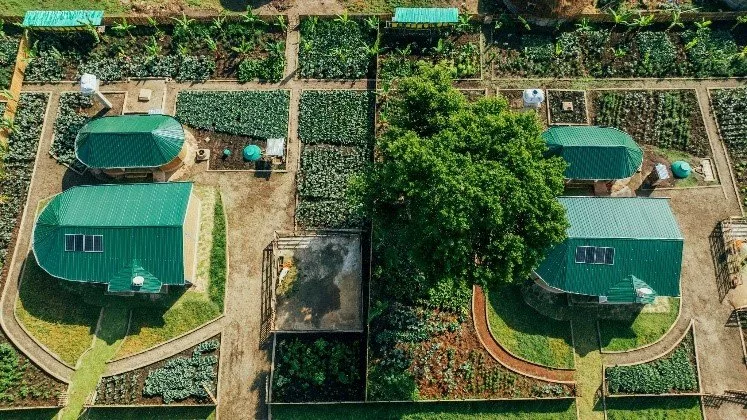
Central to this model is off-grid solar lighting, which replaces polluting fuels and establishes clean, climate-resilient settlements while preserving agrarian Ethiopia’s rich social fabric.
LEADING AFRICA’S CLEAN MOBILITY REVOLUTION
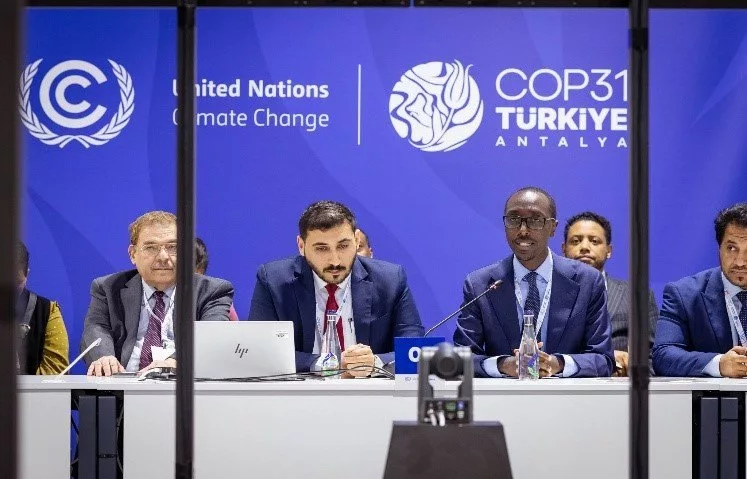
Over the past week, as world leaders gathered in Antalya, Türkiye, for COP31, Ethiopia has stood apart by moving beyond rhetoric translating climate commitments into decisive policy and tangible action on the ground.
Nowhere is this more evident than in Ethiopia’s clean mobility revolution. In 2024, Ethiopia became the first country in the world to ban the import of non-electric passenger vehicles, backed by sweeping tax exemptions and a national E-Mobility Strategy. Powered by a 96% clean-energy grid, our EV fleet has grown from 7,000 in 2022 to over 115,000 vehicles today, alongside Africa’s largest municipal electric bus fleet in Addis Ababa.
• Welcome to the Land of Origins, Ethiopia! • KARIBUNI SANA ETHIOPIA! • ኢትዮጵያን ይጎብኙ!
The newly constructed corridors are engineered for a clean-energy future, integrating dedicated bus rapid transit (BRT) lanes and fast-charging stations across urban arteries and regional highways. By designing streets for electric mobility rather than fossil fuels, Ethiopia is reducing its annual fuel import burden, clearing urban air, and delivering practical climate action.
THE ROAD TO COP32: CHAMPIONING GREEN URBANISM
As the global community looks from the ongoing deliberations in Antalya toward the future, it is no coincidence that Ethiopia has been officially selected to host the 32nd UN Climate Change Conference (COP32) in Addis Ababa in November 2027.
At COP31 in Antalya, Ethiopia’s Foreign Minister and incoming COP32 President-Designate, H.E. Dr. Gedion Timothewos, articulated a clear, action-driven vision for the road ahead. Addressing world leaders, he emphasised the urgent need to rebuild trust in climate multilateralism by moving “from repeated declarations to measurable delivery.” Ethiopia’s core stances center on securing accessible climate finance including lower capital costs and debt relief accelerating technology transfer, and reframing Africa not merely as a climate victim, but as a proactive hub of green solutions.
Ethiopia’s legitimacy to lead this global transition is anchored in lived, measurable environmental action at home. Working through our comprehensive green urban framework alongside our historic Green Legacy Initiative, which has planted over 56 billion seedlings and lifted Ethiopia’s national forest coverage from 17.2% to 23.6%, Ethiopia is turning degraded landscapes and urban riverbanks into thriving forests, zero-emission transit arteries, and climate-resilient communities.
When Africans design for Africans, we do not just build roads we build resilient communities, shared prosperity, and a sustainable, green future. To our brothers and sisters in Kenya and friends from around the world, our doors are wide open to experience this transformation firsthand as Addis Ababa prepares to welcome the world to COP32!