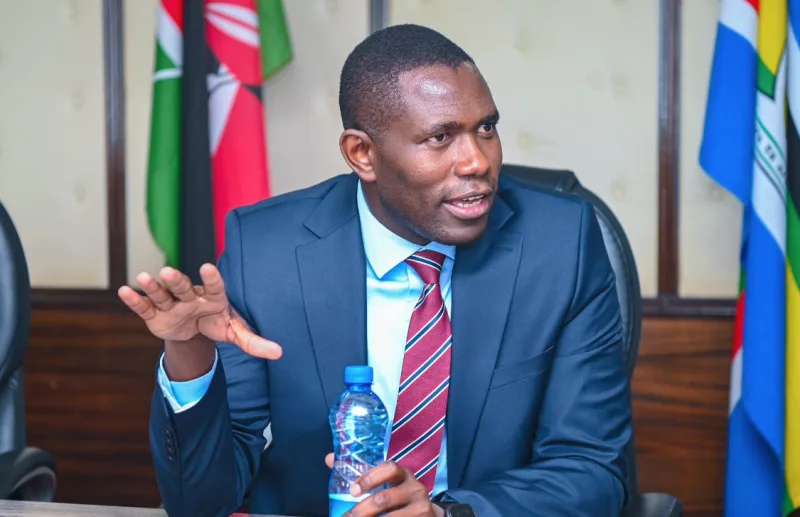
Medical Services Principal Secretary Ouma Oluga has warned that poor-quality healthcare is driving up treatment costs and contributing to avoidable deaths, as patients develop complications from conditions that could have been diagnosed and treated earlier.
Oluga said missed diagnoses can turn minor infections into serious conditions requiring intensive care, placing a heavier financial burden on the government and patients.
Speaking on Thursday, during a stakeholder engagement on the operationalisation of the Kenya-US Health Cooperation Framework, Oluga said the country continued to pay heavily for gaps in the quality of healthcare.
He cited cases where infections that could have been treated with inexpensive medication progressed to severe illnesses requiring intensive care.
"Poor quality is the most expensive thing in any healthcare system. It's the most expensive thing in any system and you know it," Oluga said.
"The cost of a misdiagnosis becomes a late stage admission. And a late stage admission ends up in an ICU with a very heavy bill that you push back the government to put in the Social Health Authority benefit package."
Oluga said some patients ended up in intensive care after infections that could have been identified and treated at an early stage.
He gave the example of sepsis, saying an infection that could initially have been treated with medicine costing about Sh300 could progress into a life-threatening condition when not identified early.
"Perhaps because of a sepsis that could have been identified earlier as a small infection that would have been treated with a medicine of Sh300 we still lose that patient," he said.
Oluga said this meant the Social Health Authority could end up paying for expensive treatment without saving the patient's life.
"So SHA has paid very expensively but the patient has died," he said.
The PS made the remarks during a high-level stakeholder engagement convened to advance the implementation of the Kenya-US Health Cooperation Framework, with discussions focusing on a transition towards a sustainable, resilient and government-led health system.
In a statement after the event, Oluga acknowledged the longstanding health partnership between Kenya and the United States, noting its contribution to HIV, malaria, tuberculosis, maternal and neonatal health, health workforce development and disease surveillance.
He said the transition needed to safeguard the gains made through the partnership while strengthening the country's capacity to finance and deliver healthcare.