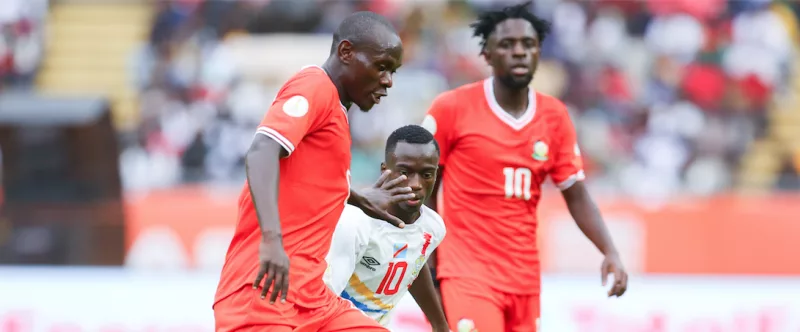
Kenyan football is once again standing on the edge of a dangerous precipice, with the bitter power struggle at the Football Kenya Federation (FKF) threatening to plunge the country back into the international wilderness it painfully escaped barely four years ago.
The battle for control of Kandanda House at Goal Project in Kasarani, Nairobi, has turned into a bruising war of authority, accusations and constitutional disputes, with the spectre of another FIFA suspension hovering ominously over a country preparing to co-host the 2027 Africa Cup of Nations.
The stakes could hardly be higher. Unless the warring camps sheath their swords, respect the federation's constitution and find common ground, Kenyan football could once again become the casualty of a fight being waged far away from the touchline.
Kenya is preparing to share the AFCON 2027 stage with Uganda and Tanzania in what promises to be a defining moment for East African football. The assignment demands a united federation, efficient administration and close cooperation between the government, FKF, FIFA and the Confederation of African Football (CAF).
Instead, Kandanda House has become a theatre of political manoeuvring, accusations and deepening mistrust. The November 7 Special General Meeting (SGM) in Meru, which resulted in the suspension of Vice President McDonald Mariga and six National Executive Committee (NEC) members, has thrown fresh fuel onto an already raging fire.
FIFA governance manager Bruno Comicholi had already raised questions about a parallel NEC meeting planned for November 4 at Nairobi's Tamarind Hotel, questioning whether the process complied with Article 38 of the FKF Constitution.
“Consequently, the conditions under which NEC members may themselves convene a meeting pursuant to Article 38.2 do not appear to be fulfilled,” Comicholi stated.
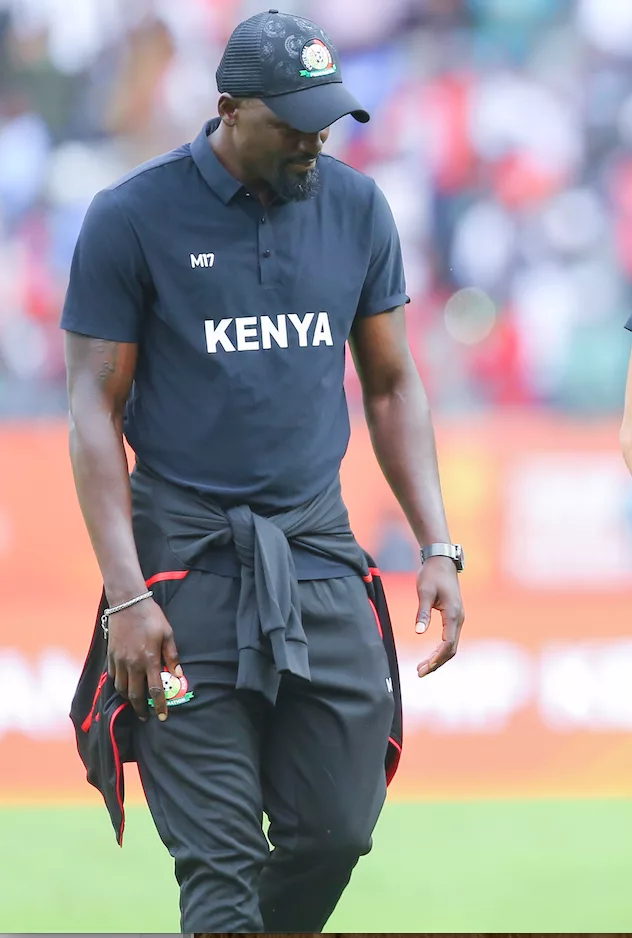
FIFA went further, asking FKF to “refrain from holding the NEC meeting scheduled for November 4, 2026.
That warning was a sharp reminder that FKF cannot become a playground where constitutional provisions are picked and discarded to suit rival political ambitions. FIFA has not announced another suspension or declared that Kenya faces an immediate ban, but its intervention has placed the federation's governance under an unforgiving spotlight.
The unfolding drama has dragged back memories of 2021, when government intervention in FKF affairs led to Kenya's suspension in February 2022. National teams and clubs were banished from international competitions until November that year, when the caretaker arrangement was lifted and FIFA's reinstatement conditions were met.
Another suspension would be a hammer blow to a country pouring billions of shillings into stadiums, training facilities, transport and other AFCON infrastructure. Kenya cannot afford to build the stage for a continental celebration only to have its football administration locked out of the international theatre.
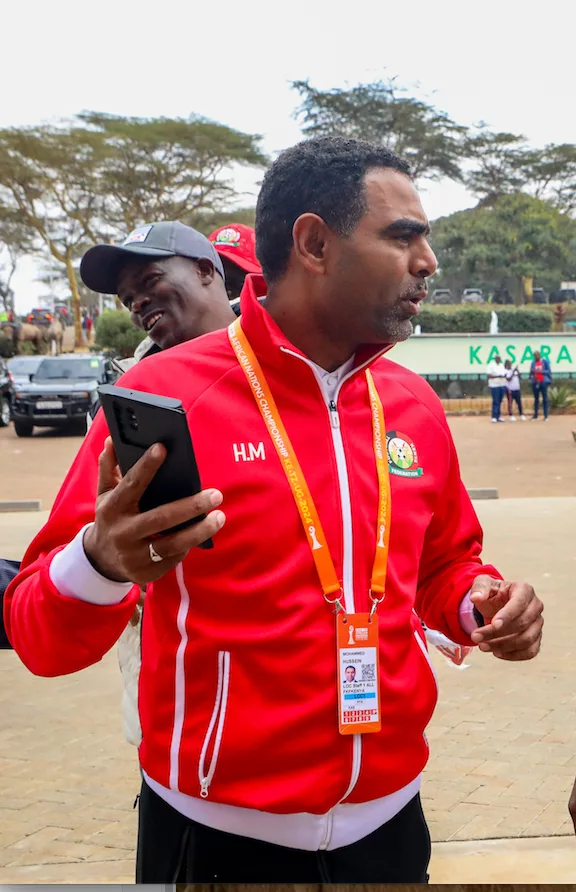
The Meru SGM marked the culmination of months of hostility between FKF president Hussein Mohammed and his former deputy, Mariga, who were elected together under the Team Fresh ticket in December 2024. Disagreements over national team management, federation finances, sponsorships and the authority of individual office-holders have swallowed their once-promising partnership.
At the heart of the dispute was the April 24 resolution by Mariga's faction seeking to suspend Mohammed, acting general secretary Dennis Gicheru and NEC member Abdullahi Yusuf over questions surrounding a Sh42.48 million CHAN 2024 insurance arrangement. FIFA declined to recognise the attempted suspension, citing constitutional shortcomings and the need to respect the right to a fair hearing.
Meru brought the feud to a dramatic end. A total of 66 delegates attended the gathering at Three Steers Hotel, where 65 voted for the removal of Mariga and six other NEC members. AFC Leopards chairman Boniface Ambani was the lone dissenting voice.
The expelled officials were Dan Shikanda, Gabriel Mghendi, Violet Kerubo Momanyi, Collins Opiyo Kalee, Robert Macharia and Bernard Lagat. The proceedings were accompanied by ugly scenes involving security personnel, tear gas and rival groups attempting to access the venue.
Mohammed's administration insists the assembly followed constitutional procedures and that the seven officials were notified of the charges against them and given an opportunity to respond.
“For the record, all seven NEC members, whom the Congress has taken action against, were invited to make their submissions but none of them did,” Mohammed said.
He has defended the General Assembly's authority to act against officials accused of violating the federation's constitution, insisting that the organisation cannot be held hostage by internal wrangles. “We will never give up on Kenyan football; there's no going back,” he said.
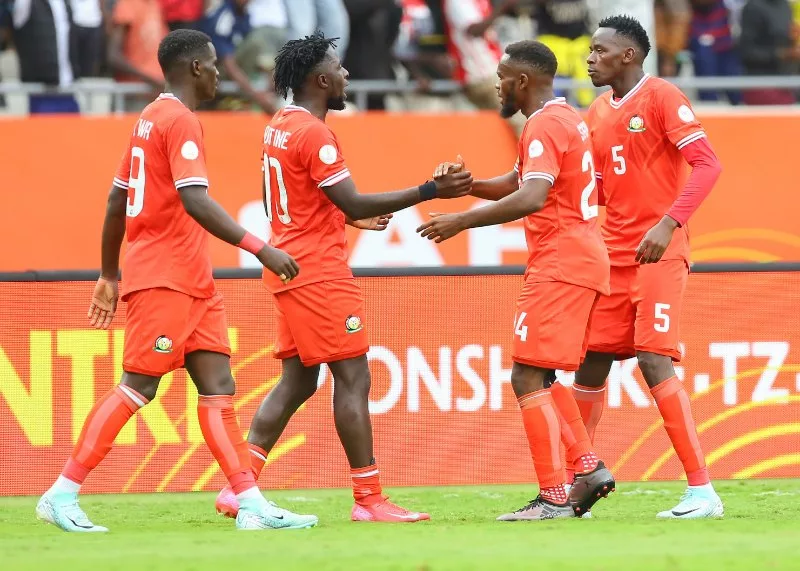
But Mariga has refused to accept the Meru verdict, insisting that he remains the legitimate FKF vice-president and that the proceedings were unconstitutional.
The former Harambee Stars captain argued that the assembly violated Article 41(4) and (5) of the FKF Constitution, which he says guarantees the right to a fair hearing and requires a secret ballot in removal proceedings. He also alleged that 32 accredited delegates were locked out of the venue.
“When we removed Hussein in May, FIFA said due process had not been followed and that he had not been allowed to be heard. We were not heard on Saturday, nor were we given a chance to respond to the accusations against us,” Mariga said. He also challenged the voting process, alleging that secret ballots were not used and unauthorised individuals were present.
“We are still consulting our lawyers on whether we should go to the SDT. However, our case is with FIFA, and it is very solid. Due process was not followed in removing us,” he said. Mariga rejected suggestions that his involvement in national team activities was motivated by financial gain, claiming he repeatedly dug into his own pocket to meet expenses associated with assignments. “I swear I have not been paid a penny for the trips I have made,” he said.
Mariga dismissed Mohammed’s account of financing some of his trips, arguing that national team budgets and government funding covered essential expenses. “We worked with approved budgets, while the Ministry took care of flights, accommodation and team transport. I therefore struggle to understand what he claims to have paid for me,” Mariga said.
He accused Mohammed of changing his attitude towards him soon after they assumed office, with their relationship deteriorating sharply after the CHAN insurance controversy.
“Things were different when we first came into office. He soon began shutting me out, and the CHAN saga only made matters worse,” he said.
Mariga also recalled an uncomfortable experience in Uganda, claiming he was left to make his own arrangements after the vehicle assigned to collect him was reportedly without fuel and the hotel demanded payment.
“I arrived expecting the usual arrangements, only to be told there was no fuel in the vehicle meant to pick me up. At the hotel, I was informed that I had to settle the bill myself, yet the team was staying at the same establishment,” he said.
He further claimed he had repeatedly used personal funds to purchase supplies for players when the federation fell short. “There were occasions when I had to buy energy drinks and medication for the players using my own money because those items had not been provided,” Mariga said.
Mariga also recalled an uncomfortable experience in Uganda, claiming he was forced to make his own arrangements after the vehicle assigned to collect him was reportedly without fuel and the hotel demanded payment.
“I arrived expecting the usual arrangements, only to be told there was no fuel in the vehicle meant to pick me up. At the hotel, I was informed that I had to settle the bill myself, yet the team was staying at the same establishment,” he said.
He further claimed that he had repeatedly used personal funds to purchase supplies for players when the federation fell short.
“There were occasions when I had to buy energy drinks and medication for the players using my own money because those items had not been provided,” Mariga said.
He has since submitted his grievances to FIFA, CAF and the Sports Registrar, seeking an examination of the delegate register, quorum and voting procedures. He is also consulting lawyers on a possible challenge before the Sports Disputes Tribunal.
Among the expelled officials, former Nairobi NEC representative Dan Shikanda has become one of the most vocal figures demanding outside intervention. He wants FIFA to appoint a normalisation committee to take charge of the federation and rescue it from the growing administrative storm.
Shikanda has dismissed the Meru proceedings as illegitimate. “That was an illegal meeting done by some friends of one Hussein Mohammed,” he said.
He insists the fight is bigger than the fate of the seven expelled officials and concerns the direction in which Kenyan football is being taken. “We are ready for that,” he said when asked about the possibility of a FIFA-appointed normalisation committee.
Shikanda believes an independent team could examine the federation's accounts, restore confidence and, if necessary, organise fresh elections. He has also dismissed suggestions that Kenya's AFCON participation is automatically in jeopardy.
“I would like to assure the country that the only thing at risk is President Hussein Mohammed and Abdallah Yusuf being denied the chance to preside over AFCON,” he said.
But a leadership vacuum, prolonged uncertainty or international suspension could derail preparations regardless of who occupies the presidential office. FIFA has not appointed a Normalisation Committee, and the proposal remains a demand from stakeholders rather than an official intervention.
The battle has now spilt into Parliament, where Kiminini MP Maurice Kakai Bissau has sounded the alarm over the federation's operations, outstanding national team payments and Kenya's readiness for AFCON 2027.
Bissau has raised concerns about the delayed start of the 2026/27 domestic season, unpaid Harambee Stars allowances and the work permits of head coach Benni McCarthy and his technical team. He has also questioned whether domestic competitions should be administered under the 2019 or 2025 FKF regulations.
“Kenyan football cannot afford to be held hostage by boardroom battles. We need an independent and credible process to restore order at FKF, protect the interests of players and clubs, and ensure that the country does not lose the opportunity to host AFCON 2027,” Bissau said.
The legislator wants accountability without another collision between the government and FIFA. “The government must safeguard public investment in football without interfering with the independence of the federation. A FIFA-sanctioned Normalisation Committee could offer a way out of this impasse and restore confidence in the management of the game,” he said. He warned that players should not pay for their administrators' failures.
“The outstanding allowances, delayed league activities and uncertainty surrounding the technical team are serious concerns. Footballers should not suffer because leaders cannot agree on how to run their federation,” Bissau said.
The courts have also entered the fray, adding another layer of uncertainty to an already tangled affair. Sports stakeholder Patrick Kinyua filed a constitutional petition at the Murang'a High Court seeking intervention in the leadership dispute and urging the rival camps to pursue mediation through recognised constitutional mechanisms.
Court declined to certify the application as urgent on November 11, directing the parties to exchange responses and written submissions before a mention scheduled for February 25, 2027. A separate application by Edwin Shamalah seeking to stop the FKF Division One League was certified as urgent on November 12.
Lady Justice Mong'are directed the respondents to file responses within five days and scheduled the matter for November 17. Shamalah is challenging the decision to organise Division One across four zones under the revised 2025 regulations, arguing that the FKF Constitution provides for a two-zone national structure. He also questions whether the NEC properly approved the competition.
The legal battles have left clubs and players caught in an administrative fog, uncertain about the status of competitions and the rules governing their participation. FIFA expects football disputes to be resolved through established judicial structures, but FKF must also provide credible and independent mechanisms for aggrieved members.
Sports Cabinet Secretary Salim Mvurya faces a delicate balancing act. A direct government takeover could invite FIFA sanctions, but standing aside while football structures deteriorate would be equally damaging. The Sports Disputes Tribunal could provide an avenue for resolving disputes within its jurisdiction without compromising the federation's independence.
Above all, the crisis threatens to cast a long shadow over AFCON 2027. Successful hosting requires more than magnificent stadiums and government investment. It demands a functioning federation capable of working with CAF, FIFA, sponsors, clubs and government agencies.
A suspended federation would complicate those relationships and create uncertainty around national teams, international fixtures and other football activities. Kenya's previous suspension should serve as a painful reminder that players, clubs, coaches, referees and supporters are often the ones left picking up the pieces when administrators fall out.
For now, the rival camps remain locked in their corners. The seven expelled officials have expressed willingness to accept an independent committee, while Mohammed's administration maintains that FKF is functioning and that the Meru resolutions were constitutionally justified.