Kenya’s foreign direct Kenya’s foreign direct investment inflows defied external economic shocks, rising by 170.5 per cent to a record $2.74 billion (Sh354 billion) in the 12 months to September 2026.
The latest economic update by the World Bank attributes the increase to sustained investor confidence, which supported economic growth of 5.2 per cent.
This was up from 4.9 per cent over a similar period last year. Growth was supported by stronger activity in the industrial and services sectors.
The surge coincided with a broader recovery in economic activity. Growth accelerated, private-sector lending picked up and foreign exchange reserves strengthened.
These developments reinforced Kenya’s position as one of the fastest-growing economies in sub-Saharan Africa.
“Portfolio inflows increased by 54.6 per cent during the same period, driven mainly by stronger non-resident investment in government and corporate bonds, as well as state privatisation proceeds,” said the World Bank.
The multilateral lender said stronger capital inflows had helped cushion Kenya against external pressures, particularly higher fuel import costs and disruptions linked to the Middle East conflict.
Industry and services offset slower growth in agriculture, helping sustain economic expansion despite rising global uncertainty, higher energy costs and pressure on household purchasing power.
Construction was among the strongest-performing sectors, expanding by 6.3 per cent in the first half of 2026. Overall industrial growth accelerated to 4.9 per cent, while manufacturing growth improved to 3.3 per cent.
The services sector benefited from stronger tourism and digital activity. Accommodation and restaurant services grew by 11.1 per cent, while information and communication activities expanded by 6.1 per cent.
The recovery was also supported by improving private-sector credit, which more than doubled to 10.6 per cent in September 2026, up from five per cent a year earlier. This gave businesses greater access to financing.
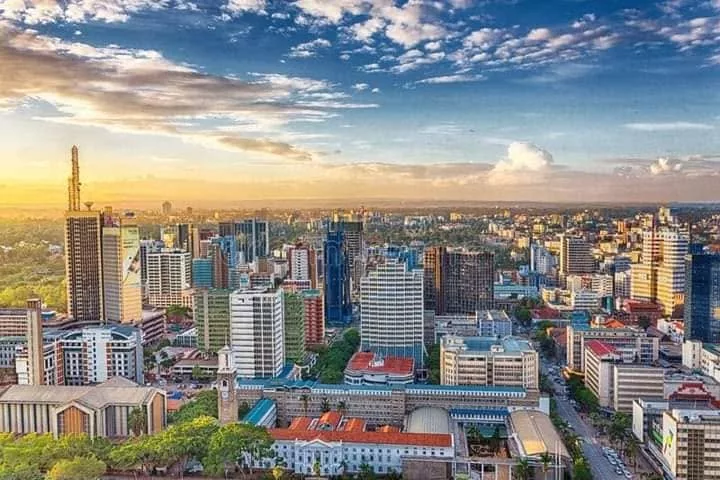
The investment recovery was accompanied by strong performance at the Nairobi Securities Exchange (NSE), where market capitalisation reached a record Sh4.17 trillion, up from Sh2.68 trillion a year earlier.
The NSE 20 Share Index climbed to 4,325.6 points by the end of August. It crossed the 4,000-point mark in July for the first time in nearly a decade.
The report attributed the strong performance to rising equity valuations, particularly in the banking sector, improved macroeconomic stability and increased investor confidence.
It also cited the partial privatisation and listing of Kenya Pipeline Company as factors supporting activity in the market.
The growth in market capitalisation signals a significant recovery in the value of listed companies, boosting investors and the country's capital markets.
The World Bank said the stronger equity market performance was among the indicators pointing to improved conditions in Kenya’s financial sector.
Despite the improving investment climate, the World Bank identified corruption as a major constraint to private investment. It noted that 39 per cent of businesses considered corruption a major or severe obstacle to their operations in 2025, up from 25 per cent in 2013.
The report further found that 36 per cent of firms had experienced at least one bribery request in the preceding year. This highlights the cost of informal payments and bureaucratic hurdles to doing business.
The impact extends to innovation and productivity. Businesses exposed to bribery were more than 30 per cent less likely to introduce innovations. They also recorded slower growth in labour productivity and sales.
Informal workers are affected as well. The World Bank estimates that demands for bribes by frontline institutions, including traffic police and municipal inspectors, can consume up to 20 per cent of their daily earnings.
The report warns that corruption also weakens tax collection, inflates infrastructure costs and reduces the efficiency of public spending. This contributes to wider budget deficits and higher government borrowing costs.
It estimates that stronger anti-corruption reforms could raise Kenya’s gross domestic product (GDP) by 8.7 per cent by 2035, compared with a scenario in which the reforms are not implemented. More ambitious reforms could increase output by 22.3 per cent.
The gains could also translate into better employment opportunities for up to 7.7 million people and increase household consumption by as much as 27 per cent.
The World Bank is urging the government to strengthen public procurement oversight, fully implement electronic government procurement, improve transparency in State-owned enterprises and enforce conflict-of-interest rules.
It also wants the government to improve accountability in public investment projects, simplify business regulations and reduce electricity and logistics costs, which continue to weigh on manufacturers.
The positive investment figures come against a backdrop of persistent fiscal pressures and external shocks.
Kenya’s fiscal deficit widened to 6.8 per cent of GDP in the 2025-26 financial year, against an original target of 4.7 per cent. Public debt stood at 69.9 per cent of GDP at the end of June 2026.
“Elevated debt-servicing costs and continued reliance on domestic borrowing could limit the government’s ability to finance development projects and potentially crowd out private-sector lending,” the World Bank cautioned.
Inflation also rose to 7.3 per cent in October 2026, up from 4.6 per cent a year earlier. The increase was driven largely by higher food and energy prices.
The bank warned that prolonged geopolitical tensions, particularly in the Middle East, could further raise fuel and shipping costs, weaken household purchasing power and discourage investment.
Nevertheless, it maintained that stronger private-sector credit, foreign investment and infrastructure spending could push growth above current projections if investment and exports perform better than expected.
INSTANT ANALYSIS
The latest economic update by the World Bank attributes the rise in foreign direct investment to sustained investor confidence in Kenya, which supported economic growth of 5.2 per cent.