Against the backdrop of rapidly shifting political and security dynamics in the Middle East, Riyadh has been confronted with an uncomfortable reality: its allies in Khartoum, particularly the Sudanese army and the Islamist armed brigades fighting alongside it, have rejected a direct Saudi request to deploy troops to Yemen to participate in the ongoing conflict.
The refusal was more than a tactical disagreement over troop deployment. It represented a diplomatic setback that exposed the fragility of alliances built around shared interests. It also demonstrated that Sudanese Islamists, particularly the al-Baraa ibn Malik Brigade, place their own political and military calculations, especially the consolidation of power in Sudan, above Riyadh’s strategic interests.
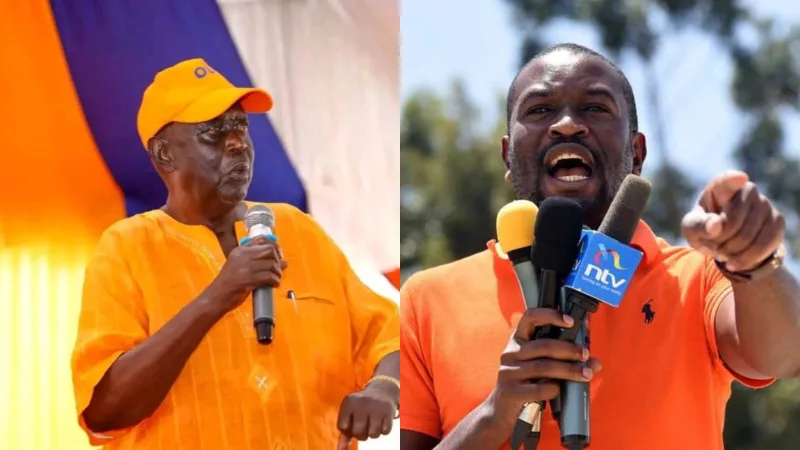
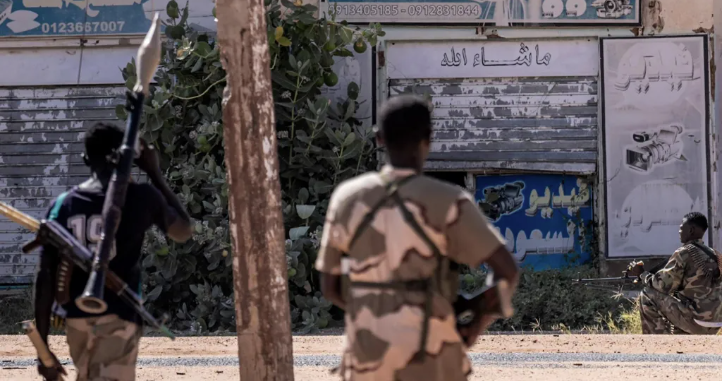
To understand the implications of this refusal, one must first examine the nature of the al-Baraa ibn Malik Brigade itself. It is not merely another transient armed faction. The US Department of State describes it as the military wing of Sudan’s Muslim Brotherhood and designated it a Foreign Terrorist Organization in March 2026. Although its fighters receive orders and artillery and drone support from the command of the so-called Sudanese army, they retain complete organizational and political autonomy.
It is this autonomy that enabled them to say no to the Saudi request—not out of opposition to fighting, but because of the absolute priority they attach to their existential battle inside Sudan against the Rapid Support Forces.
For these brigades, any depletion of their forces beyond Sudan’s borders would mean forfeiting decisive battles on Sudanese soil.
Yet the greatest contrast lies in the identity of those refusing the request. In September 2025, the US Department of the Treasury revealed that the al-Baraa ibn Malik Brigade receives direct training and support from Iran’s Islamic Revolutionary Guard Corps. Riyadh thus finds itself in an acutely embarrassing position: asking an armed faction trained by its arch-rival, Iran, to fight another adversary in Yemen—the Houthis. This glaring contradiction confronts Riyadh with a complex strategic equation and reveals that its alliances in Sudan have become hostage to considerations that ultimately do not serve its objectives.
More troubling still, these same brigades, which refuse to fight in Yemen, are engaged in a series of systematic violations against Sudanese civilians, particularly moderate Islamists and political activists.
In July 2026, the Sudanese National Observatory for Human Rights documented cases of the forced recruitment of children from schools in Khartoum by the al-Baraa ibn Malik Brigades and their transfer to training camps at Green Yard.
In August of the same year, the Darfur Victims Support Organization documented the summary execution of an unarmed civilian in Omdurman. Brigade members had reportedly arrested him, tied his hands, covered his face and then shot him. Reports by Human Rights Watch also indicate that these brigades have been integrated into security cells alongside the police and intelligence services, where they carry out arrests and systematic torture targeting activists who do not subscribe to their ideology.
Thus, the military refusal has evolved into a profound crisis of trust. Riyadh, which hosts the Jeddah peace talks on Sudan and provides military, political and financial support to the Sudanese army, now finds that its allies are refusing to comply with its requests.
While Saudi Arabia remains preoccupied with its war in Yemen, its allies in Khartoum appear to have chosen to fight their own battle, even at the expense of relations with their most important regional backer and the principal source of support for their war, at least financially.
The result is that Riyadh now faces a complex landscape: an ally that refuses to follow orders, a militia accused of committing war crimes, and an Iranian network expanding amid the war.