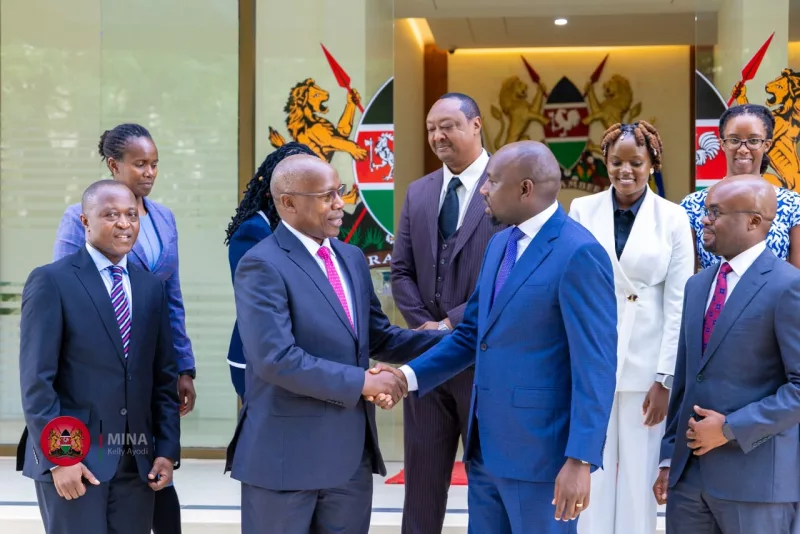
Interior Cabinet Secretary Kipchumba Murkomen has challenged the newly inaugurated National Cybersecurity Agency (NCSA) Board to move with speed in establishing the institution’s management structures and human resource framework.
Murkomen said the Board should prioritise putting in place the structures before the end of the year to pave the way for the Agency’s full operationalisation.
He issued the directive during the formal inauguration of the Board of Directors, marking a major step in Kenya’s efforts to strengthen national cybersecurity governance and resilience.

The CS warned that relying on seconded personnel and short-term staff for too long could undermine the development of the new institution.
“Your work is cut out,” he said. “You do not have the time; you have to move with speed and establish quickly the human resource instruments that will govern this organisation. If you rely on secondments and short-term staff, you will become a short-term institution for a very long time.”
Murkomen said draft instruments had already been prepared by the team involved in establishing the Agency and would remain available to support the Board.
He proposed that the Board use the remaining two months of 2026 to establish its human resource framework and top management structure, creating a foundation for subsequent recruitment.
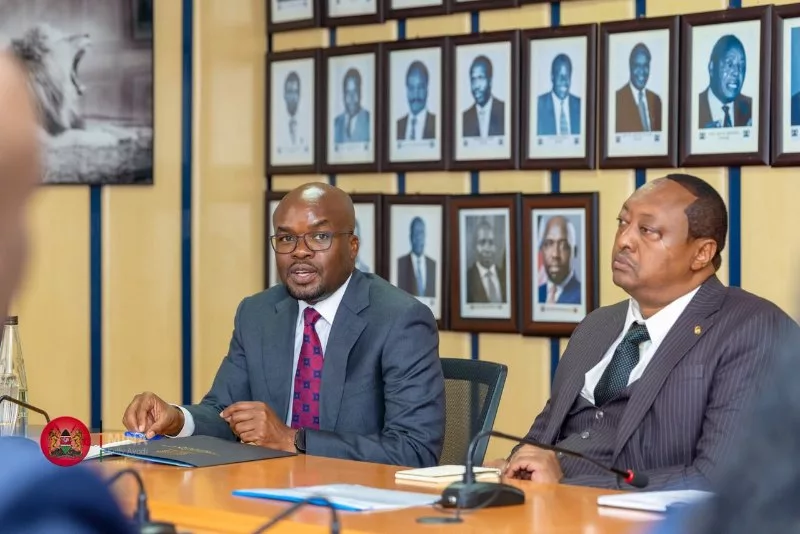
The CS also challenged the directors to provide decisive leadership in building a proactive, coordinated and accountable national cybersecurity architecture.
“We must build a cybersecurity architecture that is proactive rather than reactive, coordinated rather than fragmented, and firmly anchored in the protection of national interests and our constitutional rights,” he said.
He emphasised that the Agency’s success would depend on the commitment of Board members and their ability to build productive working relationships across government institutions and other stakeholders.
“The survival, growth and strength of this institution will depend on your individual commitment to ensuring that it thrives,” Murkomen told the directors.
He called for a whole-of-government and whole-of-society approach, urging members to bring the expertise and institutional experience of their respective agencies to the new institution.
He cautioned against allowing competing institutional interests to undermine the Agency’s development.
Murkomen also tasked the Board chairperson with providing inclusive and diplomatic leadership to ensure all represented institutions have an opportunity to contribute while respecting their respective mandates and institutional autonomy.
The Board is chaired by Dr Martin Koyabe and brings together representatives from key government institutions, academia and the private sector.
Eight institutional seats are held by the Principal Secretary for Internal Security, the Principal Secretaries for the National Treasury and ICT, the Attorney-General, the Chief of the Kenya Defence Forces, the Inspector-General of Police, the Director-General of the National Intelligence Service and the Director of Public Prosecutions.
President William Ruto appointed Dr Koyabe on August 21, 2026, for a three-year term.
On September 11, Murkomen appointed Lorna Achieng’ Omondi Ogolla and Dr Jerop Joy Kibor as additional Board members, bringing expertise from outside the traditional government institutional framework.
The Agency was established under the State Corporations (National Cybersecurity Agency) Order, 2026, Legal Notice No. 89 of 2026, published on May 15.
It is mandated to serve as Kenya’s single accountable authority for cybersecurity strategy, critical infrastructure resilience, cyber operations, technical capabilities and national and international cooperation.
Principal Secretary for Internal Security and National Administration Raymond Omollo said the Board had an opportunity to build a new institution from the ground up.
“We are lucky that this is, to me, a green field. We are starting an agency from scratch,” Omollo said.
He expressed confidence in the experience represented on the Board and assured members of continued support from relevant government agencies, institutions and individuals.
Omollo also emphasised the need for a constructive working relationship between the Board and the Agency’s management.
He said the Board should provide strategic direction and oversight while allowing management to handle operational responsibilities and remain accountable for its performance.
The PS further highlighted the importance of budgetary planning, noting that financial considerations would be critical in developing the Agency’s human resource structures and meeting other operational requirements.
Murkomen also called for deliberate investment in local cybersecurity expertise through partnerships with universities and research institutions, saying nurturing young professionals was important to strengthening Kenya’s long-term technical capabilities.