Two Kenyans who developed a mobile dialysis clinic that takes kidney treatment to rural villages and a portable device that detects heart problems have received international recognition in one of the world's biggest engineering awards.
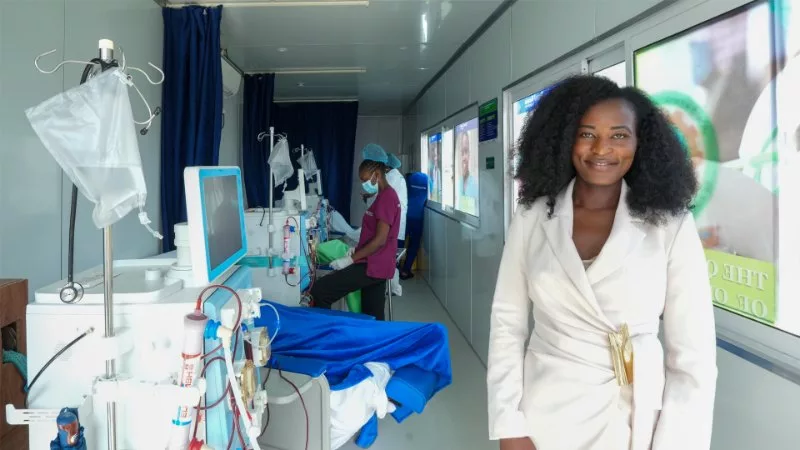
Nurse and entrepreneur Naom Monari, who founded Renal Roads, and medical doctor Alice Muhuhu, who developed MoyoECG heart device, were among four finalists in the 2026 Africa Prize for Engineering Innovation, awarded by the Royal Academy of Engineering.
Monari's retrofitted truck brings dialysis services closer to patients who would otherwise travel long distances for regular dialysis, while Muhuhu's device helps health workers in rural clinics identify possible heart disorders before they become life-threatening.
The two were each awarded Sh1.7 million (£10,000) as runners-up in the competition, which recognises African innovators developing practical solutions to major problems facing the continent.
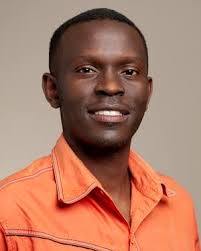
The overall winner was Nigerien engineer Mamane Kabirou Ousseini, who received Sh8.5 million (£50,000) for developing Likita Care, a locally manufactured medical monitoring system that helps health workers keep track of patients.
Ousseini is the first engineer from Niger to participate in and win the Africa Prize.
"Winning the Africa Prize is a dream come true. We started this project five years ago and to see how far we've come and receive this recognition today means more than words can express," he said.
His Likita Care system combines medical equipment, computer software and locally manufactured technology. It can monitor patients' vital signs, heart activity and pregnancy-related conditions.

Monari founded Renal Roads after discovering how far some kidney patients had to travel to receive treatment.
Most dialysis centres in Kenya are concentrated in major towns and cities. Patients in rural areas can therefore travel up to 200 kilometres each way, sometimes twice a week, to receive dialysis.
The journeys are expensive, exhausting and difficult to maintain, particularly for people who must continue working or caring for their families, she said.
Some patients miss treatment because they cannot afford the journey or manage the time required. Missing dialysis can lead to serious complications and even death.
Monari, a trained nurse, first experienced these challenges while working in Kenya's public health system.
In 2017, she founded Bena Care, a home-based nursing service intended to reduce the financial and emotional burden of hospital visits.
After the Covid-19 pandemic, her team noticed a sharp increase in patients requiring dialysis. She obtained a research grant from the International Development Research Centre and partnered with a local university to study the problem between 2022 and 2023.
The research found that patients were travelling long distances for treatment, while work and family responsibilities contributed to missed dialysis sessions.
This inspired her to develop Renal Roads, a mobile dialysis clinic built inside a 40-foot shipping container and mounted on a trailer.
The clinic moves between rural communities on a fixed weekly schedule, operating from local government health facilities. This allows patients to receive treatment closer to home without travelling to major towns.
The service is covered through the Social Health Authority and patients do not pay out of pocket for the dialysis sessions.
An independent evaluation of its first rollout in Murang'a County found that the distance patients travelled fell by 76.6 per cent, while treatment adherence increased by 100 per cent.
Renal Roads now serves more than 100 patients every month, delivering about 700 dialysis sessions. More than 200 people are on its waiting list.
"Our goal is simple: bring life-saving care closer to people who need it. The first version has worked, but three years from now it will be more compact and efficient. I’m very happy to be among engineers. The Africa Prize gives us visibility and access to networks that can help us scale," Monari said.
Muhuhu's invention addresses another major challenge in Kenya's health system: the difficulty of detecting heart problems early, particularly in rural facilities.
Cardiovascular diseases are the leading cause of death worldwide. Across sub-Saharan Africa, deaths from non-communicable diseases are also rising and are projected to overtake those from infectious diseases by 2030.
Yet many health facilities lack the equipment and specialists needed to identify heart conditions.
In Kenya, fewer than six per cent of health facilities have specialised heart diagnostic equipment. The country has only about 35 cardiologists serving a population of more than 50 million people.
This means many patients may go for years without knowing they have a heart condition.
Muhuhu, a medical doctor, founded MoyoECG to make heart screening possible in clinics that have limited equipment, electricity or internet access.
The portable device records electrical activity in the heart and uses artificial intelligence to help health workers identify possible abnormalities.
It is designed to be operated in frontline clinics, including those without specialist heart doctors.
Clinical trials have shown that the device can identify irregular heartbeats and other heart abnormalities. It can also detect signals linked to reduced blood supply to the heart, electrical problems and disturbances in the body's salts.
The device has also reduced the time needed to interpret heart test results from about 30 minutes to less than five minutes during early trials. This could help health workers identify patients who need further examination and refer them for specialist care sooner.
"Recognition from the Africa Prize shows that breakthrough medical innovation can rise from Africa. Because no life should be lost simply because diagnosis came too late. Every heartbeat matters," Muhuhu said.
The two Kenyans were selected alongside other African innovators from a group of 16 entrepreneurs who completed eight months of training and mentoring.
They presented their inventions to a live audience and a panel of judges at a ceremony held in South Africa.
The judging panel was chaired by Rebecca Enonchong and assessed the innovations on their engineering strength, impact, ability to grow into businesses and potential to reach more people.
"Being an entrepreneur isn't easy, especially in environments where the challenges are even greater,” chief judge Rebecca Enonchong said.
“For all contestants, the Africa Prize is more than a financial reward. They all receive mentoring, communications support and access to networks that can accelerate growth, which is a critical part of the innovation ecosystem but is often missing.”
Founded in 2014, the Africa Prize for Engineering Innovation is organised by the Royal Academy of Engineering to support African engineers and entrepreneurs developing solutions to local challenges.