
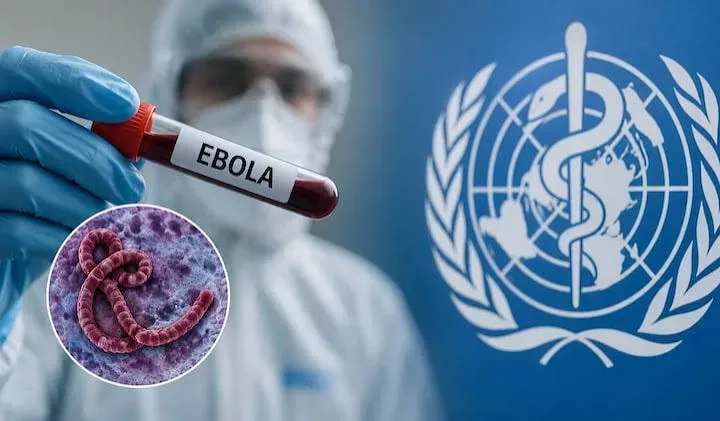
All people placed under quarantine and monitoring following the Ebola outbreak will return home by November 11, when the last person will complete the required 21-day monitoring period.
Principal Secretary for Public Health Mary Muthoni said on Friday that Kenya had gone 10 days without recording a new infection, raising hopes that the outbreak was being contained.
She said the government was progressively releasing people who had been in contact with Ebola patients after they completed the required monitoring period without developing symptoms.
“Kenya has so far recorded nine cases and two deaths, with identified contacts still under isolation, quarantine and surveillance,” Muthoni said.
“Those responding well to the interventions are expected to be progressively released, with all contacts expected to complete surveillance by November 11.”
The announcement means the last people still under monitoring are expected to leave quarantine by November 11, provided they remain well and meet the medical requirements for release.
Speaking during the ninth Ebola taskforce meeting on Friday, Muthoni said the joint efforts of the national government, county governments and development partners had helped contain the spread of the virus.
She said the country would, however, maintain heightened surveillance, particularly at airports and other points of entry, as well as in health facilities and communities.
Muthoni urged Kenyans to continue observing health precautions, including avoiding unnecessary handshakes and hugs.
The meeting brought together representatives from county governments, development partners and other government agencies to review the response and strengthen coordination.
The Ministry of Health had last week released the first 20 people placed under monitoring to return home after completing 21 days without developing symptoms.
The remaining 98 contacts were expected to be released in four groups beginning November 3, subject to individual medical assessments.
Director General for Health Patrick Amoth said the first group had completed the required period and was found to be in good health.
"Each of the 20 contacts was assessed against the release criteria, including 21 days without any symptoms since their last exposure. They do not pose any risk to their families, colleagues or neighbours, and we ask communities to welcome them back home warmly," Amoth said.
The ministry said the country had recorded nine confirmed cases, including two deaths, leaving seven patients receiving treatment in designated facilities.
All nine infections have been linked to the first imported case, with no evidence of wider community transmission, according to international health surveillance reports.
Kenya confirmed its first imported case on October 6 after a patient who had travelled from the Democratic Republic of Congo through Uganda tested positive for the Bundibugyo virus.
The last confirmed case in the Kenyan cluster was reported on October 20.
The government has also been providing mental health support to people in quarantine, patients, their families and health workers involved in the response.
Health teams have strengthened infection prevention measures in hospitals through staff training and the distribution of protective equipment. Screening and surveillance have also continued at points of entry.
Despite the progress, Kenya cannot yet be declared free of Ebola.
The World Health Organisation requires countries to complete 42 consecutive days without a new case after the last confirmed patient has tested negative twice, with the tests taken at least 48 hours apart, and has been discharged from treatment. If a patient dies, the body must be safely buried.
The 42 days represent twice the maximum 21-day incubation period of Ebola. This gives health authorities time to establish whether any hidden chain of infection remains.
The ministry has previously explained that the outbreak will only be declared over after this period is completed.
"While we celebrate this milestone today, our eyes remain firmly on the finish line. The outbreak will be declared over only after 42 days," Amoth said.
The date of the last patient's discharge will therefore determine when Kenya can complete the countdown.
If the last patient is discharged on November 11, the 42-day period will end on December 23. This is a conditional date, not an official declaration date, because the government has not announced when the last patient will be discharged.
The October 20 date of the last confirmed infection would give December 1 as the end of 42 days, but this should not be confused with the official countdown, which starts after the final patient's discharge or safe burial.
The WHO has previously used the same 42-day rule to declare Ebola outbreaks over. Uganda, for example, ended its Bundibugyo Ebola outbreak on August 27 after completing 42 days without a new confirmed case following the discharge of its last patient on July 16.
The Kenyan government has maintained that travel, trade and public gatherings remain unrestricted.
Kenyans experiencing fever, unusual tiredness, muscle or joint pain, sore throat, vomiting, diarrhoea or unexplained bleeding have been urged to seek medical attention, particularly if they have had contact with a suspected case or travelled to an area affected by Ebola.
Members of the public can report suspected cases through the toll-free number 719 or the Ministry's Jali WhatsApp service on 0700 719 719.