East African Legislative Assembly members could wait even longer for a lasting solution to their delayed salaries after National Assembly Speaker Moses Wetang’ula called for a review of a proposed payment arrangement.
The proposed plan by the EAC Summit shifts responsibility for paying the regional legislators to the respective national assemblies.
However, Wetang’ula wants the Bureau of East African Community Speakers to recommend that two decisions on EALA members’ remuneration and election processes be returned to the Heads of State Summit for further consideration, citing legal and constitutional concerns.
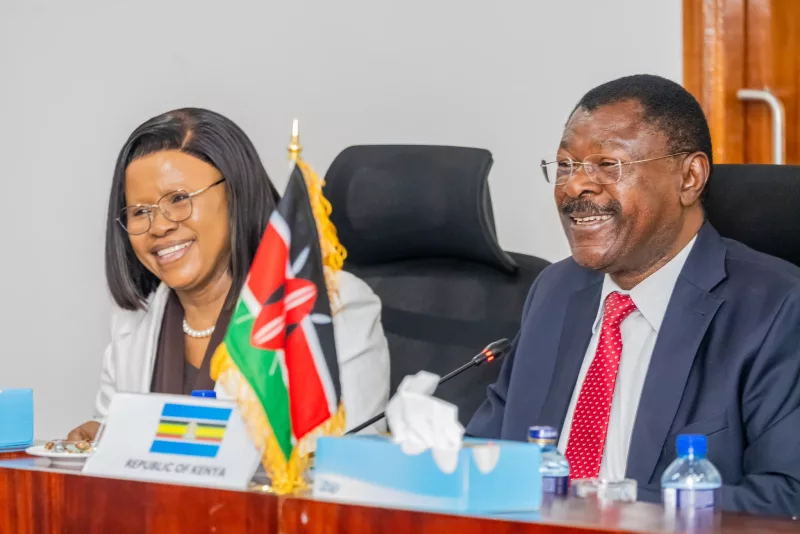
Speaking during an extraordinary meeting of the Bureau of EAC Speakers and EALA representatives at Parliament Buildings in Nairobi on Thursday, he argued that the proposed changes must comply with the EAC Treaty.
The treaty gives the summit authority to determine the terms and conditions of service for EALA members on the recommendation of the Council of Ministers.
“Even if we amend the treaty, would the partner states defaulting in their remittances start to honour their obligations to the community?” he asked.
The National Assembly Speaker cautioned that transferring responsibility for determining members' terms of service to individual national assemblies could undermine uniformity in remuneration and the independence of the regional legislature.
The arrangement, he said, could also create differences in employment conditions among legislators serving in the same assembly, depending on the national systems responsible for their payments.
Wetang’ula further raised concerns about taxation, constitutional requirements and the proposed placement of EALA members under Kenya's Parliamentary Service Commission.
He said implementing the changes could require amendments to the EAC Treaty, the Constitution and relevant national legislation.
The Speaker also questioned aspects of the proposed selection process, citing Article 50 of the EAC Treaty, which governs the election of EALA members and bars serving national legislators from simultaneously holding seats in the regional assembly.
He urged the bureau to recommend that the two summit decisions be returned to the Heads of State for reconsideration, warning that amending the treaty and securing ratification by all Partner States would take time.
Kenya is consulting the Executive, including the Attorney General's office, the Ministry of East African Community Affairs and the National Treasury, to establish a common position on the proposals.
The move could thus prolong uncertainty over the proposed changes, which were expected to introduce a new financing arrangement from December 2027.
Regional legislators continue to face irregular salary payments arising from the community’s financial difficulties.
The salary delays have been a longstanding problem at the regional assembly, with members repeatedly complaining about unpaid salaries and allowances as partner states fail to remit their financial contributions to the EAC.
In February, David Sankok (Kenya) told the Star that legislators had gone four to five months without receiving their salaries.
“The situation is serious and needs immediate action,” Sankok said.
In a February 24 memo to members and staff, EALA clerk Alex Obatre acknowledged that the community was facing dire liquidity challenges, making it difficult to pay February salaries and settle previous obligations.
Then EAC secretary general Veronica Nduva had also sought an explanation from the clerk over the unpaid salaries after KCB Bank Tanzania raised concerns about outstanding loan instalments owed by legislators.
In a January 27 communication, Nduva asked why members had not received their salaries since November 2025.
The problem reflects a wider funding challenge that has troubled the EAC for years. Former secretary general Libérat Mfumukeko (2016-21) previously identified delayed financial remittances by partner states as one of the major obstacles to the community's operations and integration programmes.
In 2020, EALA members suspended consideration of the regional bloc's budget over outstanding allowances, with legislators demanding settlement of arrears running into millions of dollars.
Under the arrangement adopted by the Heads of State Summit on March 7, national assemblies would assume responsibility for paying members from December 2027, while individual Partner States would cover their travel and daily subsistence costs. The community would retain responsibility for sitting allowances.
Wetang’ula's proposal also comes amid renewed calls for member states to honour their financial obligations to the EAC.
He reaffirmed Kenya's commitment to meeting its contributions, confirming that Nairobi had already fulfilled its financial commitment towards the 16th Inter-Parliamentary Games scheduled for Arusha, Tanzania, from December 4 to 15, 2026.
He urged other participating countries to remit their contributions in good time, arguing that regional integration depended on shared responsibility.