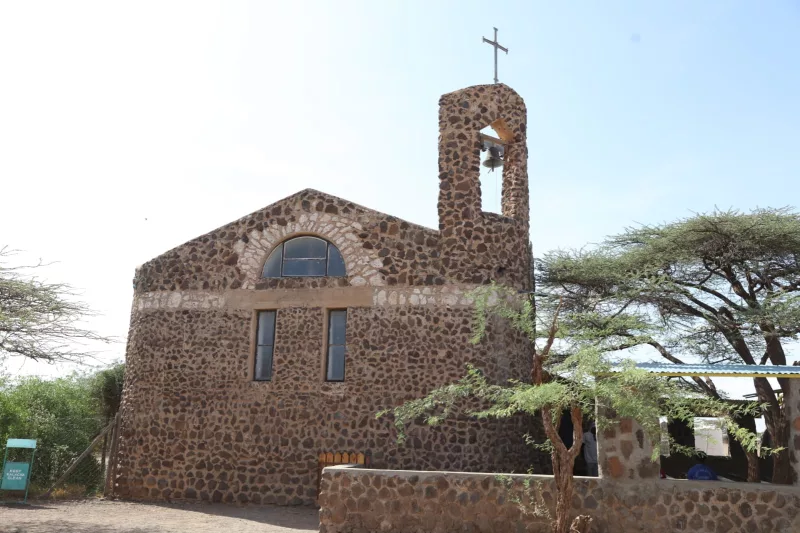
Hidden between Maikona and North Horr, on the edge of the Chalbi Desert in Marsabit County, stands a church whose walls tell biblical stories through paintings that have endured for decades.
The Kalacha Catholic Church is distinguished by its unusual architecture and colourful murals, making it both a place of worship and a cultural and historical attraction for the local community and visitors.
For travellers crossing the harsh northern landscape, the church offers a glimpse into the spread of Christianity in the region and the role religious institutions have played in community life.
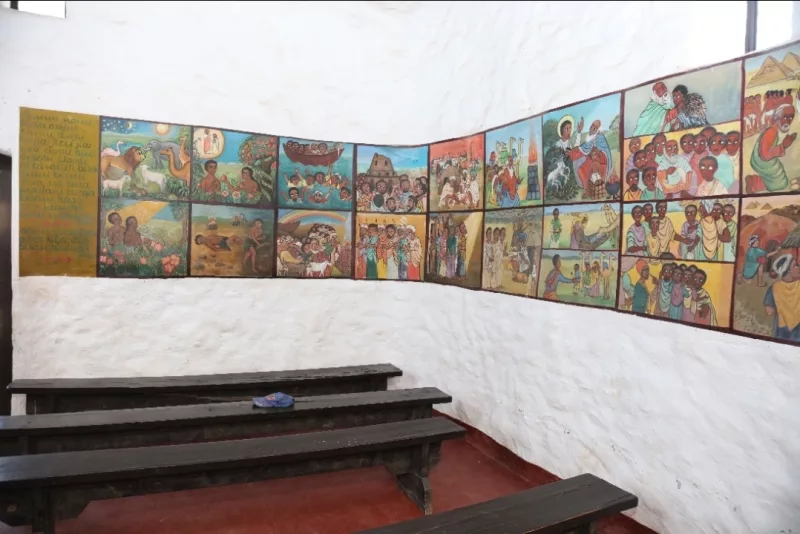
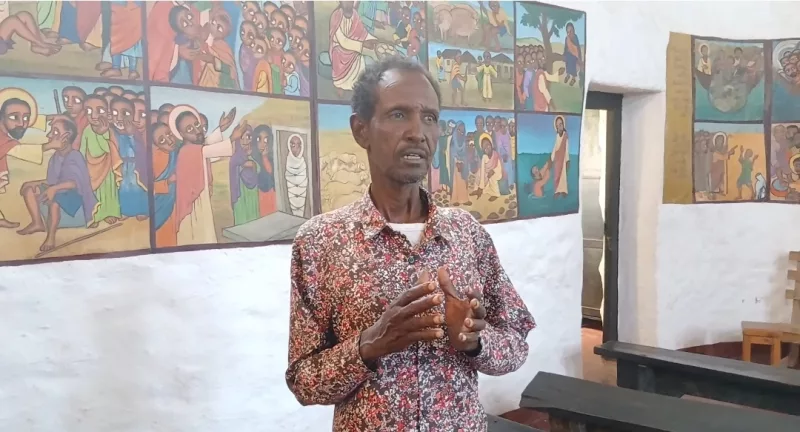
Built partly into volcanic rock, the church has a distinctive structure that sets it apart from conventional places of worship. Inside, its walls feature paintings depicting important events in the life of Jesus Christ, from his baptism and temptation to the calling of his first disciples and the Last Supper.
Scenes from the Old and New Testaments are arranged across the walls, transforming the simple interior into a visual account of biblical history.
For catechist Martin Molu, the church represents the history of the local Catholic community while continuing to attract visitors.
“The church is not only a place of worship, but it is also a tourist attraction site. Most local and foreign tourists who come here make a stop to pray, learn about the church or take photographs,” Molu says.
According to Molu, the church's history dates back to 1972, when Catholic missionaries established their first station in Kalacha.
The first structure was a modest iron-sheet building put up by an Italian missionary identified locally as Father James. At the time, the Christian community had about 10 believers, he says.
As the congregation grew, the building became inadequate, prompting the construction of a more permanent church, which opened in 1982.
The original iron-sheet structure was later converted into a dispensary before being used as a nursery school, reflecting how buildings in remote settlements can continue serving community needs long after their original purpose changes.
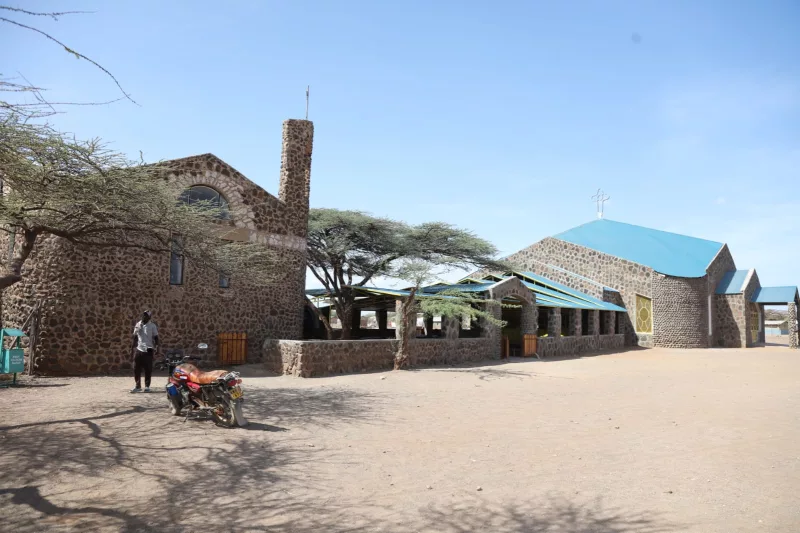
The present church is notable for its unusual design, with sections built into the ground around volcanic rock formations. Its roughly pentagonal interior is arranged around the altar and pulpit, creating an intimate space for worship.
However, it is the biblical murals that give the church its distinctive character.
Painted by an Ethiopian artist, according to local accounts, the artwork covers large sections of the interior walls and illustrates key moments in biblical history, with particular attention to the life and ministry of Jesus.
The paintings include his baptism, temptation, the calling of his first disciples and the Last Supper. Other scenes depict stories from the Old Testament, offering visitors a visual journey through different parts of the Bible.
The murals also provide a glimpse into how religious art helped communicate Christian teachings in communities where pictures could make biblical stories more accessible to worshippers.
Their continued presence makes them an important feature of the church's heritage, although preserving the paintings will be essential to ensuring they endure for future generations.
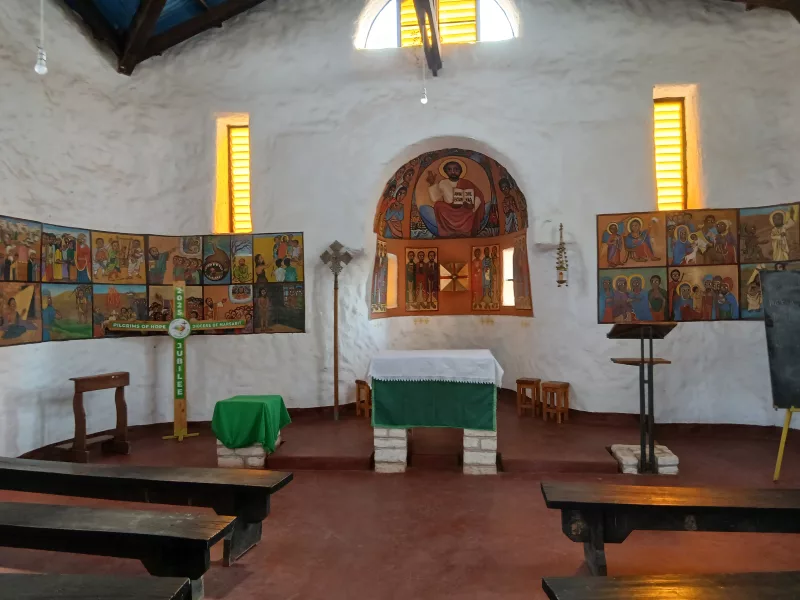
The murals have remained a distinctive feature of the church over the decades, although preserving them will be important if they are to remain part of Kalacha's heritage.
For visitors, the experience is as much about the setting as the artwork.
The church stands in a remote part of Marsabit County, where the surrounding landscape is defined by dry plains, volcanic formations and the vast expanse of the Chalbi Desert.
Its location makes it a potential stop for travellers exploring the northern tourism circuit, which includes the desert, Lake Turkana and communities whose cultures have developed in one of Kenya's most challenging environments.
The church also offers a different perspective on the region, where tourism is often associated with dramatic landscapes and indigenous cultures.
Beyond its architecture and artwork, the church's setting adds to its appeal.
It stands in a remote part of Marsabit County, where the surrounding landscape is defined by dry plains, volcanic formations and the vast expanse of the Chalbi Desert.
Its location makes it a potential stop for travellers exploring the northern tourism circuit, which includes the desert, Lake Turkana and communities whose cultures have developed in one of Kenya's most challenging environments.
The church offers a different perspective on the region, where tourism is often associated with dramatic landscapes and indigenous cultures. Its history illustrates how Christianity became part of community life and how places of worship can preserve stories that extend beyond religion.
Molu says the congregation has continued to grow, prompting plans for a new church building to accommodate worshippers.
“The church has continued to grow as more people join the congregation. We needed a bigger building to accommodate the worshippers, and the new church will give us more space as we continue serving the community,” he says.
According to plans shared by Molu, the new structure was expected to be commissioned in December.
For the local Catholic community, the expansion reflects the church's continuing importance as a centre of worship and fellowship. For visitors, the older building and its paintings offer a window into the community's religious history.
As Northern Kenya seeks to expand its cultural tourism offering, Kalacha Catholic Church presents an attraction that brings together architecture, religious art and local history.
Its appeal lies not in grand scale or elaborate facilities, but in the stories preserved on its walls and the community that continues to give the building life.
In a region where distances are long and settlements are scattered, the church is a reminder that Northern Kenya's heritage is found not only in its deserts, lakes and traditional cultures, but also in the places where communities have gathered, worshipped and built their histories.