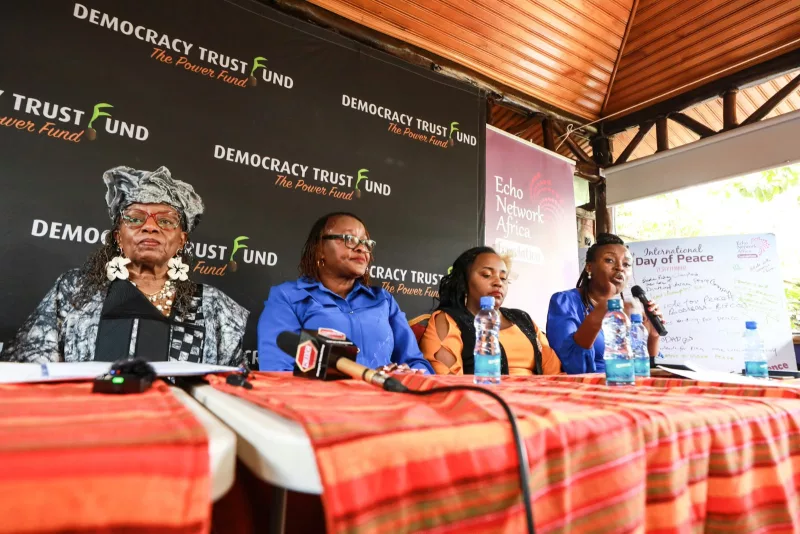
Women leaders, political aspirants and peace actors from across Kenya have raised concerns over escalating political violence against women and uncertainty surrounding campaign financing regulations ahead of the 2027 General Election.
In a joint statement, members of the Democracy Trust Fund (DTF), Women Peace Actors, Women Leaders and Aspirants, alongside the Echo Network Africa Foundation (ENAF), called on Parliament, the Independent Electoral and Boundaries Commission (IEBC), security agencies and political parties to take urgent measures to safeguard democratic participation and ensure peaceful, credible and inclusive elections.
Echo Network Africa Foundation Chief Executive Officer Dr Jennifer Riria identified three priority areas requiring immediate national attention.
“Transparency and accountability in electoral reforms, ending violence and intimidation against women in politics, and addressing the high cost of political campaigns are among the major barriers preventing women from occupying elective positions,” she said.
Dr Riria warned that unresolved legal questions, financial barriers and threats against women aspirants could undermine equal political participation and erode public confidence in the electoral process.
“Do you expect women to campaign fairly and peacefully in an environment that is hostile, infested with goons and characterised by high campaign costs? Of course not,” she said.
Speaking during a meeting with women seeking elective positions in Kenya, Dr Riria urged Parliament and the Senate to ensure that political party nominations are transparent, fair and accessible. She also called for effective complaints mechanisms to protect aspirants from discrimination, intimidation and exclusion.
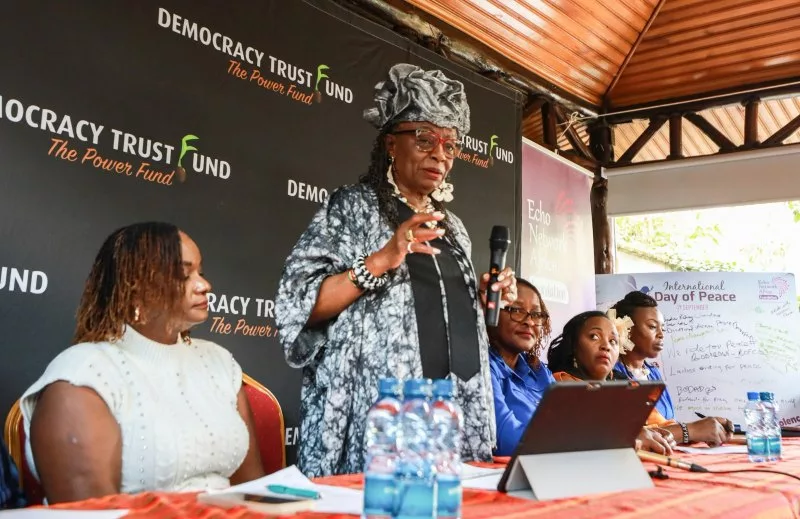
Siaya woman aspirant Pollyne Awoko called on the IEBC and the Political Parties Disputes Tribunal to ensure fairness in resolving electoral disputes and handle complaints impartially and within reasonable timelines.
“Confidence in elections depends on strong institutional accountability and transparency. Reforms will remain incomplete if they fail to address barriers preventing women and young people from participating safely and fairly,” she said.
Women aspirants continue to face threats as political activities intensify ahead of the 2027 polls, with reported incidents of political violence, harassment and inflammatory rhetoric in Kisii, Baringo, Kisumu, Meru, Nairobi and Homa Bay counties.
Among the incidents highlighted was the reported heckling, public humiliation and physical attacks involving Dr Jullie Nyamao during a political engagement in Kisii County.
In Kisumu County, woman representative aspirant Linda Ogweno reportedly faced an attack during a funeral gathering in Nyamasaria on October 20, 2026.
The groups also cited reports of derogatory remarks, heckling and gender-based intimidation during confrontations involving former Meru Governor Kawira Mwangaza and her associates. In Nairobi, they raised concerns over disrupted political gatherings, online harassment and gender-based threats.
In Homa Bay County, the leaders highlighted reports of political violence in August 2026 that allegedly resulted in deaths, injuries and property damage, alongside a reported attack involving parliamentary aspirant Agneta Mwangale.
The concerns come against the backdrop of election-related sexual and gender-based violence documented during Kenya’s 2022 electoral period.
According to a report by the Federation of Women Lawyers (FIDA Kenya), 1,746 cases of election-related sexual and gender-based violence were documented across the country’s 47 counties. The report indicated that verbal abuse and hate speech accounted for 54 per cent of reported cases, while cyberbullying accounted for 23 per cent.
Dr Julia Chege, an aspirant in Kangema, also stressed that addressing political violence, strengthening electoral accountability and reducing financial barriers to campaigns are essential to ensuring women can participate meaningfully in the democratic process.
“Safeguarding women in politics is a shared national responsibility and a fundamental requirement for peaceful, credible and inclusive elections in 2027. Women must never be allowed to be used to fight their fellow women who are making steps to ascend to positions of leadership,” she said.