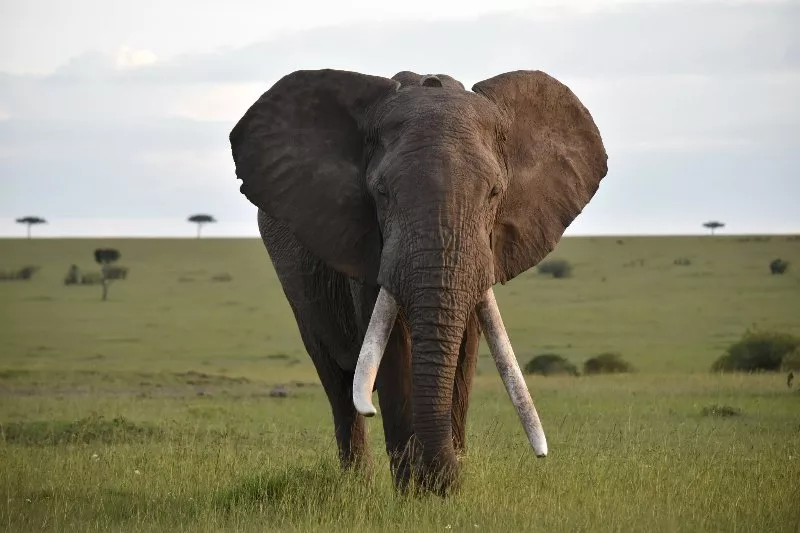
The plains of the Maasai Mara will feel a little emptier without Fred, the magnificent elephant whose massive tusks and gentle nature made him one of the ecosystem’s most celebrated giants.
For years, the great bull roamed the Mara, watched over by conservationists determined to ensure elephants could grow old in the wild, even as poaching threatened the survival of some of Africa’s largest tuskers.
On October 26, Fred’s journey came to an end. The elephant died of natural causes, bringing to a close a life that conservationists say stands as a testament to years of efforts to protect the region’s elephants.
“A giant of the Mara has fallen,” the Mara Elephant Project announced.
The conservation organisation, which works to protect elephants and their habitats across the Greater Mara Ecosystem, described Fred as an iconic Mara tusker who lived well into his fifth decade.
His longevity, it said, symbolised the gains made by the Kenya Wildlife Service (KWS) and conservation partners in combating ivory poaching over the past 15 years.
Many of the great bulls that once shared the landscape with Fred did not survive long enough to reach old age.
Fred was fitted with a tracking collar in 2013, becoming part of a conservation effort that helped inform approaches to monitoring other tuskers across Kenya.
For those who tracked him over the years, however, Fred was more than a name on a monitoring system. His movements, habits and survival became part of their lives.
Mara Elephant Project Conservation Officer Wilson Sairowua, who joined the organisation in 2016, had a particularly close association with the elephant. He tracked Fred over the years and was present during all his re-collaring operations.
Sairowua recalled an elephant whose presence could turn an ordinary night in the wilderness into a treasured memory.
“One of my favourite elephants, Fred was a magnificent tusker with the gentlest soul. I will always treasure the nights he browsed beside my tent, quiet moments that made protecting him feel deeply personal,” he said.
“Losing him hurts, but there is comfort in knowing he grew old in the wild and died of natural causes.”
For Sairowua, Fred’s death brings both grief and reassurance. In a landscape where poaching robbed the wild of many great bulls, the elephant’s long life offers evidence that sustained protection can make a difference.
“His life is a conservation success worth honouring, a tribute to the rangers, communities and conservation partners who helped keep him safe,” Sairowua said.
Fred was among the largest bulls tracked by the Mara Elephant Project alongside KWS and the Wildlife Research and Training Institute.
His collar was an important tool for understanding his movements and helping conservation teams make decisions about protecting elephants and their habitats.
Although small, the technology plays a significant role. GPS-enabled collars allow experts to monitor elephants in real time, providing insights into migration routes, habitat use and how animals respond to environmental pressures such as drought and rising temperatures.
The information can guide decisions on park management, wildlife corridors and water points. It can also help teams detect potential human-wildlife conflict before it escalates.
When a collared elephant approaches farmland or settlements, tracking data can help teams respond and alert communities to take precautions.
The technology can also help locate an injured or distressed animal, enabling veterinary teams to intervene.
In vast conservation landscapes, knowing an elephant’s location can mean the difference between a prolonged search and a timely response.
Fred’s life therefore represented not only the survival of an extraordinary tusker but also the value of the monitoring systems and partnerships established to protect elephants across the country.
His death adds to the losses of other celebrated tuskers that lived to old age or died of natural causes.
They include Ahmed, who died on Mount Marsabit in 1974, and Tim, who died in Amboseli National Park in 2020. Other notable bulls include Satao, who died in Tsavo East in 2014, and Dida, who lived in Tsavo East National Park.
Amboseli also lost Craig in 2026, while One Tone, associated with the Amboseli-Tsavo landscape, died that year as well.
Fred’s passing leaves a gap in the Mara, but his story carries a lasting message: with sustained protection, elephants can survive the threats that have claimed so many of their kind and grow old in the wild.
The Mara Elephant Project said that even in death, Fred remained an emblem of the Maasai Mara’s magic, a landscape that continues to thrive despite its challenges.
“He will be missed, but what a life well lived.”
INSTANT ANALYSIS
Fred’s death is both a loss to the Maasai Mara and a reminder of what sustained conservation can achieve. The celebrated tusker survived into old age at a time when poaching claimed many of his counterparts, highlighting the impact of wildlife protection efforts. His tracking collar also demonstrated the value of technology in monitoring elephants and guiding conservation decisions. His legacy now rests with the rangers, communities and partners protecting Kenya’s remaining giants.