More than 15,000 Ethiopians have More than 15,000 Ethiopians have fled into Kenya following deadly clashes in neighbouring Moyale, triggering a humanitarian crisis marked by shortages of food, clean water and shelter as fighting disrupts cross-border trade.
The violence has forced thousands of families to seek refuge on the Kenyan side of the border, stretching local resources and raising concerns about the health and safety of displaced people, particularly women and children.
The crisis has also spilled into Kenya, with eight people reportedly injured by stray bullets linked to the fighting, including a member of staff at Moyale Sub-County Hospital.
The hospital is facing mounting medical and humanitarian pressure as displaced people and casualties seek assistance. Some health workers have reportedly stayed away from work because of fears for their safety.
As of October 25, a multi-agency team had confirmed 15,240 displaced people, comprising 3,048 households. Of these, 10,950 were staying in six temporary camps, while another 4,290 had sought refuge in host communities.
In Mandera, about 200 people have also sought safety at a police station following a localised attack linked to the conflict.
The fighting reportedly began about two weeks ago after the alleged raising of the Somali Regional State flag on the Ethiopian side of Moyale. This triggered clashes involving forces and groups from Ethiopia's Oromia and Somali regional states.
At least nine deaths were reported last Friday, although humanitarian officials fear the toll could be higher as heavy fighting continues.
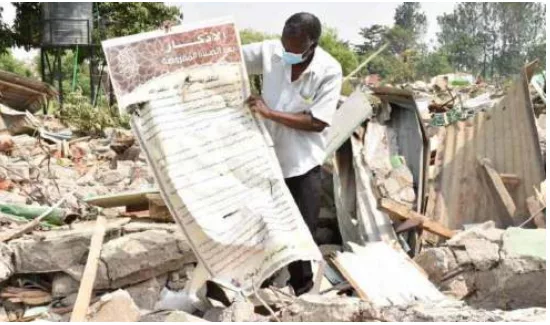
The violence has disrupted business along the Kenya-Ethiopia border, with trucks unable to transport goods in either direction. Several shops near Kenya's One-Stop Border Post have closed amid fears of stray bullets and uncertainty over the security situation.
Marsabit County Commissioner Stanley Kamande said the growing number of refugees was placing additional pressure on local communities, which were also feeling the effects of disrupted trade and restricted movement across the border.
During a visit to Moyale subcounty to assess security and conditions in the temporary settlements, Kamande said thousands of displaced people were living in camps, while others had been accommodated by residents.
He commended humanitarian organisations and residents for providing food, water and other emergency assistance but said the needs remained substantial.
“It is a crisis that is growing daily. There is pressure on the residents who can't cross to Ethiopia for trade and other businesses and other resources,” he said.
Kamande said refugees urgently needed blankets, tents, mosquito nets and sanitation facilities. He warned that cold nights and inadequate toilets were worsening their living conditions.
He appealed to humanitarian partners to increase support as the conflict continued, adding that authorities were working to ensure displaced families were as comfortable as possible.
The Kenya Red Cross Society has launched an emergency response to support families arriving in Moyale. Secretary General Dr Ahmed Idris said the organisation would continue responding as needs evolved.
“Our priority is to make sure every family arriving in Moyale is safe, sheltered and treated with dignity,” Idris said.
The organisation has distributed 134 bags of Super Cereal, weighing a total of 1,005 kilogrammes, to 134 pregnant and breastfeeding mothers across the six camps.
It has also begun distributing shelter kits targeting 1,000 households and providing cereals and porridge for children under five.
The county government has supplied each camp with 20 bags of rice and 16 bags of beans to support displaced families.
A team from the Marsabit county department of health, led by the Health executive Malich Boru, has also assessed conditions in the camps as authorities step up efforts to protect displaced people from disease.
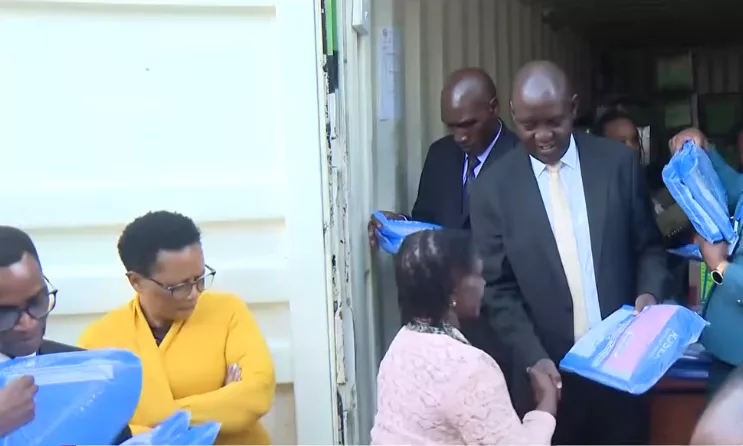
Boru said the county government had provided food relief and distributed more than 500 long-lasting insecticidal mosquito nets and insect repellents across temporary camps in Moyale.
The interventions are intended to protect thousands of vulnerable people from malaria and other mosquito-borne diseases.
“Malaria is the single biggest killer disease affecting mostly expectant mothers and children under the age of five,” he said.
Boru commended humanitarian organisations and Moyale residents for supporting displaced families with food, shelter and other emergency services.
He appealed to the international community and humanitarian partners to increase assistance as the conflict continued.
Chief Officer for Public Health and Sanitation Omar Mohammed said the county had distributed specialised vector-control tools as part of an integrated malaria prevention initiative targeting more than 11,000 displaced people.
He said the repellents were designed to reduce mosquito bites and protect households against mosquito-borne diseases.
“This activity is more than protection — it is protection in action. In places where malaria remains a serious threat, this effort is helping populations in these vulnerable settings take back control of their health and daily lives,” he said.
Some displaced families welcomed the intervention but said they continued to struggle with inadequate shelter and other basic necessities.
Ibren Galgallo, a refugee at Harrosa Temporary Camp, said the mosquito nets would help protect his family from mosquitoes and other insects, particularly during the rainy season.
However, the growing population in the camps has raised concerns about sanitation, overcrowding and the risk of disease outbreaks.
The Kenya Red Cross reported that Manyatta Burji camp hosts 129 children under five, 18 pregnant women and 83 breastfeeding women. Of the pregnant women, 15 had not received iron and folic acid supplements, while two newborns had not received BCG vaccinations.
Cases of diarrhoea, fever, vomiting and skin rashes were also increasing. Three suspected measles cases at Arosa Mixed School had been isolated pending further investigation.
Screening in three camps identified two cases of severe acute malnutrition and eight moderate cases among children. Officials said insecurity had prevented screening in Somare, Manyatta Burji and St Mary's camps.
Moyale Sub-County Health Officer Abdi Suku said overcrowding and inadequate sanitation across the six temporary camps posed serious health risks.
He said the three suspected measles cases had been isolated pending laboratory confirmation by the Kenya Medical Research Institute.
Suku also reported two deliveries in the camps. He said Moyale Sub-County Hospital remained open around the clock to handle emergencies, with an ambulance available for urgent cases.
However, the hospital is facing its own challenges as the conflict continues near the border.
Moyale Sub-County Hospital Chief Executive Officer Abshiro Apicha said eight people in Kenya had been injured by stray bullets linked to the fighting in Ethiopia, including a member of the hospital's health staff.
Apicha said the hospital was facing significant humanitarian and medical challenges as more casualties from the conflict sought treatment.
The hospital had also assisted eight displaced women to deliver their babies, he said. He urged expectant mothers to seek medical attention and noted that maternity services were available free of charge.
Director of Public Health Hassan Halakhe said malaria remained a significant threat to young children and expectant mothers in the temporary settlements.
He urged humanitarian agencies to support the county government's efforts to scale up preventive and healthcare interventions.
Director of Family Planning Bokayo Arero urged pregnant women displaced by the conflict to seek medical care at nearby health facilities. She said pregnancy required close attention, even under difficult circumstances.
“Our health facilities are sufficiently equipped, with qualified medical personnel deployed across our healthcare facilities,” she said.
The United Nations High Commissioner for Refugees (UNHCR) has also intervened, distributing non-food items and helping relocate displaced people to safer areas away from the conflict zones.
UNHCR Team Leader Henok Ochala warned that overcrowding and poor living conditions in temporary camps could trigger disease outbreaks. He called on authorities and humanitarian partners to scale up assistance.
“Even a few cases of measles can cause a full-blown outbreak where sanitation and hygiene are poor,” he said.
Kenya Red Cross representative Malik Adan said the organisation had responded swiftly by establishing temporary camps and providing food and non-food items to families fleeing the violence.
“Our first priority is to safeguard the families fleeing the conflict and provide them with food and shelter. We continue responding as humanitarian needs evolve,” he said.
Mohammed Adan, one of the displaced people from Ethiopia, appealed for urgent assistance, particularly blankets, mats and sanitation facilities. He said inadequate toilet facilities were worsening conditions in the camps.
Abdi Roba, a refugee at Odda Temporary Camp, said many families were sleeping on bare floors. He expressed fears that overcrowding could lead to disease outbreaks.
Beyond the humanitarian emergency, some Ethiopians stranded in Kenya are appealing for help to return home.
Kulong Duoth, a trader from Ethiopia's Gambella region, said he had been unable to return home after travelling to Kenya to buy merchandise for his business.
Another displaced resident, Bashir Ali, appealed to the Kenyan and Ethiopian governments to protect civilians and help end the fighting. He said many families had fled without their belongings.
Moyale, a major crossing between Kenya and Ethiopia, lies about 780 kilometres north of Nairobi by road and approximately 775 kilometres south of Addis Ababa.
Kenyan authorities have deployed additional security personnel along the border to maintain stability and protect displaced families.
Eastern Regional Police Commander Stephen Chebet said more officers had been sent to the area to help manage the situation.
“We have sent more personnel to help in many ways as needed. We appeal for calm among the locals as the concerned parties solve the conflict,” he said.
However, police officers on the ground said the increasing number of people arriving from Ethiopia was putting pressure on their resources as the humanitarian and security situation continued to evolve.
With fighting continuing across the border, county authorities and humanitarian agencies face mounting pressure to provide adequate shelter, sanitation, healthcare and other essential services. They must also address the needs of host communities while protecting displaced families.
Instant analysis
The clashes in Ethiopia are fast becoming a humanitarian and security concern for Kenya, with more than 15,000 people displaced, cross-border trade disrupted and local services stretched. Reported injuries from stray bullets, disease risks in overcrowded camps and shortages of basic supplies underscore the conflict's spillover effects.
While county authorities and humanitarian agencies have mobilised support, sustained assistance and a peaceful resolution are needed to protect civilians and host communities.