The singing starts before the baby elephants appear.
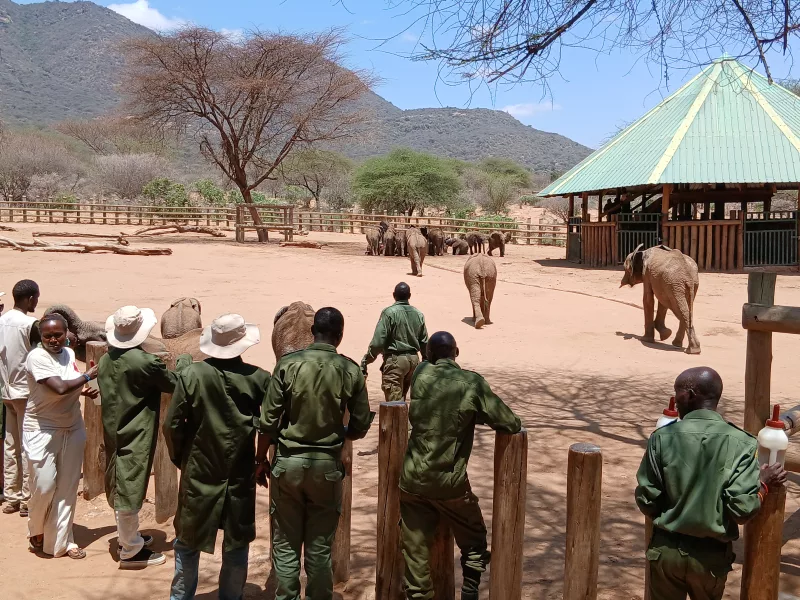
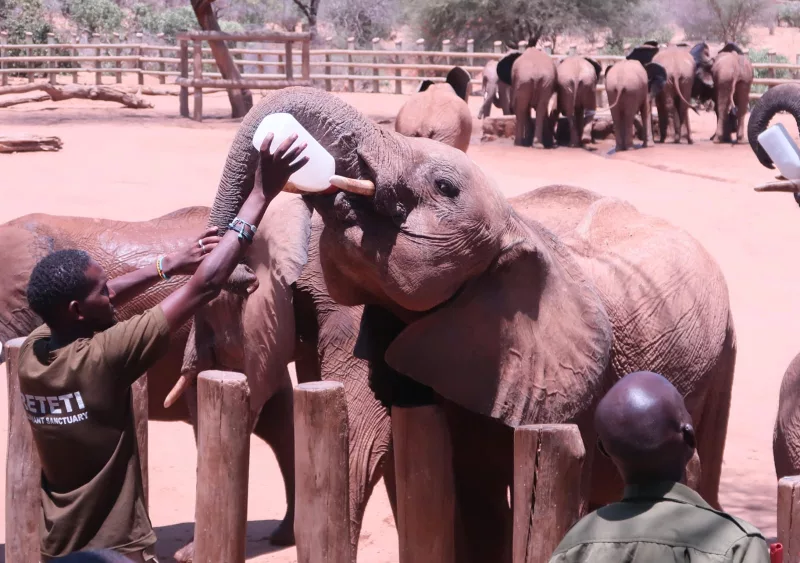
It is 11:55 am, and the keepers here at Reteti Elephant Sanctuary in Samburu are busy preparing for the next feeding session.
We are told it is only five minutes to feeding time, and the calves have already descended from the nearby hills.
A few minutes later, the keepers begin lining up, ready with bottles of goat milk, as songs fill the air.
An elderly man leads the singing, soon joined by the other keepers.
Their voices echo across the sanctuary, drawing the young elephants closer as they approach the feeding area.
One after another, the calves make their way towards the waiting keepers, their trunks swinging and ears flapping in anticipation of the milk.
They know what is coming.
Among them are calves with unusually short or damaged trunks, a visible sign of the injuries inflicted by hyenas while they are trapped in the wells, leaving them vulnerable and unable to defend themselves.
Yet they, too, push towards the keepers for milk, their determination a touching reminder of the sanctuary’s mission to give every rescued elephant a second chance at life.
Some move quickly, seemingly eager to get their share, while the keepers maintain the routine that has become part of daily life at the sanctuary.
It is a captivating scene, but behind the songs and feeding bottles lies a deeper story of wildlife rescue, rehabilitation and a community determined to give orphaned elephants another chance at life.
Located in the rugged Matthews Range in Samburu County, Reteti has built a distinctive approach to conservation by bringing together Samburu traditions, community livelihoods and the protection of vulnerable wildlife.
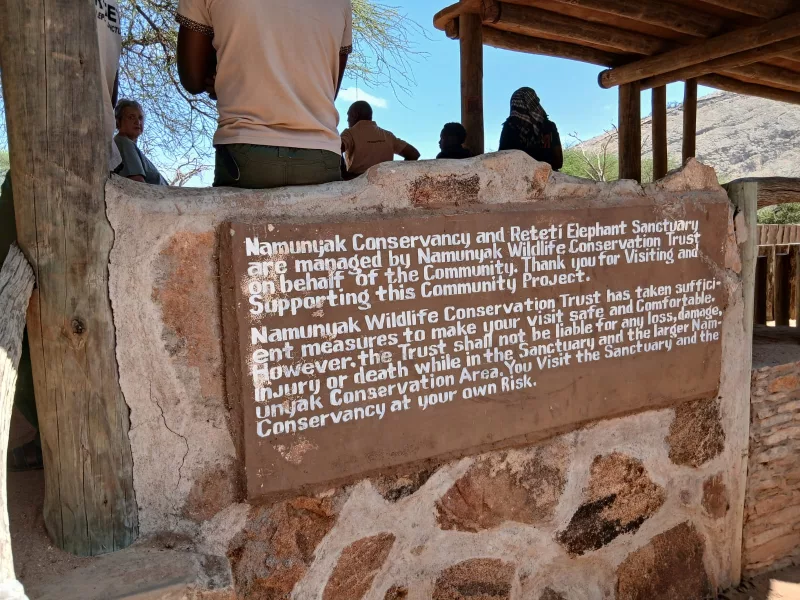
Established in 2016 within Namunyak Community Conservancy, Reteti is Africa’s first indigenous community-owned and run elephant sanctuary.
It currently cares for 52 elephant calves and has released 23 elephants into the wild.
A different kind of safari
For travellers looking beyond Kenya’s familiar safari circuits, Reteti offers an experience that combines wildlife encounters with culture and community-led conservation.
Rather than spending the day on a conventional game drive, visitors can watch the feeding routine, learn how orphaned elephants are rescued and rehabilitated, and see how Samburu traditions have become part of their care.
The experience also offers a glimpse into the livelihoods built around conservation, from the women supplying goat milk to the local keepers responsible for the animals.
Reteti receives an estimated 5,000 to 10,000 visitors annually, placing it among the attractions drawing attention to northern Kenya’s tourism potential.
The sanctuary is about an eight-hour drive from Nairobi and roughly three hours from Isiolo, via the Isiolo-Moyale highway.
Charter flights provide another option, although the remote location and road conditions can make access challenging.
The wider Namunyak Conservancy covers approximately 850,000 acres, a vast landscape of mountains, wildlife and Samburu heritage. The name Reteti refers to a type of Maasai fig tree, reflecting the sanctuary’s connection to the natural environment.
For domestic travellers in particular, the sanctuary provides an opportunity to explore a less familiar part of Kenya while supporting a conservation model that puts the surrounding community at its centre.
The power of a song
At Reteti, singing is more than a way of welcoming visitors.
It is rooted in Samburu culture, where songs have traditionally been used when watering livestock.
The practice has been incorporated into the sanctuary’s routine, creating a familiar experience for the young elephants as they gather for feeding.
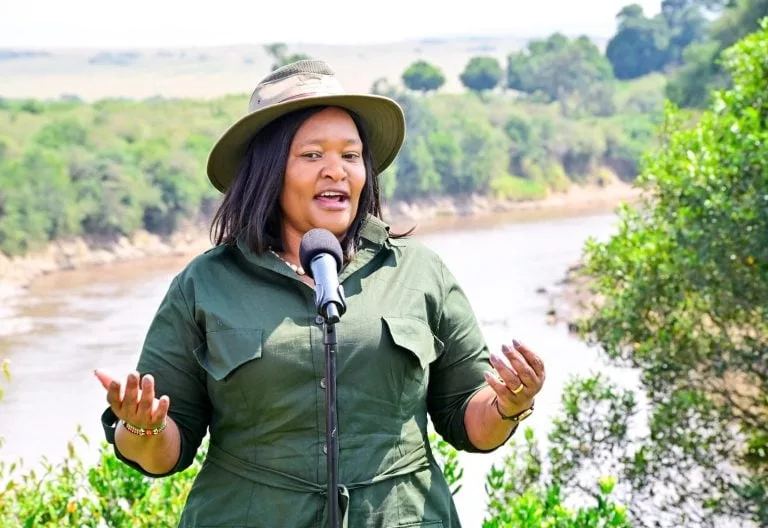
Operations officer Patricia Parkeri says the songs are part of a tradition passed down through generations.
“We sing to our animals while we are feeding them. It is a culture that has been passed down through generations,” she says.
The connection between the community and the elephants goes beyond the feeding enclosure.
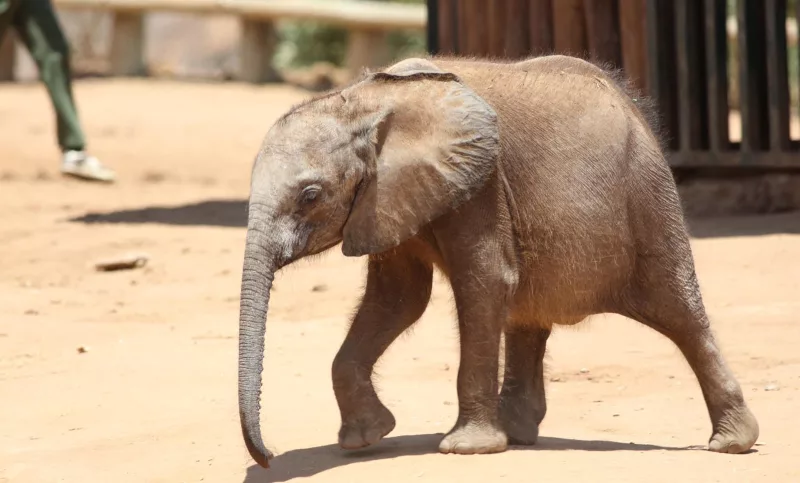
Many of the calves brought to Reteti are rescued after being found in circumstances that threaten their survival.
“About 70 per cent of the elephants we have here come from the singing wells,” Parkeri says.
Singing wells are man-made pits dug in seasonal riverbeds to provide water for livestock.
While they serve an important purpose for pastoralist communities, young elephants can sometimes fall into them, sustain injuries or become separated from their mothers.
Other calves are orphaned because of drought, natural causes, human-wildlife conflict, injuries or attacks by predators.
When a calf is reported, the rescue team first assesses whether it can be reunited with its mother.
Where that is not possible, it may be brought to the sanctuary for specialised care.
“We normally create community awareness, telling them that when they meet an elephant inside a well, they should contact us. We go to that place, rescue it and try to reunite it immediately with its mother,” Parkeri says.
The priority is not simply to keep the animals alive, but also to support their physical and emotional recovery.
“It is our primary role to first take care of them physically and emotionally,” she adds.
The process requires patience, close monitoring and consistent care as the young elephants grow.
The 23 elephants already released into the wild represent part of the sanctuary’s effort to help rescued animals return to their natural environment.
Goat milk that sustains lives and livelihoods
At feeding time, the bottles of milk are central to the scene.
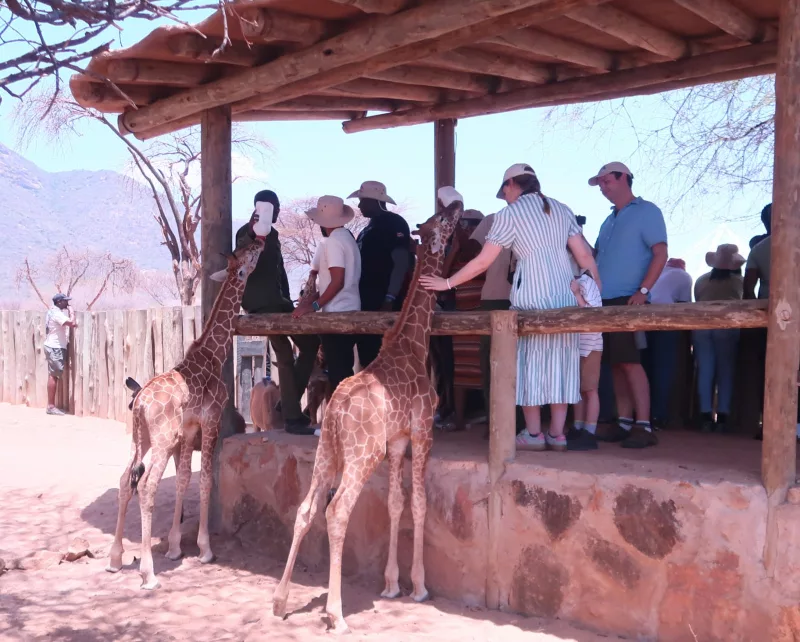
But supplying enough milk for dozens of growing elephants is a major undertaking.
Reteti uses over 1,000 litres of goat milk daily, sourced from women in the surrounding Samburu communities.
The sanctuary spends about Sh6.4 million a month on milk, providing a steady market for local producers.
Approximately 1,250 women are involved in supplying the milk, linking elephant care to household incomes in a region where many families depend on livestock.
Guest relations officer Russia Lenanyokie says the sanctuary works with women across nearby villages to collect the milk.
“We move around villages in Samburu. It is the women who milk the goats, and they sell the milk to us. In every village around here, we collect from them,” he says.
The arrangement gives local women an opportunity to earn from their livestock while contributing directly to wildlife conservation.
It also illustrates how a sanctuary can generate benefits beyond tourism, making the protection of wildlife relevant to the everyday lives of people living alongside it.
Reteti employs about 140 keepers and other staff, most of them drawn from the Namunyak Conservancy community.
The keepers receive training to care for the animals, monitor their welfare and support their rehabilitation.
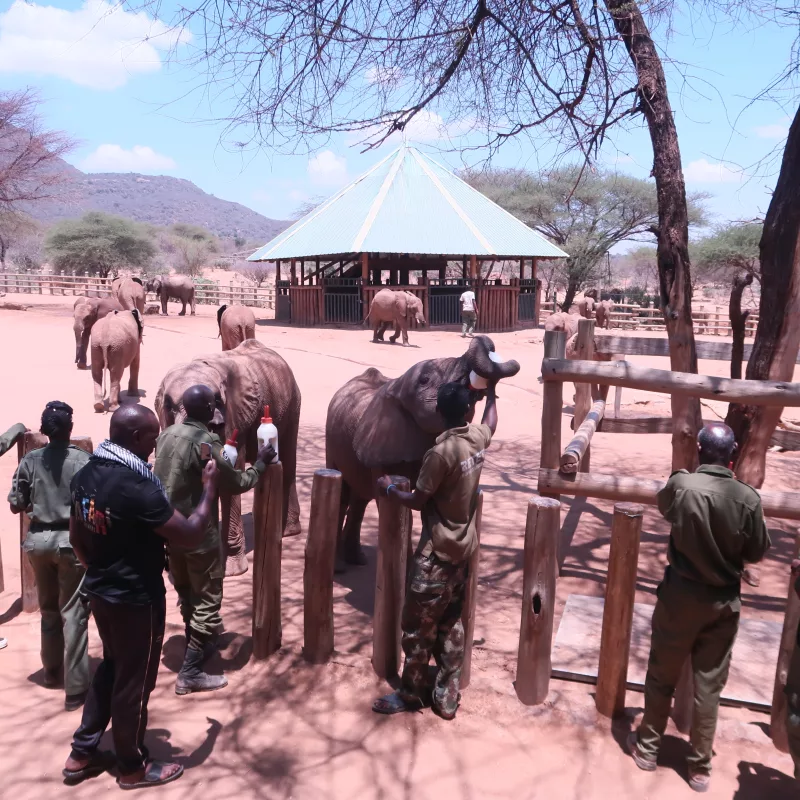
The sanctuary has also employed a full-time veterinary officer who provides medical care to the calves, treats their injuries and monitors their health as they recover and grow.
For the community, the sanctuary is therefore both a conservation centre and a source of employment.
Conservation that benefits the community
Reteti’s community-owned model is central to its work.
Rather than treating wildlife protection as a responsibility separate from the needs of local residents, the sanctuary seeks to ensure that conservation brings tangible benefits to the people who share the landscape with wild animals.
Its revenue-sharing arrangement allocates 60 per cent to the local community and 40 per cent to sanctuary operations.
The community share supports needs such as education bursaries and hospital bills.
This is significant in a region where communities can bear the costs of living alongside wildlife, including livestock losses and damage associated with human-wildlife conflict.
Namunyak Conservancy also works to raise awareness and address conflicts between people and wildlife.
Residents play an important role in alerting the rescue team when elephants are injured, trapped or separated from their mothers.
The relationship is not without challenges.
Conservation requires cooperation, particularly where livestock and wildlife depend on the same land and water resources.
Reteti’s operations are supported by private donations, elephant adoption programmes, visitors and partnerships involving the Kenya Wildlife Service, Samburu County Government and the Namunyak community.
In 2024, President William Ruto opened a guest house at the sanctuary, drawing further attention to the role of conservation and tourism in the region.
Opening up northern Kenya
Reteti’s location makes it part of a wider opportunity to expand tourism beyond Kenya’s established destinations.
Better roads and improved access could help more travellers discover Samburu and support businesses operating in the region.
The Kenya Tourism Board (KTB) is seeking to encourage more domestic travel through its Hapa Ni Wapi Sales Conversion Campaign, which aims to turn interest in local destinations into actual bookings.
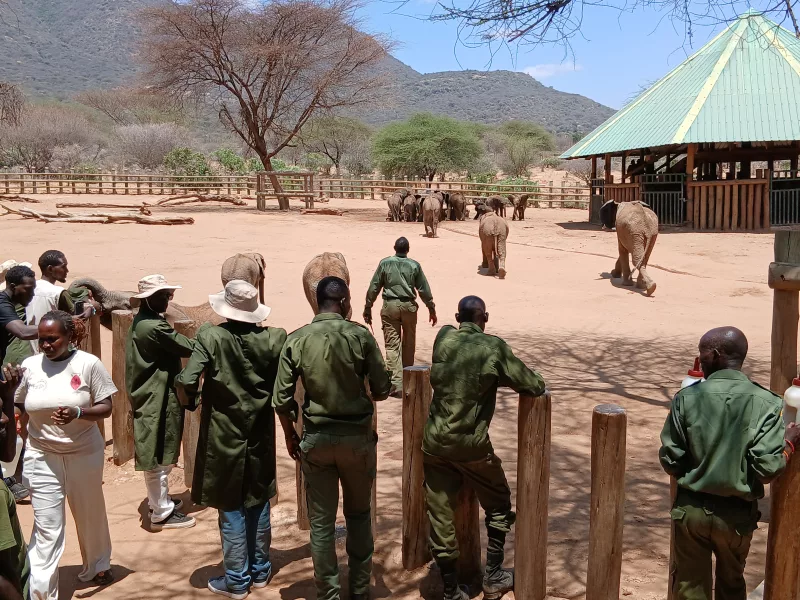
The initiative brings together tour operators, county governments and tourism stakeholders to develop affordable, ready-to-book packages.
Samburu, alongside the Chalbi Desert and the wider northern Kenya circuit, is among the areas being promoted.
KTB CEO June Chepkemei has said the board aims to increase domestic bed nights from 5.15 million in the 2025/26 financial year to 5.6 million in the current financial year.
For Lenanyokie, destinations such as Reteti should be explored by Kenyans as well as international tourists.
“It is good for Kenyans also to support Kenya. We are all born here. This is our country and our landscape. It is good for Kenyans to explore and come to see what other Kenyans are doing,” he says.
At Reteti, the appeal begins with Samburu songs and baby elephants rushing towards bottles of goat milk.
For those willing to travel beyond the familiar safari routes, Reteti offers a different way to experience Kenya, one in which the people caring for wildlife are as much a part of the story as the animals themselves.