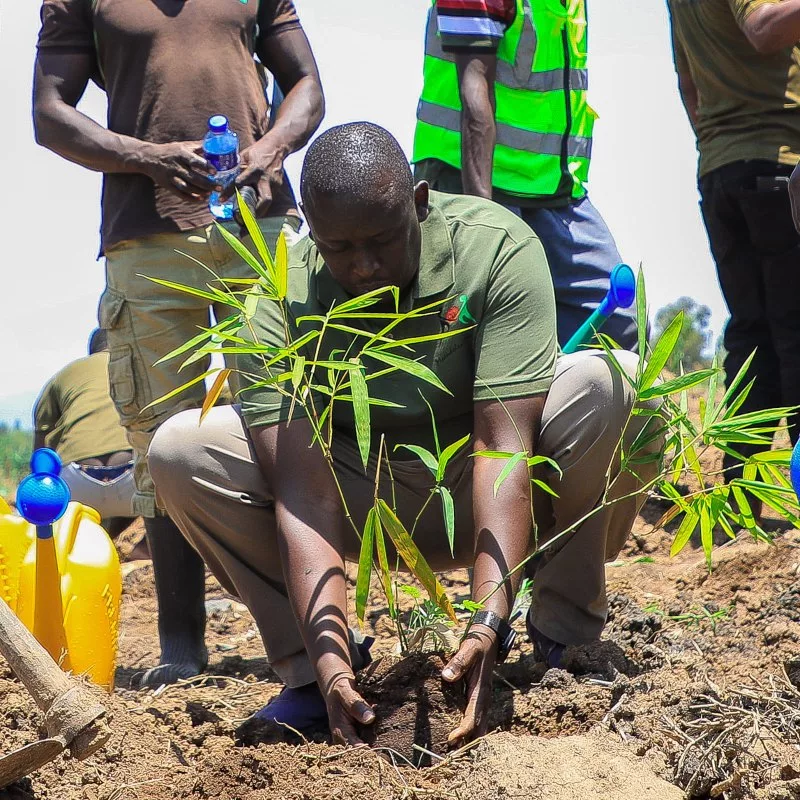
The National Government Constituencies Development Fund (NG-CDF) has committed to planting 500,000 trees annually as part of efforts to support the government's target of growing 15 billion trees by 2030.
NG-CDF Board chief executive Benjamin Magut said the fund was also investing in climate change mitigation and adaptation initiatives, including tree planting, water harvesting, solar energy and flood control projects across constituencies.
Speaking during a tree-planting exercise in Kisumu Central Constituency, Magut said the fund had allocated resources to support environmental conservation while empowering communities through tree nurseries run by youth and women's groups.
The exercise, held during the ongoing Massingira Month campaign, was part of efforts to promote environmental sustainability and protect communities from the effects of climate change.
Magut said the NG-CDF was working with constituencies and the Kenya Forest Service to support tree planting and provide seedlings for environmental restoration programmes.
He noted that the NG-CDF Act, 2015, allows constituencies to allocate up to five per cent of their funds to climate change initiatives.
According to Magut, the fund had invested approximately Sh3.2 billion in climate-related initiatives since the launch of the campaign supporting the national tree-growing target.
He said the interventions included improving forest cover, installing water storage tanks in schools and public institutions, adopting solar energy and supporting infrastructure projects designed to protect communities from flooding.
In Kisumu Central, Magut inspected flood-control works along River Auji, where gabion dykes have been constructed to protect homes, farms and schools from recurring floods.
He said residents of Kapuothe village had endured flooding for years, with rising water levels disrupting livelihoods and forcing families to abandon their homes.
The floods also affected learning at Nanga Primary School and Nanga Secondary School, which had experienced disruptions during the rainy season.
Magut said the construction of the dykes, undertaken at a cost of approximately Sh16 million, had helped restore access to homes and farmland for thousands of residents.
He added that the flood-control measures had enabled the two schools to resume normal operations throughout the year, reducing the risk of learning disruptions during heavy rains.
The tree-planting exercise around the dykes is expected to complement the flood-control infrastructure by helping to reduce soil erosion and strengthen environmental protection along the riverbanks.
Magut said such projects demonstrated how constituency-level interventions could improve community resilience while supporting the country's broader climate action agenda.
Kapuothe residents welcomed the project, saying recurring floods had affected their homes, farms, sanitation and children's education.
Ezekiel Onyango Oketch, a resident of Kapuothe, said the community had endured years of flooding before the intervention by Kisumu Central MP Joshua Oron.
He said the opening of the river channel and construction of gabion dykes had renewed hope among residents, with some families who had left the area beginning to return to their homes and farms.
“We had a serious problem with water for about seven or eight years. Since the river was opened and the dykes constructed, people have started returning to their farms,” Oketch said.
He added that residents were more confident about facing future heavy rains, noting that flooding had previously affected both primary and secondary schools in the area.
Mildred Omondi said residents had experienced severe flooding since 2019, leaving families worried about their safety whenever heavy rains began.
She said the new dykes had brought relief, particularly to women and children who previously faced uncertainty whenever rivers burst their banks.
“As women, we can now sleep in our houses with our children without constantly worrying about floods, even during the long rains,” Omondi said.
She added that floodwaters had previously mixed with sewage, exposing residents to sanitation risks as children struggled to get to school.
Omondi said the improvements had restored a sense of security among families who had lived with the threat of flooding for years.
Residents expressed gratitude to the area MP for supporting the flood-control project, saying they hoped the intervention would provide lasting protection for their homes, farms and public institutions.
The tree-planting initiative is expected to reinforce the project's environmental benefits as the government steps up efforts to increase tree cover and strengthen communities' resilience to climate change.