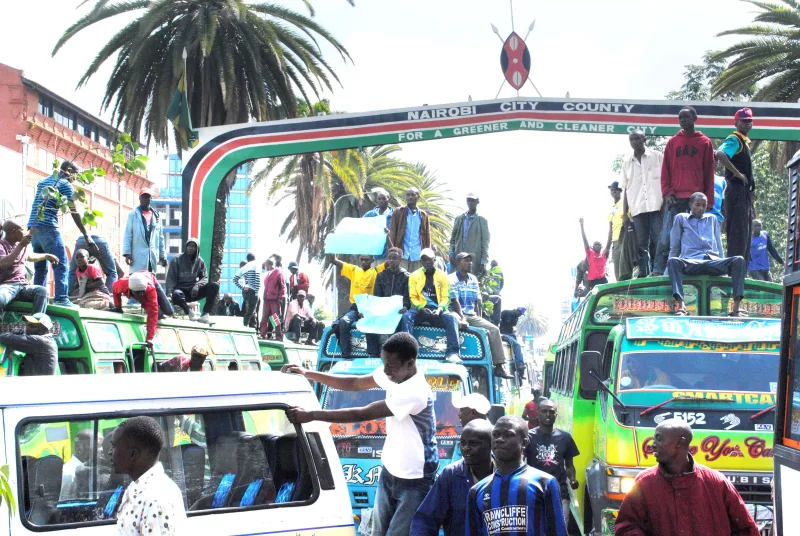
You don’t know bullying until you are a new driver in Nairobi. Woe unto you if you are using Jogoo Road, because you might as well be driving in the gutter. You are expected to give way, squeeze yourself into whatever space remains and somehow apologise for being on the road in the first place. A matatu will overlap, cut you off, hoot at you and leave you wondering whether you missed a memo on how driving in this town works.
There is a saying that if you can drive in Nairobi, you can drive anywhere in the world, not necessarily because our roads are terrible, although some of them are, but because of the matatus you have to contend with.
When I started driving, I genuinely could not understand this culture. The bullying was exhausting. I hated driving so much that, at some point, I parked my car. Every journey felt like a confrontation I had not signed up for. I would leave the house wondering what the road had in store for me that day, and more often than not, I returned frustrated. At some point, though, my frustration gave way to curiosity. I wanted to understand why these men drove the way they did.
Why was every trip seemingly a race? Why did they behave as though every other road user was an obstacle? Why did the police watch some of these things happen without any apparent consequence? And why, despite the complaints, near misses and occasional tragedies, did the behaviour persist?
So I changed my strategy. Instead of confronting matatu drivers on the road, I decided to confront them one at a time. I started boarding matatus, sitting in the front seat and asking questions. If a driver had just overlapped or performed one of those manoeuvres that make you question your faith in humanity, I wanted to know why.
It was through these interactions that I began to appreciate something I had not considered while sitting behind my steering wheel. Many of these men are trying to survive.
Now, before anyone misunderstands me, this is not an argument for excusing reckless driving. No economic pressure gives anyone the right to endanger the lives of passengers, pedestrians or other motorists. But I think we sometimes make the mistake of condemning behaviour without trying to understand the conditions that produce it. And Nairobi’s matatu culture deserves a closer look.
For many drivers, the day begins early and ends when the numbers add up. In this business, the saying that the early bird catches the worm is not a motivational quote. It is economics. If you have ever been stuck at Muthaiga for 30 minutes, you know how much time Nairobi traffic can steal from you. Sometimes, you are on Bunyala Road, looking at your office a few metres away, yet it takes you another 30 minutes to get there. For the ordinary motorist, this is an inconvenience. For a matatu driver whose earnings depend on completing trips, those 30 minutes could mean missing an opportunity to make another round.
Many matatus are financed through loans taken out by their owners. The vehicle must generate enough money to meet its financial obligations, pay the sacco and cover the costs of running the business. The driver, meanwhile, is often expected to meet a daily target. Depending on the route and arrangement, this may mean completing a number of round trips a day, most times, six.
And here is where the pressure begins. The matatu business is fiercely competitive. Report late and you lose time. Get caught in traffic and you lose time. Spend too long on one trip, and by the time you return, 26 vehicles may already have moved ahead of you. There are other drivers looking for work, other vehicles competing for passengers, and targets that do not necessarily adjust themselves because traffic was terrible that morning.
Every minute counts. Every trip counts. Every passenger counts.
You begin to understand why some drivers seem to treat the road as a race. The more trips they make, the better their chances of meeting their targets and earning something for themselves. The pressure to finish early and make money early is real. Unfortunately, so are the risks when speed takes precedence over safety.
Sometimes, exhaustion becomes part of the equation. This is where the squad comes in. Drivers may bring in young men looking for a day’s work to help operate the vehicle. If you have travelled on the Rongai route, you have probably seen some of these young men, miraa stuffed into their mouths, looking as though they are permanently wired. It’s called a taxin in street lingo. We see the young man chewing miraa cutting us off, and we stop there. We rarely look at the working conditions, the pressure to earn or the incentives that may reward speed over caution.
Perhaps this is where the conversation about Nairobi’s matatu culture needs to change. We need to hold drivers accountable, certainly. But we must also ask what responsibility vehicle owners and saccos bear for the targets drivers are expected to meet. We must question why traffic laws can be flouted in broad daylight, and what meaningful enforcement should look like.
Understanding the pressures behind reckless driving does not make it acceptable. The motorist being pushed out of their lane has a right to safety. The passenger boarding a matatu has a right to a driver who is sober, rested and responsible. And the pedestrian crossing the road should not have to gamble with their life because someone is in a hurry to make another trip.
My conversations with matatu drivers did not suddenly make me enjoy driving in Nairobi. I still understand the frustration. But they taught me that there is often more to a person’s behaviour than what we see in a passing moment.
Sometimes, understanding requires us to get close enough to ask questions we would otherwise never think to ask.
And perhaps that is what we need to do with Nairobi’s matatu culture: look beyond the chaos, interrogate the system and recognise the human beings within it, without losing sight of the lives their actions can put at risk.
Because at the end of the day, we are all trying to make a living and get somewhere. The difference is that none of us should have to risk our lives to get there.