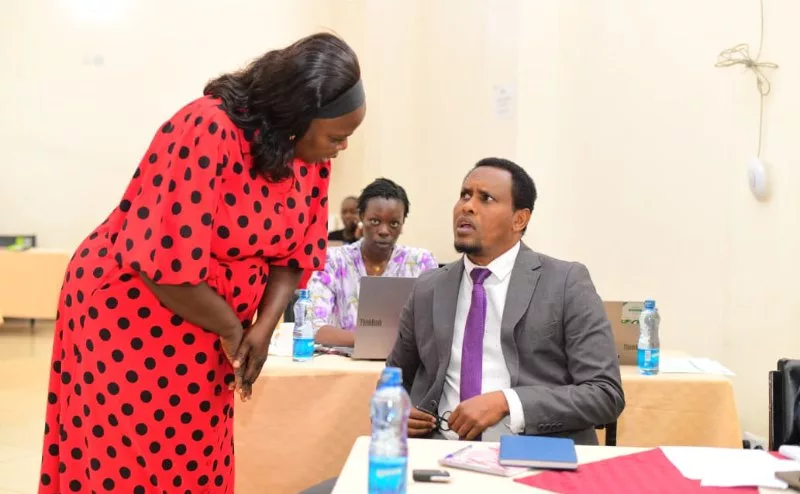
 Sophia Yiega, the CEO of WERK during the release of the report
Women in Kenya take an average of 19 years to become school principals, compared with 16 years for men.
This as caregiving responsibilities, gender stereotypes and institutional barriers continue to slow their advancement into school leadership.
A new study by Women Educational Researchers of Kenya (WERK), conducted in partnership with Global School Leaders (GSL), has found that women face persistent structural, social and cultural constraints that affect both their entry into leadership and their experiences once appointed.
The report identifies family responsibilities, relocation requirements, unclear promotion processes and gender-based assumptions about leadership as some of the factors limiting women's progression in the education sector.
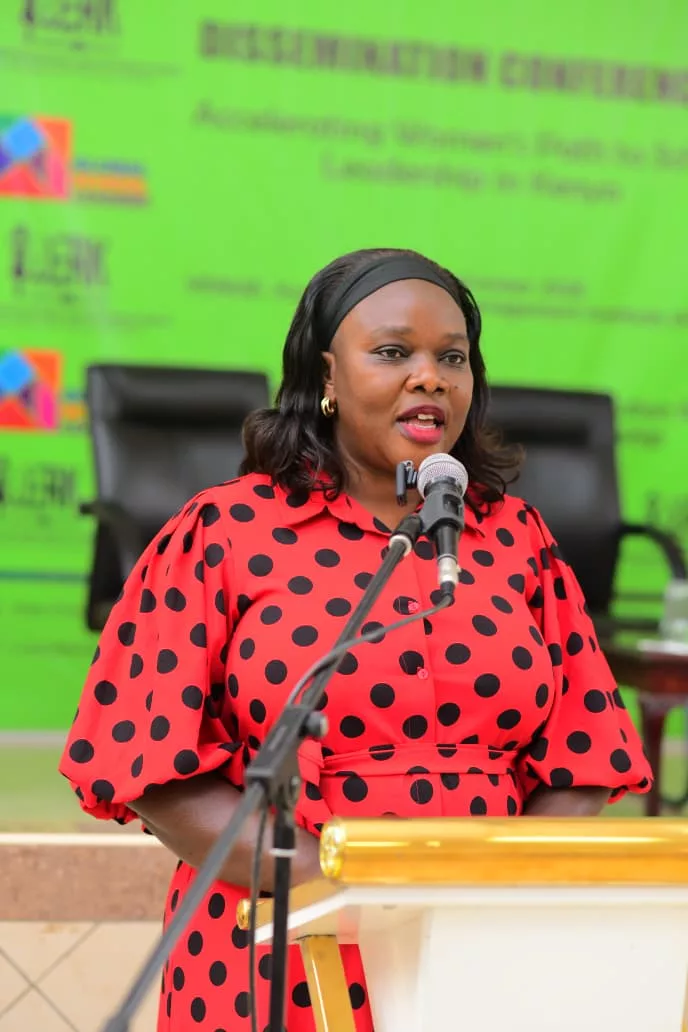 Sophia Yiega, the CEO of WERK during the release of the report
“Kenyan classrooms are full of women, yet fewer than 35 per cent of school leaders are female, despite men and women being almost evenly represented in the teaching workforce,” said Sophia Yiega, the Chief Executive Officer of WERK.
“At WERK, we sought to understand why this gap persists, because leadership shapes the climate of a school, the confidence of its teachers, and the opportunities available to learners.”
The study found that family and caregiving responsibilities often influence women's decisions to pursue promotions, with some postponing applications while raising young children or waiting until their children are older.
Others reported that leadership positions requiring relocation away from their families made career advancement difficult, while some had to negotiate their decisions with spouses or parents because of the additional time and responsibilities associated with leadership roles.
The findings show that 57 per cent of women surveyed reported difficulties balancing their workload with family responsibilities, compared with 49 per cent of men.
Beyond the home, community attitudes and entrenched gender stereotypes also affect women's prospects. Some female principals reported encountering scepticism from parents and community members who expected school leaders to be men.
“One community is patriarchal… women are supposed to be in the kitchen… not seated in such a position,” one female principal from Kajiado told researchers.
Another principal from Nairobi described the experience of having her authority questioned because of her gender.
“Some men tend not to accept the fact that I am the principal here… when they hear ‘principal’, they expect a man and are shocked to see me as a lady,” she said.
Institutional barriers further complicate women's career progression, with teachers citing limited leadership vacancies, unclear promotion procedures, favouritism and corruption.
The report also points to informal practices that discourage women from taking leadership positions in boys' schools, restricting their access to some opportunities within the education system.
Women remain particularly underrepresented in mixed-gender schools. In the study sample, they accounted for only 28 per cent of principals in such schools, compared with 72 per cent men.
The challenges do not end when women secure leadership positions. While principals of both genders contend with inadequate financial resources, teacher shortages, bureaucratic demands and limited parental cooperation, women reported additional difficulties in asserting their authority.
Survey findings indicate that 62 per cent of female principals said their decisions were sometimes challenged by colleagues or supervisors, compared with 53 per cent of their male counterparts.
Women were also more likely to consider leaving their current schools, with 44 per cent reporting that they had considered doing so, compared with 35 per cent of men.
The study also highlights gendered perceptions of leadership, with women frequently described as nurturing, organised, detail-oriented and collaborative, while men are more often viewed as assertive, authoritative and directive.
Researchers warn that such assumptions can influence how communities and institutions perceive leadership ability and may reinforce expectations about who is suited to head a school.
Despite the challenges, the report identifies practical ways schools can promote gender equity. These include assigning leadership responsibilities to students and staff based on merit rather than gender, promoting female role models and sensitising boys to gender equality.
Principals also highlighted the importance of working with community organisations to support vulnerable girls facing challenges such as early pregnancy, substance abuse and inadequate access to sanitary materials.
Yiega said the barriers identified in the report were not a reflection of women's ability or ambition, but challenges that education systems and communities could address.
“These are not failures of ability or ambition, but barriers that our systems and communities can change,” she said.
The report recommends monitoring gender gaps in leadership appointments, reducing relocation-related barriers and adopting targeted affirmative measures to ensure women have fair opportunities to advance.
It also proposes flexible timetables, temporary maternity cover, study leave and on-site childcare facilities to help teachers balance professional responsibilities with family life.
Mentorship programmes, peer-support networks and access to leadership training are identified as additional measures that could strengthen women's preparedness and confidence to take up senior positions.
The researchers further urge schools, parents, communities and school boards to undertake gender-sensitisation programmes and challenge assumptions that associate leadership with men.
Abraham Okumba, Senior Manager for Partnerships Africa at Global School Leaders, said the findings would inform the organisation's work with partners in Kenya and across its global network.
“Effective school leadership transforms what happens in classrooms, and who gets to lead matters just as much as how leaders are trained,” Okumba said.
He said the report could help policymakers, school boards and sponsors identify practical reforms, including fairer career progression and stronger support for women balancing leadership and family responsibilities.
The findings place renewed focus on the need to address gender inequality in school leadership, with the report urging education authorities and other stakeholders to translate the evidence into policies and practices that give qualified women a fair chance to lead.