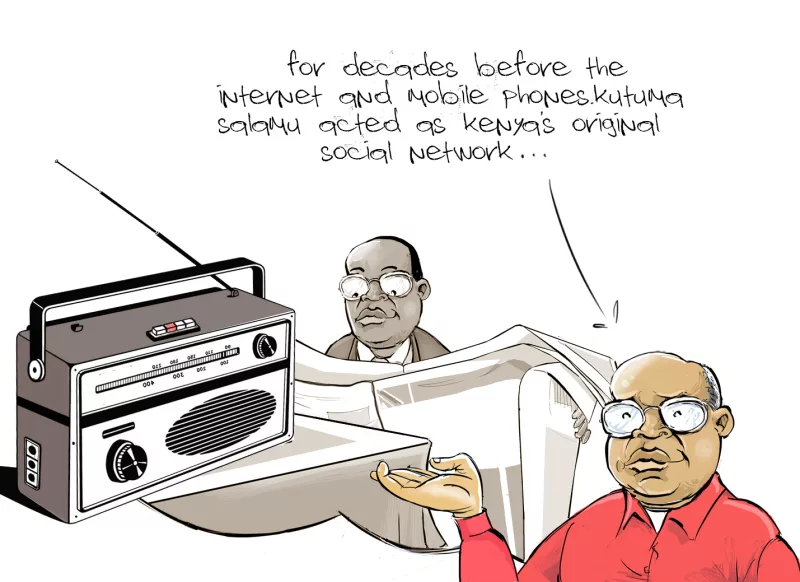
Kenyans are in a different category when it comes to embracing and utilising digital innovations and social media. Which is why perhaps Nairobi became Africa's largest technology hub, drawing in all the big tech companies to open up their sub-Saharan headquarters in the city.
In a country of only 60 million, the Communications Commission of Kenya estimates about 60 per cent of the population use smartphones, and just over half of them are active social media users.
Not to sound like an ancient millennial, but I remember the day Facebook came to Kenya. I was an undergraduate student on campus, and I spent many hours on the page. Why do I remember it so well? I was a multimedia lab assistant and I had to lock up after students. Since I was waiting for them to finish, I browsed that social media page for hours.
That was just the beginning. Then came Twitter (now X). I spent half my internship on Twitter as I interned for a slow-paced NGO. I give my own experience with introduction and interaction of social media as an example of how fast and independently most millennials embraced these new innovations. My own friends were much more active on social media than I was.
Then came the Gen Zs. They were raised in an already booming technological environment. They spoke tech lingo and played with smartphones since they were toddlers. I say all this to say that Kenyans are unbeatable as internet users and more so as social media users. For us, the digital platform provides a safe space for freedom of expression.
We use social media to share our appreciation or disappointment with certain issues, especially things that affect us as Kenyans. Is there a corrupt traffic officer on a certain point on the highway? Have you just had an amazing customer service experience somewhere? Just share your experience in 280 characters and watch the stone roll. When the state of the country is in shambles, we don't mobilise outside the Office of the President, we convene on X and make the subject matter trend until we are heard. Back then Kenyans on Twitter were seen as a collective referred to as KOT (now KOX). It was this identity of Kenyans as a whole that gave the people a very powerful voice. They moved as one and spoke in a unifying voice. It is this voice that has sent people running for the hills, trying to get away from the unrelenting voice of disgruntled Kenyans.
I believe Kenyans understand just how powerful and undefeated they are when they move and speak as one. This is perhaps why we are among the most feared online foes in the world. The hashtags #kenyavs… and #someonetell… were among the first hashtags we used to go to war against people who dared to cross us as Kenyans.
Just last week, Kenyans drew international attention with their X feud against South Africans. The #KenyavsSouthAfricans hashtag was used to hurl insults and mock South Africans as they had dragged Kenyans into their debate against Zimbabweans that resulted from the death of Zimbabwean businessman Wicknell Chivayo. The ‘banter’, as many Kenyans refer to it, drew international attention from many African counterparts who were at one point on the receiving end of these banters.
The debate brought about the conversation of Kenyans being the biggest online bully many Africans and Westerners have faced.
Some Americans have found themselves on the receiving end of the Kenyan ire. American actress Skai Jackson found herself facing an overnight foe when she said in an interview that many Kenyans don’t have mirrors. The number of comments and clapbacks she received from angry Kenyans made the poor actress turn all her comments off from her social media platforms.
Early last week, she turned them back on, only for Kenyans to inform each other and swarm her comment sections once more.
In 2015, media giant CNN reported Kenya as a ‘hotbed of terror’ ahead of the then President Obama’s visit. Kenyans flew into a rage and created the hashtag #someonetellcnn and pelted the media house with angry tweets demanding an apology. A senior executive from CNN ultimately flew to Nairobi to meet with the government and apologise in person.
Even though millennials were at the pioneers of these Twitter wars, Gen Zs have taken over as the main group that assembles to fight these social media wars.