The government is implementing a Sh14 billion aquaculture programme in 16 counties in an ambitious plan to boost fish production, create jobs and strengthen food security.
The Aquaculture Business Development Programme (ABDP) targets thousands of smallholder farmers, women and youth groups seeking to venture into fish farming.
Mining, Blue Economy and Maritime Affairs Cabinet Secretary Hassan Joho said the initiative has already supported 19,000 smallholder farmers and developed nine fish landing sites across five counties.
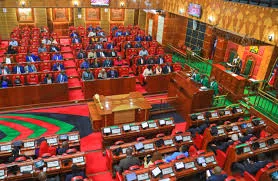
Appearing before the Senate, Joho said the programme is being implemented in Nyeri, Kirinyaga, Meru, Embu, Tharaka Nithi, Machakos, Kiambu and Kajiado.
Other beneficiary counties are Kisii, Migori, Kisumu, Siaya, Homa Bay, Busia, Vihiga and Kakamega.
The programme also supports school nutrition projects through 4K clubs, with investments in fish ponds and kitchen gardens.
Joho said 175 women and youth groups have received grants to implement business plans targeting various activities along the fisheries value chain.
“I would like to inform the Senate that through the Aquaculture Business Development Programme, 175 women and youth groups have been supported with grants to implement business plans along value chain activities,” Joho said.
He said the programme has also supported the equipping and accreditation of the Fish Quality Laboratory in Kisumu.
The CS was responding to Kilifi Senator Stewart Madzayo, who sought details on measures to ensure equitable distribution of blue economy investments.
Madzayo questioned whether counties along the coast and Lake Victoria, where fishing is a major economic activity, were receiving adequate government support.
Joho disclosed that the government is separately implementing a Sh10 billion Kenya Marine Fisheries Socio-Economic Development project in five coastal counties.
The counties are Mombasa, Lamu, Kwale, Kilifi and Tana River.
The initiative seeks to improve fisheries management and expand alternative livelihood opportunities for coastal communities.
According to Joho, the project has supported 1,263 subprojects through grants worth Sh3.37 billion, benefiting 83,925 people.
The investments include mariculture infrastructure, fish landing sites and other county fisheries facilities.
“The State Department of Blue Economy and Fisheries has undertaken the construction of fish markets in Malindi, Ngomeni and Kichwa cha Kati landing sites in Kilifi County,” Joho said.
He added that the government is developing the Likoni fish market in Mombasa, alongside seawalls and fish landing sites at Gazi and Kibuyuni in Kwale.
Madzayo also pressed the ministry on measures to address declining fish stocks caused by climate change, pollution and other environmental pressures.
Joho said the government is working with the State Department of Environment and Climate Change to strengthen early warning systems for fishing communities.
The systems provide oceanographic information to guide fishing operations and improve safety.
He said the ministry has adopted nature-based and mechanical interventions to address rising sea levels and other climate-related threats.
These include the planting and restoration of 2.4 million mangrove seedlings.
Meanwhile, Kisumu Senator Tom Ojienda demanded an update on blue economy projects initiated in Kisumu since 2022 and timelines for completing pending works.
Joho said the Cabinet had approved Sh1.2 billion for the development of the Kabonyo Regional Fisheries and Aquaculture Service and Training Centre of Excellence.
The project will be financed through a tied-aid credit arrangement with the Hungarian government.
“This project will facilitate training, research, innovation and best practices in fisheries and aquaculture through demonstrations and incubations,” Joho said.
The facility will incorporate a Nile Perch Research and Development Centre, an Aquaculture Resource Centre and the Kenya Fishing School.