Kenyan rapper Stevo Simple Boy has reportedly ended his relationship with Brenda following DNA test results that allegedly established he is not the biological father of their son.
The development has attracted widespread attention, with social media users discussing the musician’s relationship, the reported test results, and the circumstances surrounding the dispute.
Stevo Announces Separation Following DNA Results
The musician, whose real name is Stephen Otieno Adera, reportedly confirmed the separation in a statement shared on social media.
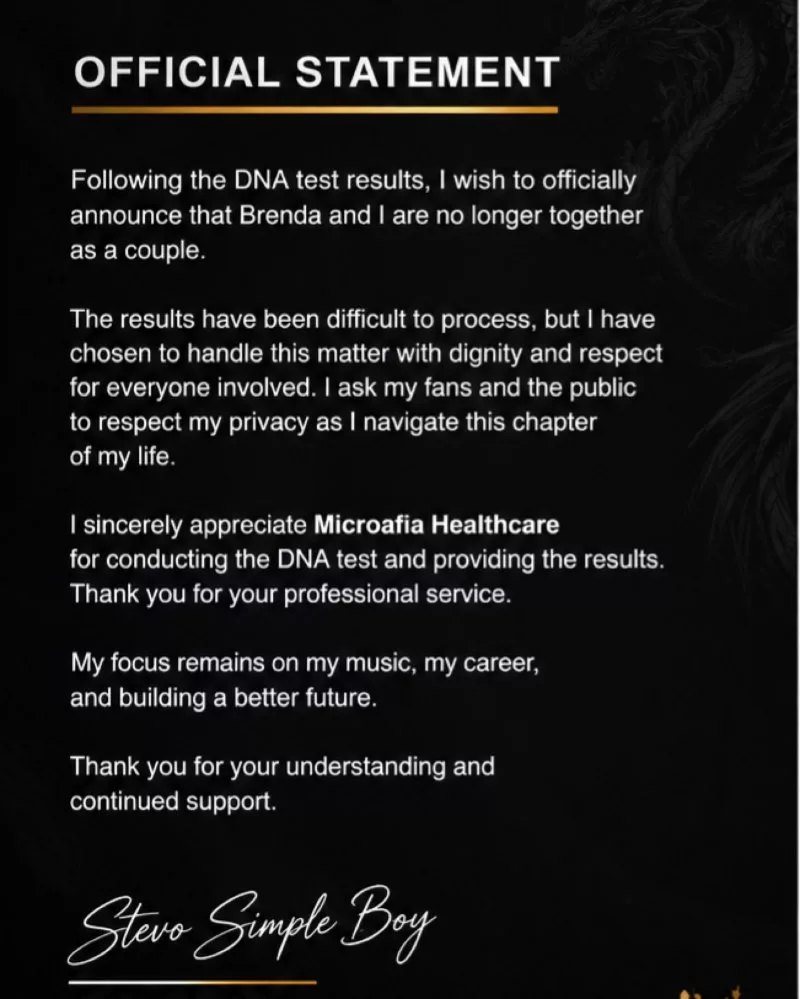
According to entertainment reports, the DNA results indicated that Stevo was not the child’s biological father.
The announcement brought renewed attention to a controversy that had generated considerable discussion online.
Stevo’s decision to address the situation publicly has prompted reactions from fans who have followed his personal life and relationship with Brenda.
However, the reported results and the couple’s statements should be distinguished from speculation about the events that led to the dispute.
Paternity Speculation Had Circulated Online
Questions about the child’s paternity had circulated before the reported DNA results became public.
The controversy was fueled partly by claims attributed to people associated with the musician, prompting online debate about the child’s biological father.
The reported test results have since placed the issue at the centre of public discussion.
Paternity disputes can have significant emotional consequences for the people involved, particularly when private family matters become public entertainment.
The child’s privacy should also be protected, and the situation should not become an excuse for online ridicule or unverified accusations against either parent.

Brenda’s Response Adds Another Dimension
Brenda reportedly disputed aspects of the narrative surrounding the paternity controversy, offering a different account of what happened between the couple.
Her reported comments have added another dimension to the story, with questions emerging about when the couple learned of the results and how the dispute affected their relationship.
The competing accounts highlight the importance of hearing both parties before drawing conclusions about the circumstances surrounding their separation.
It remains important to distinguish the reported breakup from allegations about what either partner knew or did before the DNA test.
The development has also prompted wider conversations about trust, parenthood and the consequences of making private family matters public.
For now, the reported separation marks a new chapter in the couple’s relationship, while the details surrounding the dispute continue to attract attention.