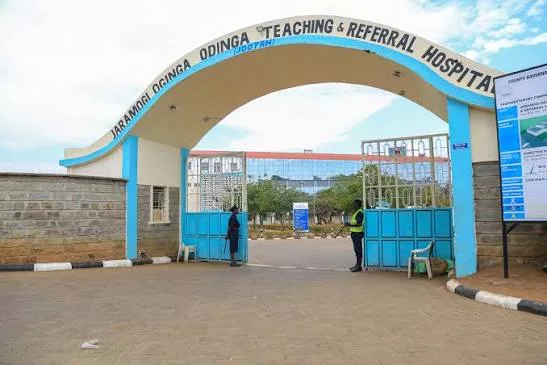
When the government elevated the Jaramogi Oginga Odinga Teaching and Referral Hospital to a Level C5 parastatal, a status previously reserved for public universities, the decision marked a transformative milestone for the institution and healthcare delivery.
For residents of Nyanza and Western regions, the facility’s upgrading means a lot of things. It means inclusion into the national health programme agenda as well as hope that the disease burden that has stalked the two regions for decades will be mitigated.
The hospital’s quick transition from its regional to national status should be applauded considering the Herculean task needed for the quick changes and transformation.
For the residents, the rich history of the hospital is unescapable because it is intertwined with that of the politics of the region.
Named after one of Kenya’s most famed politicians, the hospital was opened a few years after the country’s independence, in 1969. The hospital was one of the projects aimed at the development of our young and newly independent state, and the hope was that it would help provide free healthcare to all citizens.
Despite being named after one of Kenya’s household names, this treatment facility is more recognisable by its nickname, Russia Hospital.
The story of Russia Hospital dates back to 1964, when the then Vice President Jaramogi Oginga Odinga travelled to Russia for a meeting with the premier of the Soviet Union at the time, Nikita Khrushchev. The meeting had been organised because the wealthy and powerful USSR was identified as a possible development partner for Kenya.
Its construction was completed in 1969, and the hospital was named New Nyanza Provincial General Hospital. However, owing to its unique architecture and European donors, the hospital was rarely referred to using its official name but was instead referred to as Russia Hospital.
Upon completion of construction, it was agreed that the hospital would be officially opened to the public on October 25, 1969. The opening ceremony was to be one of pomp and circumstance, and it would be attended by the highest political officials in the land, including President Jomo Kenyatta. Unfortunately, what was intended to be a joyous occasion turned into a tragic event where many lost their lives.
The event occurred in a climate of political tension, given the deaths of various high-ranking politicians and Jaramogi’s dissent from Kenyatta’s government. So, when Kenyatta arrived in Kisumu, he was met with a hostile reception. During the event, a riot broke out, and the presidential guard opened fire on the crowds, killing more than 50 and injuring many others.
In the aftermath of the event, the New Nyanza Provincial General Hospital fell into disrepair due to a lack of funding.
As new governments came into power and policies in the country were changed, the hospital was slowly revived. In 2012, it was renamed the Jaramogi Oginga Odinga Teaching and Referral Hospital, in honour of its originator, and to mark its status as one of the region’s teaching and referral hospitals.
The hospital’s quick transition under the leadership of its acting CEO Dr Joshua Okise is significant because the health indicators for the Nyanza region has not been impressive. And this could be an opportunity to make the situation better.
This year when Kenya is undergoing a noticeable epidemiological transition, facing a "triple burden" of infectious illnesses, rising non-communicable diseases and accidental injuries, the Luo Nyanza region (comprising Kisumu, Homa Bay, Migori and Siaya counties) continues to bear some of the heaviest healthcare burdens in the country.
Data from the Ministry of Health and the 2026 Economic Survey highlights the core diseases driving the healthcare burden in the region. Luo Nyanza continues to experience the highest HIV prevalence and new infection rates in Kenya. National data from this year indicates a 19 per cent national surge in new infections, heavily affecting young people. Outside of Nairobi, counties like Migori, Kisumu and Homa Bay report the highest new infection volumes nationally. Siaya county, for instance, maintains an HIV prevalence of 9.8 per cent, more than double the national average
For malaria, the region remains a high-endemic zone. Nationally, malaria cases spiked from 3.8 million in 2024 to 14.3 million heading into 2026. Lake endemic regions like Nyanza shoulder a vast proportion of these outpatient cases and paediatric hospitalisations.
It was impressive watching Medical Services Principal Secretary Dr Ouma Oluga reminding the hospital’s leadership that it is no longer a county government facility and urging them to adopt the discipline and strategic outlook expected of a national institution.
In my view, elevation will not only enhance JOOTRH’s prestige but also enable it to attract and retain highly skilled health professionals, a vital element in improving clinical outcomes.
To help tackle the big disease burden facing the region, the hospital’s management should develop a deliberate public health approach that addresses root causes of preventable diseases within the community because the elevation risks the hospital being overwhelmed.
Supporting local hospitals is vital for maintaining the health, safety and economic stability of a neighbourhood.
Immediate access to care: Local hospitals ensure that residents do not have to travel long distances or wait in delayed queues during medical emergencies, providing fast treatment for injuries, labor and delivery, and acute illnesses
Economic anchors: Healthcare facilities are often among the largest employers in a region, generating steady local jobs, supporting small businesses and driving regional economic activity.
The writer is a resident of Kisumu and a health professional