 Ebola outbreak in DRC
People with malaria-like symptoms should be assessed for Ebola if they have travelled to an active outbreak area or had direct contact with an infected person or their body fluids, an infectious diseases specialist has advised.
Prof Rodney Adam, a consultant infectious diseases specialist at Aga Khan University Hospital in Nairobi, said the early signs of Ebola could easily be confused with malaria and other common illnesses.
He said bleeding, often portrayed on social media as a hallmark of the disease, is rare and usually occurs in severe cases.
“Symptoms start about four to 10 days after the virus has entered the body. The initial symptoms resemble those of malaria and may include fever, weakness, tiredness and muscle pains.”
Kenya confirmed its first case two weeks ago involving a citizen who had been working in the Democratic Republic of Congo (DRC). He travelled through Uganda to Nairobi, was admitted to hospital on October 3 and died two days later.
The second patient, a close family contact of the first, tested positive after developing symptoms while in quarantine on October 13. The cases highlighted the importance of tracing and monitoring people who may have been exposed to the virus.
Experts say pictures and videos circulating on social media can create the impression that Ebola always causes bleeding from the eyes, nose or mouth. Prof Adam said this was misleading because bleeding does not occur in every patient and is generally associated with severe illness.
As the disease progresses, some patients develop vomiting, diarrhoea and abdominal pain. In severe cases, it can lead to bleeding, shock and organ failure, he said.
“After about three days, vomiting, diarrhoea and abdominal pain may occur. One week later, an infected person may become severely ill, with bleeding from several sites, shock and organ failure.”
Dr Wessam Mankoula, the lead for Ebola Response at Africa Centres for Disease Control, who has worked in outbreak zones in the DRC and Uganda, echoed these concerns.
Dr Mankoula said most patients never reach the stage associated with bleeding.
"When people think about Ebola, they think about bleeding. This bleeding is the last things that usually happen. And it's not happening in all of the cases. Maybe less than 50 per cent of the cases deteriorate,” he said.
“But you'll find most of the symptoms are related to fever, headache, body ache, malaise, and then sore throat. Then later on, you start having also, maybe diarrhea as well, and vomiting. So these are the most common symptoms as we speak."
"In later stages, we're speaking on average less than 50 per cent of the cases, when they deteriorate, they start having these bleeding symptoms."
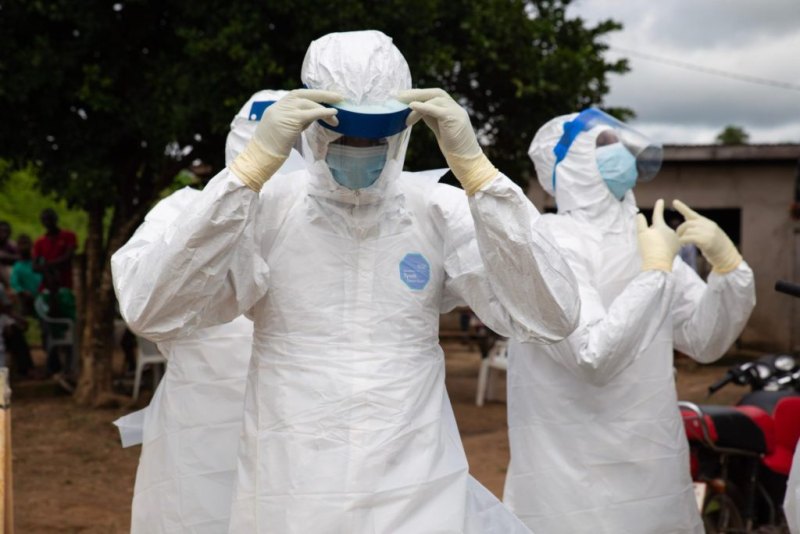
Ebola spreads mainly through direct contact with the body fluids of an infected person after symptoms begin. These include blood, saliva, vomit, urine, sweat and other fluids.
The virus can enter the body through broken skin or the lining of the eyes, nose and mouth. People may also become infected through contact with contaminated clothing, equipment and other items.
Handling infected wildlife, whether alive or dead, can also expose people to the virus. Caregivers, health workers and people handling the bodies of those who have died from Ebola face particular risks if they come into contact with infectious fluids without proper protection.
The outbreak of Bundibugyo virus disease in the DRC began in May 2026 and has spread to several provinces. Uganda recorded 20 cases, including two deaths, in an outbreak earlier in the year that has since been declared over.
There is no approved vaccine or specific treatment for Bundibugyo virus disease. Vaccines developed against other types of Ebola virus may not protect against this strain, and their effectiveness remains uncertain.
A vaccine study is under way in Uganda to assess a candidate vaccine against the Bundibugyo virus. Meanwhile, supportive care remains important in treating patients. This includes providing fluids and treating complications as they arise.
Prof Adam said the difference between the reported death rates in the DRC and Uganda could reflect differences in the care patients received, as well as the possibility that not all infections and deaths in the DRC had been identified.
“It is important to remember the importance of effective supportive treatment. Note that in Uganda, the fatality rate was 10 per cent rather than 50 per cent. The difference is likely due to two factors; the level of supportive care that was offered in Uganda and the likelihood that there are many other uncounted cases in DRC,” he said.
Earlier last week, the World Health Organization (WHO) launched a new five-year strategy for its Hub for Pandemic and Epidemic Intelligence. The strategy charts a path towards a world where every country can detect and understand emerging health threats within 24 hours of their appearance by 2030.
Strengthening rapid detection is a cornerstone of global health security. It helps countries contain outbreaks before they escalate into larger epidemics or spread internationally.
The Hub’s strategy aims to equip every country with the capabilities needed to rapidly identify and understand emerging health threats. It will support countries in developing the systems, capacities and partnerships necessary to prevent outbreaks from escalating into epidemics or pandemics.
WHO director general Dr Tedros Adhanom Ghebreyesus reflected on the Hub’s achievements in the five years since its creation.
"Five years after its establishment, the WHO Hub for Pandemic and Epidemic Intelligence has become an integral part of the global health security system," he said.
"Its new strategy charts a clear path towards 2030, uniting governments and partners around a shared goal: a world in which every country can rapidly respond to health threats before they turn into major crises."
The WHO Hub was created in 2021 with foundational support from the German Government in response to critical gaps exposed by the Covid-19 pandemic. Since then, it has worked with 160 WHO Member States, 190 partner organisations, and thousands of scientists and policymakers to detect new epidemic threats, sequence and identify pathogens, and support rapid action to protect communities around the world.
Under the next five-year strategy, the Hub will build on its achievements and improve its work, he said.