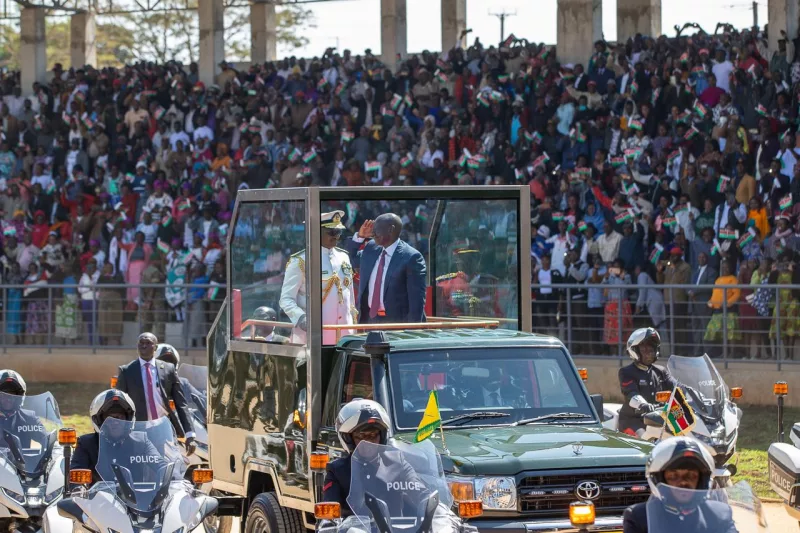
Kenya’s 63rd Mashujaa Day celebrations at Kipchoge Keino Stadium in Eldoret on Tuesday mark another milestone in the country’s decade-long shift from Nairobi-centred national ceremonies to celebrations hosted across the counties.
The 2026 Mashujaa Day celebrations are being jointly hosted by Uasin Gishu, Nandi and Elgeyo Marakwet counties, continuing a policy introduced in 2015 under retired President Uhuru Kenyatta and sustained by President William Ruto.
Previously, national holidays were largely celebrated in Nairobi, making the capital the centre of major national ceremonies.
The decentralisation of the celebrations was prompted by the spirit of the 2010 Constitution and the philosophy of devolution.
The policy sought to address decades of regional marginalisation, economic centralisation and political exclusion while giving counties a greater role in national affairs.
The rotation has also enabled different parts of the country to showcase their history, culture, economic potential and contribution to national development.
Since 2016, counties have taken turns hosting Madaraka Day and Mashujaa Day celebrations.
Nakuru hosted Madaraka Day in 2016 while Machakos hosted Mashujaa Day. In 2017, Nyeri hosted Madaraka Day, and Nairobi hosted Mashujaa Day.
Meru and Kakamega hosted the two celebrations in 2018, followed by Narok and Mombasa in 2019.
In 2020, Madaraka Day was held in Nairobi at State House while Kisii hosted Mashujaa Day. Kisumu and Kirinyaga hosted the respective celebrations in 2021.
Nairobi hosted both ceremonies in 2022 before the rotation resumed in 2023, when Embu hosted Madaraka Day, and Kericho hosted Mashujaa Day.
Bungoma hosted Madaraka Day in 2024 while Kwale hosted Mashujaa Day. In 2025, Homa Bay hosted Madaraka Day, and Kitui hosted Mashujaa Day.
This year, Wajir hosted Madaraka Day, while Uasin Gishu, Nandi and Elgeyo Marakwet are jointly hosting Mashujaa Day.
The policy has transformed national celebrations into a rotating platform that brings the President, senior government officials and national institutions closer to citizens outside Nairobi.
It has also provided host counties with an opportunity to showcase local development projects, cultural heritage and economic potential while attracting national attention and visitors. They have helped spread economic benefits from major national ceremonies.
The Eldoret celebrations therefore represent more than an annual national ceremony.
They are part of a broader effort to make national occasions more inclusive and give devolution a visible place in Kenya’s national identity.
From Nairobi to the North Rift, national celebrations have increasingly become occasions for the whole country to share the national stage.