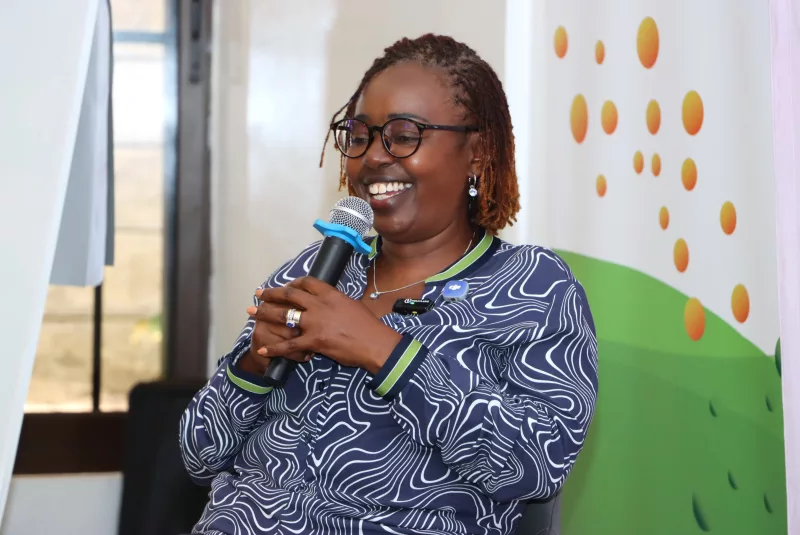
Susan Warui, Managing Director of Essential Drugs Ltd (EDL), did not set out as a child to become a manufacturing executive. Her early dream was to become a hotelier, drawn to what she describes as her natural interpersonal and hospitality skills.
Today, she is at the helm of a company that has grown into one of Kenya’s leading manufacturers of vitamin and mineral premixes for animal feeds, with ambitions to expand across Africa.
Her journey has been shaped by business, agriculture, resilience and a determination to prove that sophisticated manufacturing can be built locally.
Excerpt :
What inspired Essential Drugs Ltd to venture into animal nutrition?
We recognised that livestock productivity in Africa is constrained not only by the quantity of feed available, but also by its nutritional quality.
Farmers and feed manufacturers could access conventional raw materials such as maize, soybean meal and oilseed cakes, but there was a significant gap in the reliable supply of vitamins, minerals, amino acids and other essential micronutrients.
These nutrients may be required in very small quantities, but they have a major influence on animal growth, health, reproduction and productivity.
We therefore set out to build a regional platform that could translate global innovations in animal nutrition into practical, affordable and science-based solutions for African livestock producers.
Over time, we have evolved from an ingredient supplier into a regional manufacturer of premixes, macropacks, concentrates and customised nutritional solutions.
Our broader purpose is to help farmers produce more efficiently, strengthen regional food security and reduce dependence on imported finished nutritional products.
Why are vitamin and mineral premixes so important?
Premixes provide essential micronutrients that may be absent, deficient or highly variable in conventional feed ingredients.
They support virtually every major biological function in animals, including skeletal development, eggshell formation, immunity, reproduction, fertility, growth, feed conversion, milk, meat and egg production, as well as antioxidant protection and stress management.
When animals receive properly formulated and precisely manufactured premixes, nutrients are supplied consistently and in the correct proportions. This improves performance while reducing the risk of deficiencies, toxicity and excessive nutrient excretion.
There is also a food-safety dimension. Precise formulations, controlled raw materials, accurate dosing and traceable manufacturing help prevent contamination and nutrient imbalances.
Ultimately, healthier and efficiently nourished animals support safer and more dependable supplies of milk, meat, eggs and fish. Safer feed means safer food for us.
Feed costs and inconsistent quality remain major challenges for farmers. How are you helping?
Feed is the largest cost in most livestock production systems. Our approach is therefore not simply to sell ingredients, but to help customers get greater value from every kilogram of feed.
We manufacture premixes, macropacks and concentrates locally, which shortens lead times, improves supply reliability and reduces some of the costs and foreign-exchange exposure associated with importing finished nutritional products.
We also formulate solutions based on locally available raw materials, animal species, production stage and individual performance objectives.
Our technical teams conduct feed-mill audits, farm assessments, total mixed ration evaluations, formulation reviews and performance monitoring. This helps identify problems such as raw-material variability, poor mixing, incorrect nutrient specifications, mycotoxin exposure, mineral imbalances and inefficient feeding practices.
We also provide analytical support through raw-material and feed analysis and formulation validation.
The objective is to reduce the cost per unit of protein produced—whether meat, milk, eggs or fish—not simply the apparent cost per tonne of feed.
What technology has made the biggest difference to your manufacturing operations?
One of our most significant investments has been a modern, fully automated Buhler premix manufacturing facility.
Premix manufacturing requires exceptional precision because some nutrients are added in very small quantities. Automation improves weighing accuracy, dosing, mixing uniformity, process control and traceability.
It also reduces human error and the risk of cross-contamination while ensuring consistent quality from one batch to another.
We have complemented the facility with laboratory and analytical capabilities, including near-infrared technology for evaluating raw materials and feeds. This supports formulation validation, quality control and more accurate use of locally available feed ingredients.
How do you ensure your products meet Kenyan and international quality standards?*
Quality begins before production. We assess and approve suppliers, establish specifications for incoming raw materials and conduct inspections and analytical testing before materials are released for use.
During manufacturing, we maintain controls covering raw-material identification and traceability, accurate weighing and dosing, mixing-time validation, homogeneity, contamination and carry-over controls, batch coding, documentation, packaging, labelling and finished-product verification.
Quality is not treated as a final inspection activity. It is embedded throughout procurement, formulation, manufacturing, storage and distribution.
What trends will shape animal nutrition in Africa over the next decade?
Precision nutrition will be one of the biggest trends. Producers will increasingly formulate diets according to actual animal requirements, raw-material composition, genetics, climate and production objectives rather than relying on generalised formulations.
There will also be greater demand for functional feed additives that support gut health, immunity, feed efficiency and resilience without unnecessary reliance on antibiotics.
The industry will increasingly use alternative and locally available feed materials as conventional ingredients become more expensive. This will require better analytical systems and products such as enzymes, organic acids, phytomolecules and mycotoxin binders.
Aquaculture is another major growth area as demand for affordable animal protein increases. It will require specialised premixes, feed additives and technically advanced feeds.
Digital technology will increasingly connect feed formulation, laboratory analysis, manufacturing, farm performance and traceability, while sustainability will become central to how the industry operates.
How can animal nutrition help farmers cope with climate change?
Climate change exposes livestock to heat stress, water scarcity, changing disease patterns and greater variability in the quality and availability of feed ingredients.
Nutrition cannot eliminate these challenges, but it can improve an animal’s ability to cope with them. During heat stress, animals often reduce their feed intake, meaning every kilogram consumed must deliver nutrients more efficiently.
Better nutrition also supports immunity, reproductive performance and recovery from stress.
However, resilience requires a broader approach combining appropriate genetics, good housing, disease prevention, water management and scientifically formulated nutrition.
What has it been like leading a manufacturing company as a woman?
Manufacturing is demanding. It is capital-intensive and requires technical knowledge, operational discipline, financial resilience and confidence to make difficult long-term decisions.
As a woman, there are occasions when you have to work harder to establish credibility in traditionally male-dominated environments. But I have learned that competence, preparation and consistency eventually speak louder than stereotypes.
My advice to young women is to develop genuine technical and commercial competence. Do not confine yourself to roles others consider traditional or comfortable. Learn how the business works—from production and quality control to finance, sales and supply-chain management.
Seek mentors, build professional networks and support other women.
Women are not merely participants in agriculture and manufacturing. They are important drivers of innovation and resilient food systems.
What policy change would make the biggest difference to livestock and manufacturing?
Kenya needs a more coordinated policy framework that incentivises local manufacturing of animal-nutrition products and other critical agricultural inputs.
This should include predictable taxation, appropriate duty treatment for specialised raw materials and manufacturing equipment, access to affordable long-term financing and efficient regulatory approvals.
The objective should be to encourage companies to import essential raw materials and technology, add value locally, create skilled employment and supply the region competitively.
Supporting regional manufacturing would improve supply security, reduce dependence on finished imports and contribute directly to food security.
Where do you see Essential Drugs Ltd in the next five to ten years?
I see EDL becoming one of Africa’s most trusted animal-nutrition and feed-technology companies.
We intend to deepen our manufacturing capacity, expand our analytical and formulation capabilities and increase our presence across Africa.
We want to serve poultry, dairy, beef, swine, small-ruminant and aquaculture producers with solutions designed for production conditions in Africa and the Global South.
But growth is not measured only by production volumes or geographical presence. It is also measured by our customers’ performance, the jobs and skills we create, the technology we transfer and our contribution to sustainable food production.
Our goal is to combine world-class science with local manufacturing and practical technical support.
You grew up in South Kinangop. How did your upbringing shape you?
I grew up in South Kinangop, Nyandarua County, in an environment where hard work, discipline and personal responsibility were highly valued.
I learned that progress rarely comes immediately. It requires patience, consistency and the courage to continue even when circumstances are difficult.
I was also taught to respect people, remain grounded and use every opportunity responsibly.
Those values continue to influence my leadership. I expect high standards, but I also believe in treating people fairly, listening to different perspectives and creating opportunities for others to develop.
Did you ever imagine you would lead a manufacturing company?
Not at all. As a child, I dreamed of becoming a hotelier because I have strong interpersonal and hospitality skills.
I certainly did not have a detailed plan to lead a manufacturing company.
My career developed through education, exposure to business opportunities and a growing understanding of the challenges facing agriculture in our region.
What began as an interest in business and problem-solving gradually developed into a commitment to building a company that could make a practical contribution to livestock production and food security.
The journey has taught me that our ultimate purpose can be larger than the ambitions we initially imagine for ourselves.
What did you study, and how did it prepare you for leadership?
I hold a Bachelor in Business Management from the Kenya Institute of Management and a Master of Science in Management at the Management University of Africa.
My education gave me a foundation in strategic management, finance, organisational leadership, decision-making and business operations.
Those skills are directly relevant to my role today, where I oversee manufacturing, commercial growth, financial performance, people development and long-term strategy.
Academic training provided the theoretical foundation, while practical experience strengthened my ability to lead teams, manage complex operations and respond to changing market conditions.
What were the defining moments in your career?
One was the decision to move beyond conventional distribution and invest in local manufacturing.
Establishing a modern premix facility required significant capital, technical partnerships, patience and confidence in the long-term potential of African agriculture.
Another was building a regional network and developing teams capable of serving customers in different markets. We learned that technology must be adapted to local raw materials, production systems and commercial realities.
Recognition through the Women in Ag platform was also meaningful because it affirmed the value of our work and strengthened its international visibility.
These experiences reinforced the importance of calculated risk-taking, investing in people and remaining committed to a long-term vision.
What has been your biggest professional challenge?
Building a manufacturing business amid currency fluctuations, geopolitical tensions, pandemic-related disruptions, changing regulations, supply-chain challenges and limited access to affordable long-term capital has been difficult.
External conditions can change suddenly, yet employees, customers and suppliers still depend on you to provide direction.
The experience has taught me financial discipline, the importance of diversifying risk and the danger of making decisions based only on short-term conditions.
Difficult periods reveal the importance of strong systems and capable teams. Resilience is not simply enduring hardship; it is learning, adapting and emerging stronger.
What keeps you motivated?
I am motivated by knowing that our work has an impact beyond the factory floor.
When we develop a new premix or help a farmer solve a nutritional problem, the result may be better animal health, improved feed efficiency, more milk, better egg production or reduced mortality.
Those improvements affect farmers’ livelihoods, the sustainability of businesses and food availability.
I am also motivated by our responsibility to employees and customers. Building an African manufacturing company creates opportunities for young professionals, develops technical capabilities and demonstrates that high-quality solutions can be produced within our region.
Who has influenced your career most?
The person who has most significantly influenced my career is my husband and co-founder, Steve Warui.
Throughout our journey at EDL, I have learned from his resilience, entrepreneurial courage and determination.
His grit in confronting challenges, pursuing opportunities and remaining committed to the company’s long-term vision embodies the EDL ethos.
Beyond being a business partner, he has been a trusted mentor and source of encouragement.
I also draw inspiration from entrepreneurs who have built lasting African enterprises under difficult conditions. What I admire most is not simply commercial success, but the ability to combine ambition with integrity, courage and a genuine commitment to developing people and creating lasting value.
How do you balance running a manufacturing company with family life?
Balance does not necessarily mean allocating equal time to every responsibility every day. It means knowing your priorities and being fully present where your attention is required.
I rely on planning, delegation and a strong management team. A leader who tries to control every detail eventually becomes a constraint to the organisation.
Family also provides perspective and emotional stability. I would not claim that the balance is always perfect. It requires continuous adjustment, honest communication and a willingness to ask for support.
What do you do when you are away from the office?
I enjoy spending time on the farm, particularly walking around the different enterprises and checking on projects.
Whether I am looking at crops, livestock units or ongoing improvements, these walks keep me connected to the practical side of agriculture while allowing me to appreciate the natural environment.
The quiet setting also gives me space to think through personal and professional issues and consider new ideas without the pressure of the office.
What might surprise people about you?
I am deeply involved in regenerative agriculture on my farm in Kajiado.
Beyond growing vegetables, the farm has piggery, poultry, dairy and beef feedlot enterprises. It allows me to engage directly with the realities of livestock production and sustainable farming.
Farming brings out a more practical and hands-on side of my personality. It is also a valuable source of learning because it gives me first-hand insight into animal nutrition, feed efficiency, farm management and the challenges livestock producers face.
What does a typical day look like for you?
I am a morning person. I usually wake up at around 5am, when the environment is quiet and free from distractions.
I begin with some light reading, then go to the gym, have breakfast and head to work.
At the office, I review priorities across production, finance, customer requirements and strategic projects. I engage with the management team, make key operational decisions and meet customers, partners and suppliers.
I also reserve time for longer-term planning. As Managing Director, it is important not to become so absorbed in daily demands that the future direction of the business is neglected.
No two days are exactly alike, but discipline, preparation, physical wellness and clear prioritisation remain constant.
Finally, what makes you uniquely Susan?
My friends and family would probably describe me as determined, practical and deeply committed to whatever responsibility I accept.
They may also say I am demanding about standards, but supportive of people who are prepared to learn and take responsibility.
What perhaps makes me uniquely Susan is the combination of ambition and persistence: the belief that meaningful African businesses can be built locally, compete internationally and positively influence the communities they serve.