Kenyans have been warned to be ready for more Ebola cases, a day after the cases rose to seven.
Director General for Health Dr Patrick Amoth said nearly everyone exposed to the index case is in quarantine, and more could develop symptoms.
However, he said the risk to the general population remains low.
“New cases among quarantined contacts are possible until their 21-day monitoring period ends; if they develop any symptoms, they will be detected and treated just as quickly,” Amoth said in a statement.
He said they have traced 128 of the 130 identified contacts, leaving two people still missing.
“This is above the global contact tracing benchmark of 85 per cent required to break the chain of transmission of the disease. Intensive efforts are ongoing to trace and quarantine the two remaining contacts,” he said.
The DG noted the two missing people must be found and assessed by health officials, and anyone identified as a contact must complete the required 21-day monitoring period after their last exposure.
The seven confirmed Ebola patients in Kenya include a 40-year-old man who lived in the Democratic Republic of Congo and died in Nairobi on October 5.
Two of his relatives aged 39 and 65 tested positive on October 14 and 16, respectively, while another male relative tested positive on October 17.
The ministry said the last three are health workers, two men aged 29 and 35 and a 32-year-old woman, who treated the first patient in hospital on October 3 and 4.
All six are receiving medical care, with the Ministry of Health reporting that the second and third patients were stable and responding well to treatment.
Pathologist Dr Ahmed Kalebi said the government needed to explain why the number of identified contacts had increased from 128 to 130, and what had happened to people who were previously unaccounted for.
“Earlier reports indicated 128 contacts, with 15 still untraced. The latest statement gives 130 contacts, with 128 traced and two outstanding. The ministry should reconcile these figures: when were the additional contacts identified, what were their exposure circumstances, and why were they not captured earlier? Personal identities need not be disclosed but the public has a right to know the details and circumstances of these additional two contacts identified,” he said.
Kalebi said the public needed more information about whether the previously missing contacts had developed symptoms before they were found, whether they had been monitored and whether they could have exposed other people.
He also said health officials should also explain how the three health workers were exposed, including whether there were gaps in the use of protective equipment or other infection-control procedures.
Their quarantine began on October 9, several days after they attended to the first patient.
“The three infected healthcare workers attended to the index patient on October 3 and 4 but entered quarantine on October 9. Were they continuing to work or see patients during the intervening days? Were they under daily monitoring, and did any develop symptoms before quarantine?” he asked.
“Any patient, colleague or household exposure after symptom onset and before effective isolation needs assessment and appropriate contact tracing.”
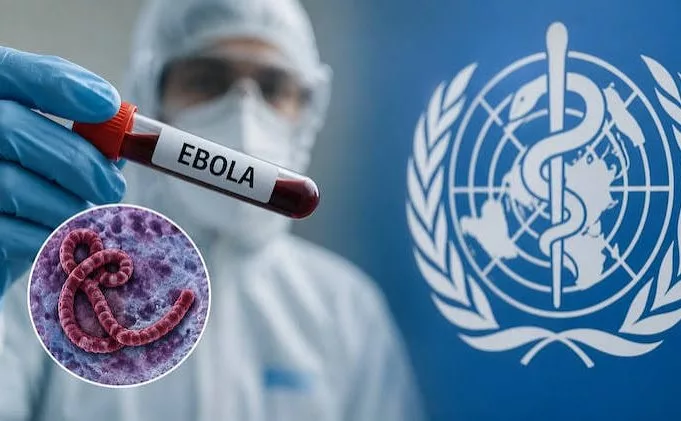
According to the World Health Organisation (WHO), Ebola spreads through direct contact with the blood or other body fluids of an infected person who is sick or has died, or by touching objects contaminated with these fluids.
The virus enters the body through broken skin or the eyes, nose or mouth. People do not spread Ebola before symptoms begin.
WHO says to prevent infection, people should avoid direct contact with suspected or confirmed patients, wash their hands regularly and leave patient care to trained health workers using protective equipment.
Bodies of people who die from Ebola must be handled by trained teams using safe burial procedures.
The WHO said early treatment improves a patient's chance of survival. Care includes giving fluids to prevent dehydration, providing nutrition and treating symptoms and other infections.
While approved antibody treatments are available for the Ebola virus disease caused by the Zaire ebolavirus, there is currently no approved specific treatment or vaccine for the Bundibugyo virus, which is responsible for the current outbreak.
Researchers are studying possible treatments and vaccines. Anyone who develops symptoms after possible exposure should seek urgent medical assessment and testing at a designated health facility.