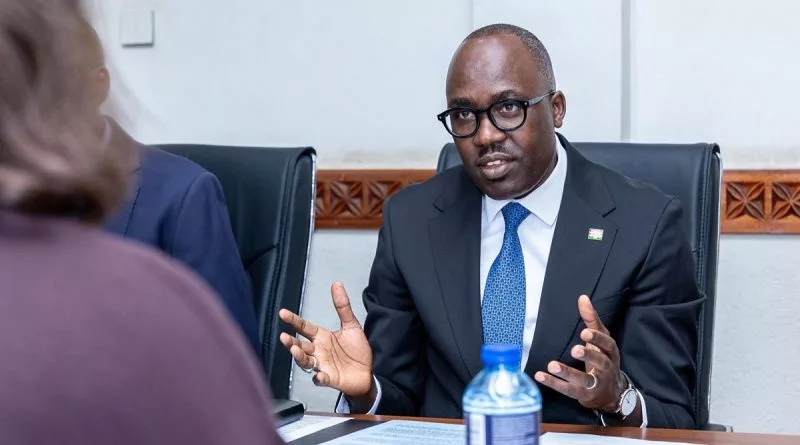
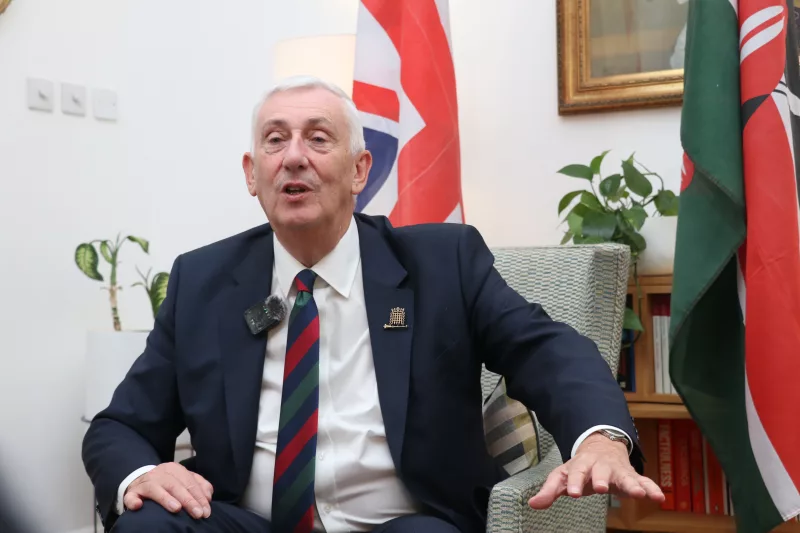
Political violence and threats against lawmakers can discourage people from entering politics, UK House of Commons Speaker Sir Lindsay Hoyle has warned.
In an interview with the Star, Speaker Hoyle said politicians must be protected without being cut off from the voters they represent.
“If people do not feel safe, why would you be an MP?” Hoyle said during an interview at the UK High Commission during his visit to Kenya.
The British Speaker cited cases in the UK over the past decade, when two British MPs were murdered separately while carrying out their constituency duties.
“Not many things keep you awake at night, but the one thing that keeps me awake at night is the security for members of Parliament,” he said.
His warning comes against recent incidents highlighting the risks surrounding politicians.
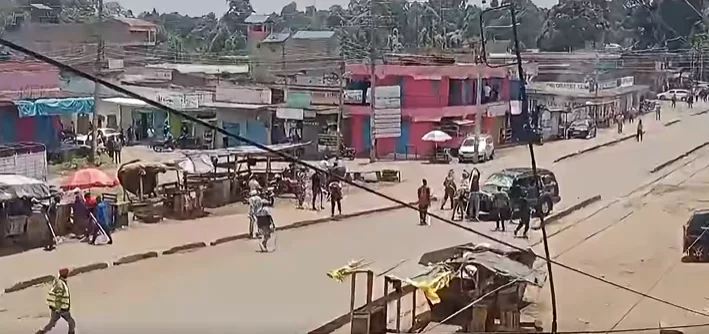
In August, former Chesikaki councillor and Mt Elgon parliamentary aspirant Nathan Wasama was shot dead at his home in Cheptais, Bungoma county. Wasama had declared his intention to contest the parliamentary seat and had survived an earlier assassination attempt. Police launched investigations into his killing.
Kasipul MP Charles Were was shot and killed in a targeted motorcycle attack in Nairobi on April 30, 2025.
In April this year, Vihiga Senator Godfrey Osotsi was assaulted at a Kisumu City coffee house by a group of rowdy youth.
Hoyle said MPs must be free to meet the people they represent without fearing for their lives.
“We cannot allow a wall to be built between delivering on behalf of constituents and meeting them,” Hoyle said.
Britain has strengthened security around Parliament, MPs’ homes and constituency offices following the murders of Jo Cox in 2016 and Sir David Amess in 2021.
Cox was killed by a far-right extremist while carrying out constituency work, while Amess was murdered by an Islamist extremist during a constituency surgery (voter meeting).
Hoyle said the British experience had forced Parliament to confront a difficult question on how to protect lawmakers without changing the way democracy works.
The same dilemma is relevant in Kenya, where politicians depend heavily on rallies, public meetings and direct engagement with voters, particularly as the 2027 campaign gathers momentum.
But Hoyle said the threat was no longer confined to physical attacks.
He raised concern over the abuse MPs face online, saying ethnic minority lawmakers receive some of the worst abuse, and that women MPs have been subjected to rape threats.
Social media companies, he said, must take greater responsibility for abuse on their platforms, including content targeting politicians and their families.
The growing use of social media in political mobilisation has added another layer to the security challenge, with threats and harassment able to follow politicians beyond rallies and constituency meetings.
The Speaker said protecting politicians is, therefore, not simply about putting more security around them.
It is about ensuring people who choose to enter public life can continue to meet citizens without being forced into isolation by fear.
When threats to life deter one from joining politics, Hoyle said, the issue transcends the safety of politicians and becomes about the ability of democracy to attract people willing to serve in public office.