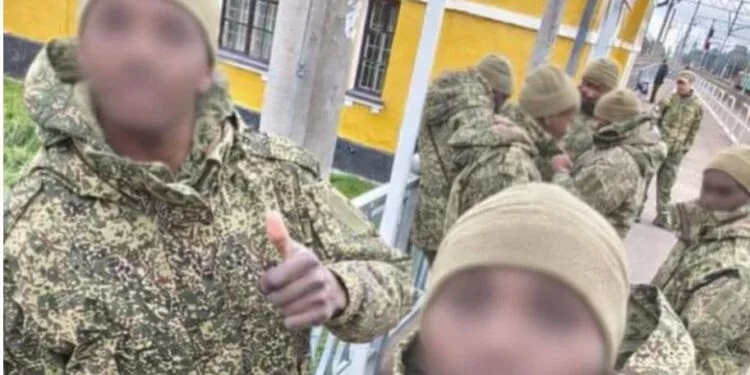
The United States Department of State has raised serious concerns over alleged collusion between Kenyan government officials, recruitment agencies and Russian officials in the recruitment of more than 1,000 Kenyan men to fight for Russia in the war against Ukraine.
The allegations are contained in the 2026 Trafficking in Persons Report, which accuses some Kenyan officials of helping facilitate the fraudulent recruitment of citizens who were reportedly promised lucrative civilian jobs before being channelled into Russia’s military.
“Officials reported that some Kenyan officials colluded with recruitment agencies and government officials from Russia to facilitate the fraudulent recruitment of more than 1,000 Kenyan men to fight for the Russian military,” the report states.
The findings have intensified scrutiny of Kenya’s overseas employment recruitment industry and raised questions about the role of public officials in protecting citizens from trafficking and exploitation.
According to the report, some Kenyan men were lured by promises of well-paying jobs in construction, security and other civilian occupations. Upon travelling to Russia, some were allegedly pressured into signing contracts with the Russian Ministry of Defence and subsequently deployed to fight in Ukraine.
The allegations point to a recruitment system that exploits unemployment and the search for better economic opportunities, while potentially involving individuals entrusted with regulating employment agencies and protecting Kenyan citizens.
The US report also criticised the Kenyan government’s handling of recruitment agencies allegedly linked to trafficking offences, particularly those reportedly owned by government employees.
“The government did not report taking action against recruitment agencies reportedly owned by government employees that were allegedly complicit in facilitating trafficking crimes; lesser charges, such as failing to register a recruitment company, were frequently levied,” the report states.
The assessment raises concerns about possible conflicts of interest and whether alleged connections between public officials and recruitment businesses have undermined investigations and accountability.
However, the report’s allegations do not, by themselves, establish the criminal liability of any specific Kenyan official. Investigations would be required to determine individual responsibility and establish whether any laws were violated.
The report’s findings come amid growing pressure on Kenyan authorities to identify those behind the recruitment networks, investigate suspected official complicity and ensure that employment agencies operate within the law.
Kenya has previously warned citizens against accepting overseas job offers through unverified agents and informal online recruitment channels.
In February 2026, the Kenyan Embassy in Moscow said it had received numerous inquiries concerning citizens who had travelled to Russia after receiving employment offers that proved misleading or substantially different from what had been promised.
Some affected Kenyans and their relatives reported that promised salaries and residency arrangements did not materialise. Others alleged that passports had been withheld and their movements restricted, making it difficult to obtain consular assistance.
The embassy urged job seekers to verify employment opportunities through the Ministry of Labour, the Ministry of Foreign and Diaspora Affairs and Kenyan diplomatic missions before travelling.
Appearing before a joint Senate committee on Labour and Defence on October 8, Prime Cabinet Secretary and Foreign Affairs Cabinet Secretary Musalia Mudavadi said the government had documented 354 Kenyans involved in the Russia-Ukraine conflict.
The government’s records included 77 Kenyans on the frontline, 38 in military camps, 52 whose whereabouts were unknown or unclassified and 34 who were hospitalised. A further 62 had been repatriated, five were prisoners of war in Ukraine and one was in detention.
Mudavadi also reported that 84 Kenyans had been classified as killed or missing in action, although the government distinguishes confirmed deaths from cases in which the whereabouts of recruits remain unknown.
The figures have been disputed by representatives of affected families, who have presented Parliament with a substantially higher estimate of Kenyans whose whereabouts remain unaccounted for.
The National Intelligence Service had earlier reported that more than 1,000 Kenyans had been recruited into the conflict, prompting calls for a comprehensive investigation into the recruitment networks and the circumstances surrounding their departure.
Kenya’s diplomatic engagement with Moscow is expected to remain central to efforts to secure the release and return of affected nationals. At the same time, families have demanded transparent investigations and accountability for those who allegedly deceived their relatives.