Kenya’s elections have repeatedly exposed the same painful truth: when the media arrives fragmented, under-resourced and dependent on official systems, public trust suffers.
In 2022, media houses invested heavily in election desks and portal-based tallies, yet divergent numbers appeared on rival screens, slowdowns fuelled suspicion and physical presence at the 290 constituency tallying centres remained uneven. The result was confusion at the precise moment when clarity was most needed. Earlier cycles, from 2007’s catastrophic information failures to 2017’s contested processes, taught the same lesson. Parallel reporting without coordinated independence is not enough.
The weaknesses are structural. Individual newsrooms cannot sustainably deploy teams across every constituency tallying centre and a meaningful share of the roughly 46,000 polling stations. Costs of transport, security, equipment and verification overwhelm single budgets. When each house builds its own tally, methodological differences and release timing create the appearance of bias even when none is intended.
Reliance on the IEBC’s public portal, while useful, still leaves media downstream of the official process rather than offering a robust independent check. In a polarised environment, that gap becomes a vulnerability. Citizens deserve a media that can say, with evidence gathered by its own eyes and systems: here is what we observed, here is how it compares.
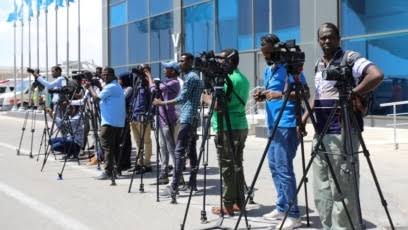
There is a better way. Kenya’s media houses should form a genuine consortium for 2027 that is independent of the IEBC in methodology, data collection and verification by deploying two or three accredited journalists to each of the 290 constituency tallying centres, with strategic coverage of polling stations.
The consortium would maintain its own chain of custody, verification protocols and a single joint tallying board broadcast contemporaneously across participating stations and platforms. This is not an alternative electoral authority, it is professional journalism scaled to match the architecture of the election itself, and for the first time, the collective assertion of the media as watchdogs in a high stakes electoral process.
Funding need not be a barrier. Joint presidential debates have previously generated significant advertising revenue. That commercial stream can be combined with support from development partners such as UNDP, European Union and other long-standing supporters of electoral integrity and independent media.
The precedence exists. Partners have funded civil-society Parallel Vote Tabulation, journalist training and fact-checking platforms while respecting operational independence. A transparent, media-led consortium with clear governance under the Media Owners Association, Kenya Union of Journalists, Kenya Editors’ Guild and Media Council of Kenya can meet the same standards of accountability and neutrality.
Independence is non-negotiable. Close operational integration with the IEBC risks the very perception of capture that erodes trust. Media teams must collect and verify results primarily through their own presence and systems, using the official portal only as a secondary reference.
The joint board must carry explicit disclaimers that only the electoral commission declares official results. Done correctly, this parallel effort mirrors the value of the 2022 Elog Parallel Vote Tabulation, which closely tracked official figures precisely because it stood apart. Covering every constituency centre would offer even broader process insight than a pure statistical sample.
Cynics will say that coordination among competitors is hard, foreign funding invites sovereignty concerns and the logistics are daunting. These are real challenges, not fatal ones. Competitors already cooperate on presidential and gubernatorial debates and industry standards. Transparent disclosure of all funding, Kenyan leadership of the consortium and rigorous technical protocols address influence concerns. Early planning, shared technology platforms and hybrid commercial-donor financing make the scale manageable.
The alternative is another election in which media presence is patchy, tallies diverge and suspicion fills the gaps. Kenya has paid too high a price for information failures in the past. A coordinated, independent media effort will not solve every problem in the electoral system, but it will close one of the most visible and damaging gaps: the absence of a trusted, nationwide, media-generated picture of what actually happened at the centres where results are aggregated.
Media houses can choose competition on analysis and storytelling while cooperating on the infrastructure of verification. They can raise resources through debates and partners rather than each bearing the full burden alone. They can give Kenyans a parallel record that stands beside the official one for comparison, not confrontation.
The weaknesses of the past are well documented. The question for 2027 is whether the industry has the courage and discipline to correct them. An independent media consortium is a professional obligation to the citizens of the sovereign republic of Kenya who guarantee the freedoms enjoyed by media.
The writer is a social impact adviser