MPs want the Water Services Regulatory Board (WASREB) to address the inadequacies by water service providers before they can consider any increase on water tariffs.
The lawmakers expressed concern over proposed increases, and sought answers on pricing disparities, unreliable supplies and the regulator’s failure to adequately explain higher charges to consumers.
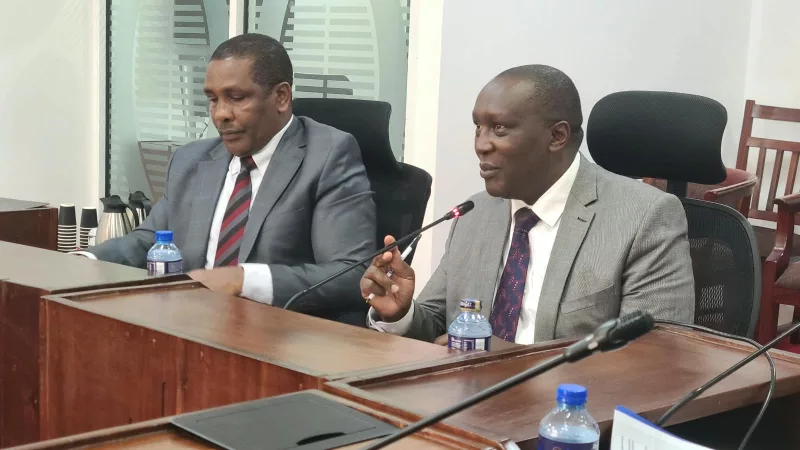
The National Assembly’s Blue Economy, Water and Irrigation Committee questioned WASREB chief executive Leparan Tialal on whether Kenyans were paying fair water tariffs and whether the charges translated into reliable, accessible and quality services.
The lawmakers argued that households and farmers were already grappling with the high cost of living and should not be forced to pay more for a basic commodity when some water service providers continue to deliver unreliable supplies and lose significant volumes of treated water through leakages, illegal connections and other inefficiencies.
The committee’s concerns intensified after it emerged that about 48 per cent of water produced by service providers is lost as non-revenue water, raising questions about the justification for higher tariffs before existing operational weaknesses are addressed.
"You have said that margins of these water providers is small and that's why you are proposing a raise in the rate, do you want Kenyans to pay for negligent water service providers," asked the committee chair Kagongo Bowen.
The MPs demanded a detailed breakdown of how WASREB determines water tariffs, questioning why consumers in some areas pay about Sh45 per cubic metre while others face charges of up to Sh300.
They challenged the regulator to explain what informs the revised charges, whether consumers were adequately consulted and how their concerns were incorporated into tariff decisions.
MPs now want enforcement measures taken against poorly performing water utilities, arguing that tariff reviews should be tied to measurable improvements in service delivery rather than allowing consumers to shoulder the cost of inefficiencies.
The committee further demanded historical tariff trends and comparisons across major towns, saying the explanations provided were insufficient to help lawmakers account for rising water bills to their constituents.
The MPs warned that higher charges could further squeeze low-income households and undermine community-managed water projects whose construction has relied on years of contributions from residents.
They raised concerns about farmers and communities that have mobilised resources to develop water infrastructure, only to face additional costs and regulatory requirements when seeking to access or operate the facilities.
“The charges reflect the cost of treating, pumping and distributing water, maintaining infrastructure, servicing debt and financing investments needed to sustain water services. The tariff decisions must balance affordability with the financial sustainability of water utilities, which require adequate revenue to operate and expand their networks,” said the regulator.
WASREB also told the committee that approved tariffs come with performance conditions covering water quality, service coverage and water losses, which are monitored to ensure compliance.
The lawmakers questioned whether these safeguards were sufficient to protect consumers from unjustified increases, particularly where utilities continue to record high water losses or fail to provide reliable supplies.
The committee also scrutinised public participation in tariff reviews, demanding evidence that consumers had been meaningfully consulted and that their views had influenced the final decisions.
The MPs said the regulator needed to provide clearer information on consumer protection measures, implementation challenges facing water service providers and safeguards to ensure fair pricing and equitable access.
WASREB told the committee that about 106 water service providers serve approximately 60 per cent of Kenya’s population, with many rural communities depending on smaller, community-managed schemes.
The lawmakers called for clearer safeguards for these projects, warning that poorly explained charges and regulatory requirements could threaten community investments and limit access to water.
The committee urged WASREB to submit detailed figures and address outstanding questions on tariff disparities, public participation, water losses and the relationship between higher charges and improved service delivery.
The scrutiny comes amid growing concerns over the affordability of essential services, with MPs insisting that the financial sustainability of water utilities should not come at the expense of consumers who already struggle to access reliable supplies.